Sourcing patient slide sheets from China
Patient slide sheets within heading 6307 carry 6% to 12% UK duty from China, depending on construction. Establish medical device status before ordering: devices for the Great Britain market require registration, and overseas manufacturers need a UK responsible person. Cambridge China Bridge sources patient slide sheets.
UK duty and classification
Read from the UK Trade Tariff on 29 September 2026, heading 6307 covers other made-up textile articles. The candidate lines below distinguish woven, nonwoven, knitted and hand-made construction; they are not dedicated patient slide-sheet codes. Relevant Chinese-origin rates are 6% for the listed nonwoven and other textile lines and 12% for knitted articles. No anti-dumping or countervailing duty is recorded.
The listed suspension applies only to qualifying textile face masks, not patient slide sheets. These candidate lines carry CITES import and export controls; listed-species material requires a permit, including when incorporated into an article. The nonwoven and other textile lines also carry torture-and-repression import prohibitions and export restrictions, and the nonwoven line has a supplementary-unit import measure. Ask your customs broker to confirm applicability and declaration requirements for the actual sheet.
Confirm construction, materials and intended use through finding your commodity code. For wider heading coverage, see textile lifting slings. Keep the slide-sheet specification separate from a lifting-sling specification.
| Goods | Commodity code | Duty | Anti-dumping or countervailing duty on China |
|---|---|---|---|
| Other made-up textile articles: candidate for woven patient slide sheets | 6307 90 98 99 | 6% | None |
| Other nonwoven articles: candidate for nonwoven patient slide sheets | 6307 90 98 20 | 6% | None |
| Other knitted articles: candidate for knitted patient slide sheets | 6307 90 10 00 | 12% | None |
| Other hand-made textile articles: candidate for hand-made slide sheets | 6307 90 98 91 | 6% | None |
Specify sliding performance and reuse
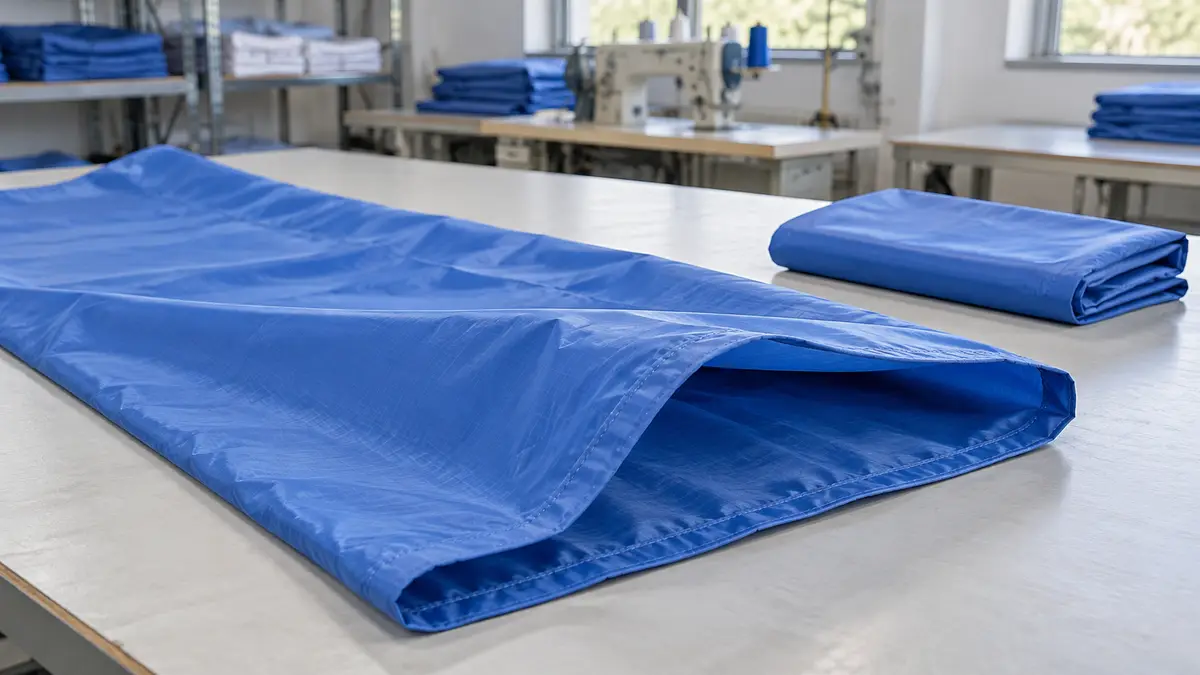
State whether the sheet is flat or tubular, its finished dimensions, sliding direction, fibre composition, coating, edging and any handles. Define whether it is disposable, patient-dedicated or intended for laundering. Agree the cleaning process and how sliding performance, shrinkage and coating condition will be assessed afterwards. Retain an approved sample.
HSE says moving and handling equipment may be classified as medical devices. Establish the status of the actual design and intended use before approving packaging. For a device supplied in Great Britain, confirm registration with the medicines regulator, the overseas manufacturer's UK responsible person, and the applicable marking and conformity assessment requirements. These checks concern the finished product, not merely its fabric.
Worked duty example
Illustrative example, not a quote: Illustrative order of 6,000 woven patient slide sheets for a care-supplies distributor under 6307 90 98 99, invoiced at £9,000 free on board, with £800 of freight and insurance to the UK. The customs value is £9,800. Duty at 6% is £588. Import VAT at 20% is charged on the customs value plus duty, £10,388, so it is £2,077.60. Import taxes total £2,665.60; a VAT-registered importer can usually reclaim the VAT, so the lasting cost is the £588 of duty. The import duty and VAT guide explains each step.
Inspection checklist
Construction: measure finished dimensions and tubular openings; compare fabric, coating and sliding direction with the approved sample.
Seams and handles: check open stitching, rough edges and attachment strength against the agreed specification.
Cleaning performance: repeat the agreed laundry trial and inspect shrinkage, colour transfer, coating damage and changes in sliding resistance.
Identification and packing: match product identity, batch information, intended-use instructions and reuse description to the approved documents; check cartons for dampness and contamination.
Working out your own order? Send us the product on WhatsApp and we reply the same working day: WhatsApp us
What goes wrong
A slippery new sample can conceal coating deterioration after laundering. Substituted fabric, puckered hems or an altered tubular opening can change handling performance. Require the factory to record material changes and compare production samples after the agreed cleaning process.
A generic textile report can leave the finished product's medical device status unresolved. Settle intended use and supporting documents before production. HSE advises introducing handling equipment only after assessment and using it in accordance with the care plan and manufacturer's instructions. For patient transport equipment, see our patient stretcher sourcing guide.
Cambridge China Bridge sources these products for UK businesses, checking the factory and the documents before shipment. See factory verification. For own-brand ranges, see sourcing for brands.
Frequently asked questions
What is the UK import duty on patient slide sheets from China?
The relevant heading 6307 candidate lines carry 6% to 12%: the listed nonwoven and other textile lines are 6%, and knitted articles are 12%. Confirm the finished sheet's code before shipment.
Are patient slide sheets medical devices?
HSE says moving and handling equipment may be classified as medical devices. Establish the status of the specific sheet and intended use; do not decide solely from its textile construction.
What should I test on reusable slide sheets?
Compare sliding resistance, finished dimensions, seams and coating condition before and after the intended laundry process. Agree acceptance criteria and retain a reference sample.
Does the face-mask duty suspension cover slide sheets?
No. The suspension recorded against these lines is limited to qualifying textile face masks. Do not apply it to patient slide sheets.