Sourcing other meat from China
Heading 0208 duties for goods from China range from 0% to 8%. Import permission comes first: rabbit meat is an exception to the China animal-product prohibition, but fresh pigeon meat and frogs' legs are not listed exceptions. Confirm eligibility before ordering. Cambridge China Bridge sources other meat.
Buying from China for a business? How our UK China sourcing agent service works · China sourcing agent for small orders and first imports
Duty and permission to import
Read from the UK Trade Tariff on 18 November 2026, heading 0208 covers other meat and edible meat offal, fresh, chilled or frozen. Domestic rabbit and domestic pigeon lines carry 6%; other rabbit or hare and specified game lines carry 0%; frogs' legs carry 6%. Across the heading, rates reach 8%. The supplied tariff records show no anti-dumping or countervailing duty and no suspensions.
The table describes tariff classifications, not a list of permitted Chinese supplies. Official Great Britain guidance prohibits Chinese animal products except listed products, including rabbit meat. Fresh pigeon meat and frogs' legs are not exceptions and cannot be imported from China under that list. Veterinary and organic controls attach throughout the heading; selected lines also carry CITES import and export controls. Seal meat carries a separate seal-product control: confirm its requirements with your customs broker.
For permitted meat, check country and establishment eligibility, health certification, advance import notification and the authorised border route. Organic consignments from China need an inspection certificate and exporter-register checks. CITES-listed specimens need the relevant permits. Confirm species, edible offal and fresh, chilled or frozen presentation with your broker using finding your commodity code. These border instructions concern Great Britain; obtain separate advice for Northern Ireland.
| Goods | Commodity code | Duty | Anti-dumping or countervailing duty on China |
|---|---|---|---|
| Domestic rabbit meat and edible offal | 0208 10 10 00 | 6% | None |
| Other rabbit or hare meat and edible offal | 0208 10 90 00 | 0% | None |
| Domestic pigeon meat and edible offal | 0208 90 10 00 | 6% | None |
| Game meat and edible offal, excluding rabbits and hares | 0208 90 30 00 | 0% | None |
| Frogs' legs | 0208 90 70 00 | 6% | None |
Specify rabbit meat before requesting quotes
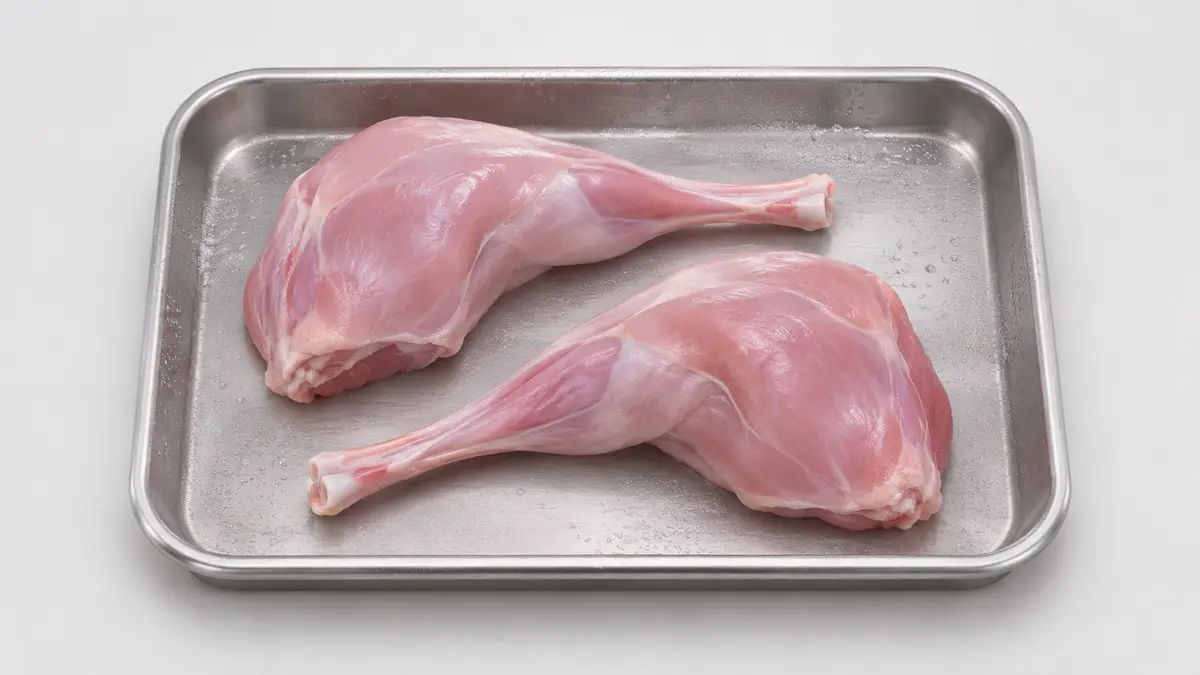
Start with domestic rabbit meat rather than a generic exotic-meat enquiry. Specify the species, whole carcase or cuts, bone-in or boneless presentation, whether edible offal is included, chilled or frozen condition, net pack weight and carton format. Agree trimming, acceptable bone fragments, freezer-burn rejection and remaining shelf life at receipt.
Ask the supplier to identify the slaughter, cutting and packing establishments and provide the proposed shipment documents before you pay. Confirm the applicable establishment approval with your import adviser. A food business must register with its local authority; office-based food brokers and suppliers are included.
Worked duty example
Illustrative example, not a quote: Illustrative small frozen domestic rabbit meat order, subject to import eligibility under 0208 10 10 00, invoiced at £834 free on board, with £889 of freight and insurance to the UK. The customs value is £1,723. Duty at 6% is £103.38. Import VAT at 20% is charged on the customs value plus duty, £1,826.38, so it is £365.28. Import taxes total £468.66; a VAT-registered importer can usually reclaim the VAT, so the lasting cost is the £103.38 of duty. The import duty and VAT guide explains each step. This assumes the goods are standard-rated for VAT. Most food for human consumption is zero-rated, and animal feed can be too, in which case no import VAT is due, so check the rate for your product in HMRC's VAT Notice 701/14.
Inspection checklist
Identity: compare the species, cuts and offal against the purchase specification and shipment documents.
Cold chain: review transport temperature records and check for thawing, refreezing, excessive ice and freezer burn against agreed acceptance criteria.
Packing: check seals, leaks, carton damage, net weight and pack consistency against the order.
Batch records: match carton identifiers, production details and establishment identity to the documents; reconcile any organic claim with the inspection certificate.
Working out your own order? Send us the product on WhatsApp and we reply the same working day: WhatsApp us
What goes wrong
A supplier can offer meat that has a UK commodity code but is prohibited from China. A duty-free line does not remove the animal-product prohibition. Rabbit meat being listed as an exception also does not establish that a particular supplier or consignment is eligible. Resolve the import route before committing to stock.
Quality disputes can arise over offal inclusion, uneven cuts, excessive ice, damaged seals or missing temperature records. Agree written acceptance criteria before shipment and photograph arrival defects. Treat documentary clearance and physical quality inspection as separate checks.
Cambridge China Bridge sources these products for UK businesses, checking the factory and the documents before shipment. See factory verification. For repeat volumes, see container programmes.
Frequently asked questions
What is the UK import duty on other meat from China?
Heading 0208 ranges from 0% to 8%. Domestic rabbit meat is 6%, other rabbit or hare meat is 0%, and frogs' legs are 6%. A tariff rate does not establish import permission.
Can I import rabbit meat from China?
Rabbit meat is a listed exception to Great Britain's prohibition on Chinese animal products. Check the applicable country, establishment and consignment conditions before ordering.
Can I import frogs' legs from China?
Frogs' legs are not listed among the exceptions to Great Britain's prohibition on Chinese animal products. Do not order them for that import route.
What should I check before buying frozen rabbit meat?
Confirm import eligibility and documents first. Then agree species, cuts, offal inclusion, net weight, packing, cold-chain records and arrival rejection criteria.