Sourcing nutmeg, mace and cardamom from China
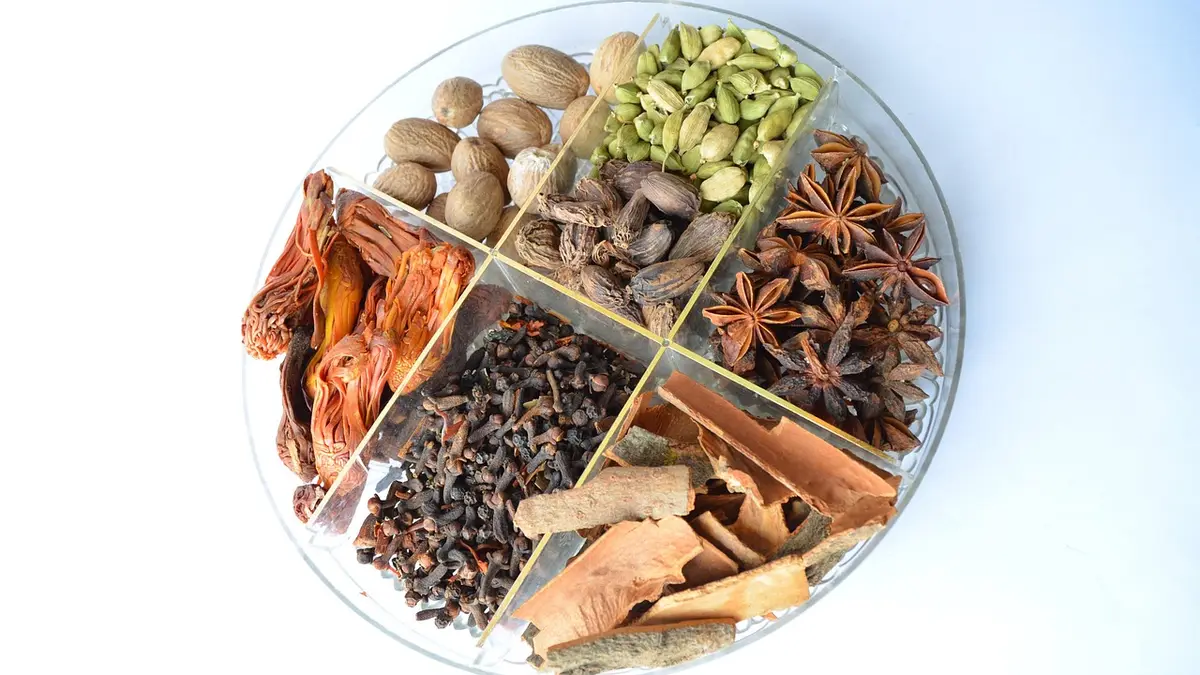
Nutmeg, mace and cardamom from China carry 0% UK duty across heading 0908, whole or ground, with no listed trade remedies. Organic spices need an inspection certificate for release as organic. Specify species, growing origin and lot testing before ordering. Cambridge China Bridge sources nutmeg, mace and cardamom.
Buying from China for a business? How our UK China sourcing agent service works · China sourcing agent for small orders and first imports
0% duty on whole and ground spices
Read from the UK Trade Tariff on 18 November 2026, heading 0908 covers nutmeg, mace and cardamoms, with separate lines for goods neither crushed nor ground and goods crushed or ground. All listed lines carry 0% duty for goods from China. The supplied tariff record lists no anti-dumping or countervailing duties and no suspensions.
The tariff attaches import control of organic products to every line. Organic spices need an inspection certificate for release as organic. For imports into Great Britain, the certificate is issued by the exporter’s control body in the country of export. Confirm the organic clearance requirements with your customs broker before shipping. Confirm the applicable VAT treatment with your customs broker; see UK import duty and VAT.
Confirm the commodity code from the exact spice and whether it is crushed or ground. Ask the Chinese processor to distinguish growing origin from the country of processing or dispatch, rather than describing every shipment as Chinese-grown.
| Goods | Commodity code | Duty | Anti-dumping or countervailing duty on China |
|---|---|---|---|
| Nutmeg, neither crushed nor ground | 0908 11 00 00 | 0% | None |
| Nutmeg, crushed or ground | 0908 12 00 00 | 0% | None |
| Mace, neither crushed nor ground | 0908 21 00 00 | 0% | None |
| Mace, crushed or ground | 0908 22 00 00 | 0% | None |
| Cardamoms, neither crushed nor ground | 0908 31 00 00 | 0% | None |
| Cardamoms, crushed or ground | 0908 32 00 00 | 0% | None |
Specify the spice, form and aroma
Specify botanical identity and growing origin. For nutmeg, agree whole kernels or powder, kernel size and acceptable broken pieces. For mace, agree blades or powder, colour and stem content. For cardamom, identify the species and agree pods, seeds or powder, pod colour and seed fill. Set moisture, foreign matter, particle size and aroma or volatile oil criteria against an approved sample.
Agree batch testing for microbiology, pesticide residues and relevant contaminants before shipment. Confirm food business registration, traceability and retail labelling requirements with the relevant food authority, including whether the name, net weight, best-before date, storage information and a UK business address must appear in English. Agree sealed liners, batch identification and the retail artwork before production.
Worked duty example
Illustrative example, not a quote: Illustrative order: 5 tonnes of whole nutmeg; FOB value and freight in whole pounds under 0908 11 00 00, invoiced at £30,000 free on board, with £2,000 of freight and insurance to the UK. The customs value is £32,000. Duty at 0% is £0. Import VAT at 20% is charged on the customs value plus duty, £32,000, so it is £6,400. With no duty, the only import tax is the VAT, which a VAT-registered importer can usually reclaim. The import duty and VAT guide explains each step. This assumes the goods are standard-rated for VAT. Most food for human consumption is zero-rated, and animal feed can be too, in which case no import VAT is due, so check the rate for your product in HMRC's VAT Notice 701/14.
Inspection checklist
Identity: compare nutmeg kernels, mace blades and cardamom pods or seeds with the approved sample; investigate substituted species and undeclared fillers.
Condition: check moisture, mould, insect damage, foreign matter and stale odours; assess cardamom seed fill and mace breakage against the specification.
Testing: match laboratory reports to the delivered batch and agreed test scope; retain a sealed sample and compare powder particle size and aroma.
Packing: check liners, seals, bag weights, batch marks and retail artwork on arrival. Use the quality inspection guide to organise acceptance checks.
Working out your own order? Send us the product on WhatsApp and we reply the same working day: WhatsApp us
What goes wrong
Orders can fail when the buyer asks only for “cardamom” and receives a different species or form. Mace may arrive as broken material rather than the agreed blades, nutmeg kernels may show insect damage, and powders can conceal fillers. Damp packing and weak seals can leave spices mouldy or stale.
A processor’s general laboratory certificate does not establish the condition of the shipped batch. Agree sampling and testing before dispatch, then reconcile the reports, batch marks and arrival checks. Keep growing origin separate from the processor’s address when reviewing the supplier.
Cambridge China Bridge sources these products for UK businesses, checking the factory and the documents before shipment. See factory verification. For repeat volumes, see container programmes.
Frequently asked questions
What is the UK import duty on nutmeg, mace and cardamom from China?
All listed heading 0908 lines carry 0% duty for goods from China, whether whole, crushed or ground. The supplied tariff record lists no anti-dumping or countervailing duties.
Is there import VAT on culinary nutmeg and cardamom?
Confirm the applicable VAT treatment with your customs broker, especially if the exact product is sold as a supplement or remedy.
Can I import organic spices from China?
Organic spices need an inspection certificate for release as organic. For Great Britain, the exporter’s control body issues it. Confirm clearance requirements with your customs broker before shipping.
What should I specify when buying cardamom?
Specify botanical identity, growing origin, pods or seeds or powder, pod colour, seed fill, moisture, aroma, foreign matter and batch testing. Approve a sample before ordering.