Sourcing non-elastane ponte from China
Non-elastane ponte double-knit fabric from China carries a flat 8% UK duty under the relevant lines of heading 6006, with no listed trade remedies. Fabric sold to consumers needs fibre-composition labelling. Confirm the blend and test recovery after stretching. Cambridge China Bridge sources non-elastane ponte double-knit fabric.
Buying from China for a business? How our UK China sourcing agent service works · China sourcing agent for small orders and first imports
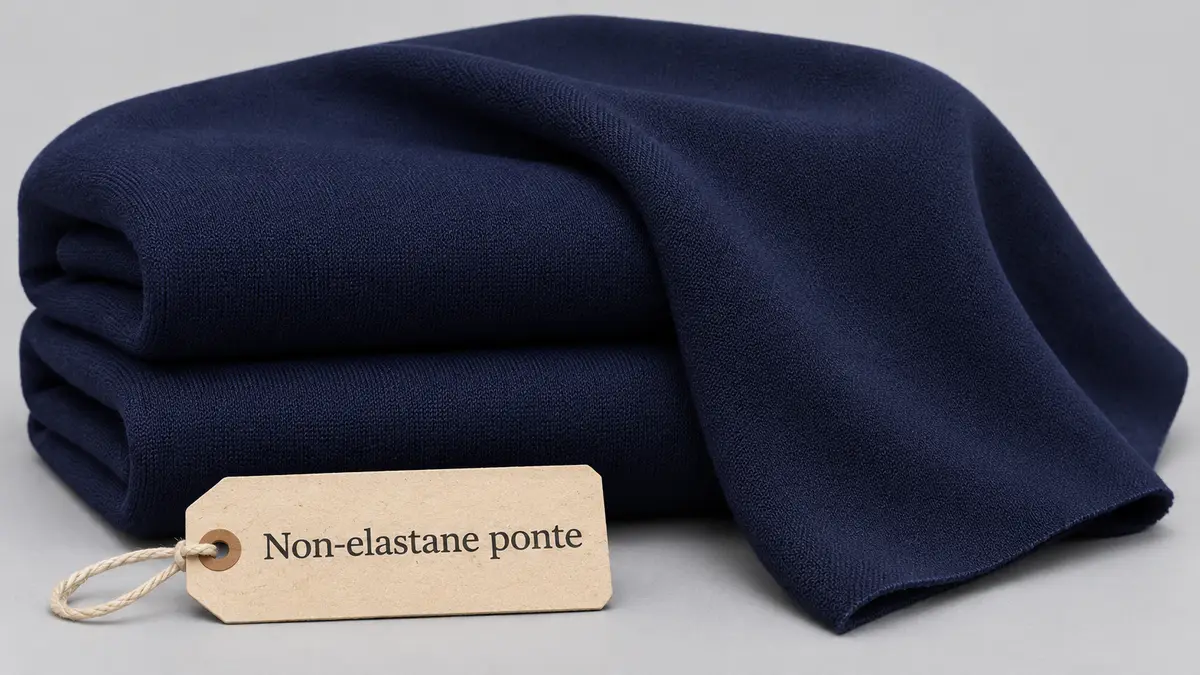
A flat 8% duty on the listed ponte lines
Heading 6006 covers other knitted or crocheted fabrics. For non-elastane ponte, confirm the double-knit construction, full fibre composition, absence of rubber thread and usable width before choosing a line. Blended fabric needs classification from its actual composition; the commercial name alone does not determine the code. See the wider scuba double-knit fabric guide.
Read from the UK Trade Tariff on 30 September 2026, all listed lines carried 8% duty for goods from China, with no listed anti-dumping or countervailing duty and no suspensions. The cotton, synthetic-fibre and artificial-fibre lines selected here have no attached import controls. Confirm the commodity code using the composition report and fabric sample.
The wider heading attaches CITES import and export controls to 6006 10 00 00 and 6006 90 00 00. For a ponte variant classified there, confirm the fibre species and applicable documents with your customs broker. Official guidance requires permits for species listed in Annex A, B or C; check the species-specific process before importing from China.
| Goods | Commodity code | Duty | Anti-dumping or countervailing duty on China |
|---|---|---|---|
| Dyed synthetic-fibre non-elastane ponte | 6006 32 00 00 | 8% | None |
| Dyed artificial-fibre non-elastane ponte | 6006 42 00 00 | 8% | None |
| Dyed cotton non-elastane ponte | 6006 22 00 00 | 8% | None |
| Synthetic-fibre non-elastane ponte of differently coloured yarns | 6006 33 00 00 | 8% | None |
| Printed synthetic-fibre non-elastane ponte | 6006 34 00 00 | 8% | None |
| Printed artificial-fibre non-elastane ponte | 6006 44 00 00 | 8% | None |
Specify ponte structure, recovery and wash stability
Specify non-elastane ponte double-knit construction and the complete fibre blend, rather than accepting a supplier's generic stretch-fabric description. Agree yarn specification, finished mass per square metre, usable width, handle, opacity, stretch and recovery in each direction. Approve a washed sample and a sewn trial for the intended trousers, skirts or jackets. Set acceptance criteria for pilling, shrinkage, seam appearance and permanent stretching.
When fabric is sold to consumers by the metre, its fibre composition must be given; ask Trading Standards to confirm the fibre names to use. Test the mill's declared blend before using it for garment labels. Ask HSE to confirm whether UK REACH restrictions on azo dyes that release listed aromatic amines apply to the intended skin-contact use. Request relevant testing for each dyed or printed quality through testing and certification.
Worked duty example
Illustrative example, not a quote: Illustrative order: 20 rolls of dyed polyester non-elastane ponte under 6006 32 00 00, invoiced at £5,840 free on board, with £1,800 of freight and insurance to the UK. The customs value is £7,640. Duty at 8% is £611.20. Import VAT at 20% is charged on the customs value plus duty, £8,251.20, so it is £1,650.24. Import taxes total £2,261.44; a VAT-registered importer can usually reclaim the VAT, so the lasting cost is the £611.20 of duty. The import duty and VAT guide explains each step.
Inspection checklist
Composition and identity: compare the bulk fabric with the approved construction and fibre report, including the declared absence of elastane. Match roll labels to the order and dye lot.
Weight and width: measure finished mass per square metre and usable width across sampled rolls. Check roll length and exclude damaged edges from usable measurements.
Recovery and washing: stretch samples in each direction and check residual growth after relaxation. Wash to the agreed care process, then assess shrinkage, distortion, pilling and the sewn trial's shape.
Shade and surface: compare rolls and edge-to-centre shade against the approved colour sample. Inspect for barré, needle lines, holes, rubbing colour transfer and print damage. Define sampling and defect acceptance in the inspection brief.
Working out your own order? Send us the product on WhatsApp and we reply the same working day: WhatsApp us
What goes wrong
A fabric can stretch comfortably yet retain growth at knees or seats. Soft handle can also mask weak recovery or pilling. A substituted fibre blend may change drape, wash behaviour and the composition used on garment labels. Compare bulk samples with the approved washed fabric and sewn trial before cutting.
Narrow usable width disrupts cutting plans, while shade differences leave adjacent panels mismatched. Damp rolls can arrive stained or smelling musty. Keep dye lots identifiable, inspect packaging and roll condition on arrival, and record affected rolls before mixing stock.
Cambridge China Bridge sources these products for UK businesses, checking the factory and the documents before shipment. See factory verification. For own-brand ranges, see sourcing for brands.
Frequently asked questions
What is the UK import duty on non-elastane ponte from China?
The listed heading 6006 lines carry 8% duty for goods from China, with no listed anti-dumping or countervailing duty or suspensions, according to the supplied tariff reading.
Can ponte stretch without elastane?
Yes, knitted construction can provide stretch. Specify the required stretch and recovery separately, and test permanent growth after relaxation and washing.
Does ponte sold by the metre need a fibre label?
Yes, when sold to consumers, the fibre composition must be stated. Ask Trading Standards to confirm the fibre names to use. Check the actual blend rather than relying on the name ponte.
How do I check whether ponte will bag at the knees?
Test stretch and recovery on bulk samples, then wear and wash a sewn trial. Assess residual growth against agreed acceptance criteria before releasing fabric for cutting.