Sourcing nappies and sanitary pads from China
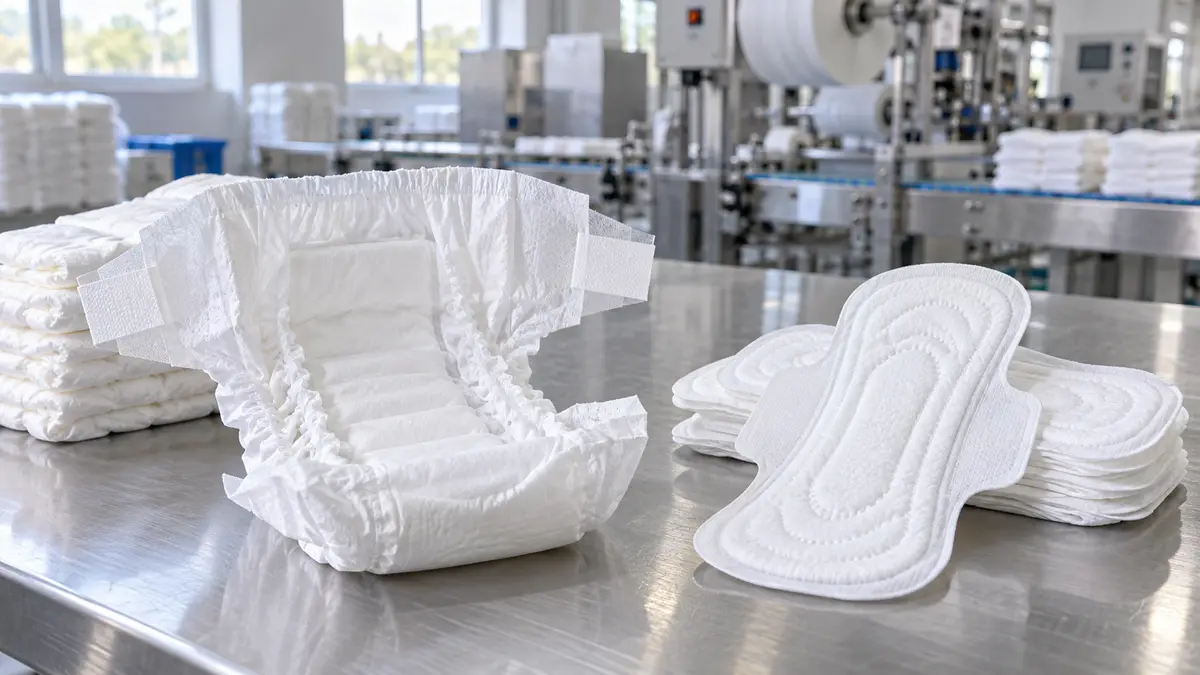
Babies' nappies, sanitary towels, tampons, panty liners and incontinence products from China pay 0% UK duty, with no anti-dumping duty. VAT differs: women's sanitary products designed for menstrual flow are zero-rated, while babies' nappies carry the standard rate and incontinence products are zero-rated only under the disability relief. Cambridge China Bridge sources them.
Buying from China for a business? How our UK China sourcing agent service works · China sourcing agent for small orders and first imports
Zero duty
Read from the UK Trade Tariff on 25 September 2026, sanitary towels, tampons, napkins and napkin liners for babies, incontinence articles and similar products of wadding, textiles or other materials carried 0% duty on goods from China under heading 9619, with no anti-dumping measure.
Wet wipes and cotton pads are classified elsewhere; confirm the commodity code. For cosmetic applicators, see our perfume atomisers and powder puffs guide.
| Goods | Commodity code | Duty | Anti-dumping duty on China |
|---|---|---|---|
| Of textile wadding | 9619 00 30 00 | 0% | None |
| Of man-made fibres, other | 9619 00 40 90 | 0% | None |
| Sanitary towels (pads) | 9619 00 71 00 | 0% | None |
| Tampons | 9619 00 75 00 | 0% | None |
| Napkins and napkin liners for babies | 9619 00 81 00 | 0% | None |
| Other, such as incontinence products | 9619 00 89 00 | 0% | None |
VAT shapes the price
HMRC's Notice 701/18 zero-rates sanitary protection products designed and marketed solely for menstrual flow or lochia, such as pads, tampons and non-incontinence panty liners, from 1 January 2021, and reusable period underwear was added from 1 January 2024. Babies' nappies are standard-rated, and eligible incontinence products can be zero-rated when supplied to a disabled person or a charitable institution under the relief conditions. Import VAT follows the same rate; see import duty and VAT.
Safety and claims
Absorbent hygiene products must be safe under general product safety law. Ask for absorbency, leakage and skin irritation test data, and be careful with claims such as "biodegradable" or "eco", which must be accurate and evidenced. Plastic packaging counts towards Plastic Packaging Tax thresholds. For disposable breast pads, see our breast pad sourcing guide.
Worked duty example
An invented example rather than a quote: one container of disposable baby nappies, commodity code 9619 00 81 00, bought for £26,000 free on board, with £3,000 of freight and insurance, so £29,000 is the value customs works from. No duty is due on baby nappies; import VAT at 20% of £29,000 is £5,800. If you are VAT-registered, that VAT is normally reclaimable. Sanitary towels and tampons are zero-rated, so a shipment of those would carry no import VAT. See calculating UK import duty and VAT for the method.
Inspection checklist
Absorbent materials: superabsorbent polymer checked for free swell and centrifuge retention capacity by the methods of the ISO 17190 series, fluff pulp and nonwoven basis weights measured against the bill of materials, and the core weight of sampled products weighed against the specification.
Finished product: absorption capacity of incontinence products measured by the whole-product method of ISO 11948-1, acquisition time and rewet on nappies and pads measured by the NWSP methods published by EDANA and INDA, fastening tape and pad adhesive peel strength tested, and leakage checked on a mannequin at the rated volume.
Hygiene and packs: finished products tested for total aerobic count, yeasts and moulds by an accredited laboratory, metal detection and foreign matter controls confirmed on the line, pack counts and weights checked, and size, age or weight range, and the importer's name and address printed on each pack.
Working out your own order? Send us the product on WhatsApp and we reply the same working day: WhatsApp us
What goes wrong
Nappies and pads fail on absorbency, leaks and adhesives. Cores with too little superabsorbent polymer or badly distributed pulp leak or clump, leg cuffs with weak elastic leak at the sides, and fastening tapes or pad adhesives stick poorly or tear the backsheet. Hygiene lapses in the factory show up as foreign matter in packs, and pack counts and sizes do not always match the label.
Test absorbency, rewet and leakage on samples against the specification, check core weight, cuff elastic and tape peel strength, audit the factory's hygiene and foreign matter controls, check pack counts and size markings at inspection, and keep retained samples from each lot.
Specification and inspection
Specify size range, core material, absorbency, backsheet and adhesive, and approve on samples. At inspection, check counts per pack, sealing and hygiene of the packing area.
Cambridge China Bridge sources nappies, sanitary pads, tampons and incontinence products, with VAT treatment and claims settled before the order. See how our sourcing service works. For tampons, see our tampon sourcing guide. For underpads, see our disposable incontinence underpad sourcing guide.
Frequently asked questions
What is the UK import duty on nappies from China?
Read from the UK Trade Tariff on 25 September 2026, babies' nappies, sanitary pads, tampons and incontinence products of heading 9619 carried 0% duty from China.
Is there VAT on sanitary pads?
No. Women's sanitary protection products designed for menstrual flow have been zero-rated since 1 January 2021.
Are babies' nappies zero-rated?
No. Babies' nappies carry the standard rate of VAT.
What VAT applies to incontinence products?
Eligible incontinence products can be zero-rated when supplied to a disabled person or a charitable institution under the relief conditions; otherwise standard-rated.