Sourcing mounted ND filters from China
Mounted neutral density optical filters from China carry 0% UK duty, so the duty range is uniformly zero. Filters intended or likely to be used by consumers must be safe in normal or reasonably foreseeable use in Great Britain. Cambridge China Bridge sources mounted neutral density optical filters.
Buying from China for a business? How our UK China sourcing agent service works · China sourcing agent for small orders and first imports
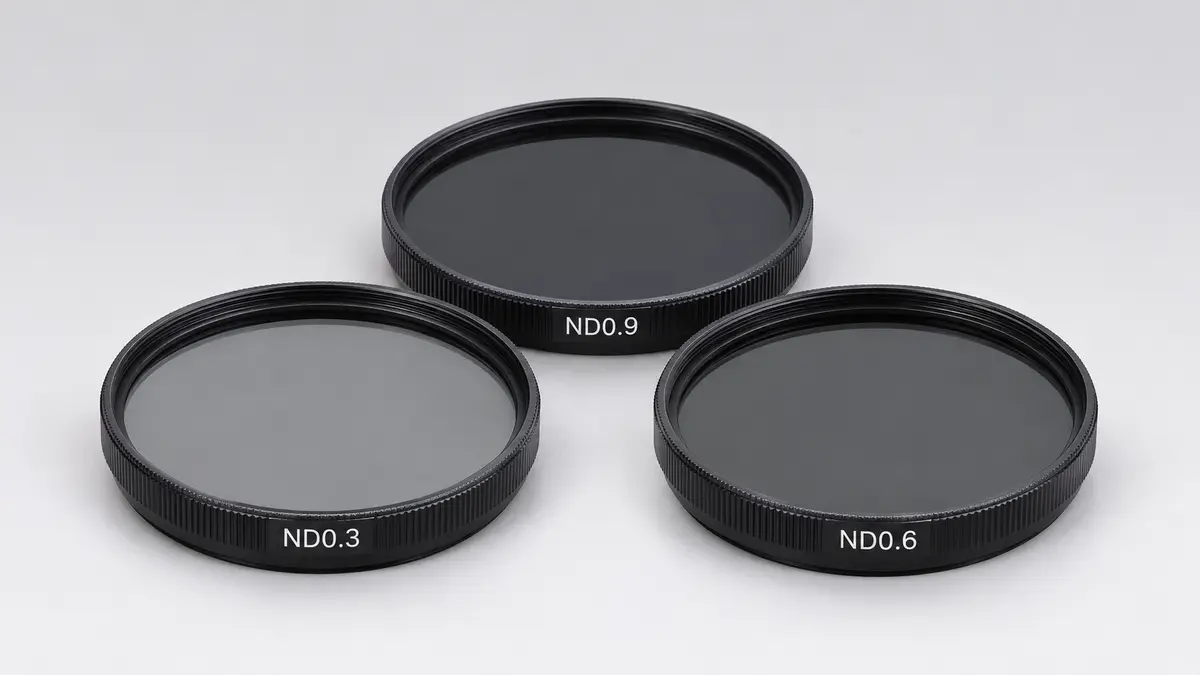
Zero duty on mounted optical filters
Read from the UK Trade Tariff on 30 September 2026, mounted filters under 9002 20 00 00 carried 0% duty on goods from China. The supplied tariff record lists no anti-dumping or countervailing duty, suspension or import control for this line.
Heading 9002 covers mounted optical elements used as parts or fittings for instruments or apparatus. The table shows filter variants sharing the same commodity line, rather than separate tariff classifications. Unmounted optical elements belong to heading 9001.
Confirm the commodity code using the finished filter's construction and mounting details. See the mounted bandpass filter guide for related filters within the wider heading, and UK import duty and VAT for the calculation method.
| Goods | Commodity code | Duty | Anti-dumping or countervailing duty on China |
|---|---|---|---|
| Mounted fixed neutral density filters | 9002 20 00 00 | 0% | None |
Specify attenuation, colour neutrality and mount fit
Specify fixed or variable attenuation, optical density, transmission tolerance and the wavelength range over which neutrality matters. Agree the substrate, clear aperture, surface quality, coating and permitted colour shift. Ask for a measured transmission curve for the finished mounted filter, with the test method and sample identification.
For threaded camera filters, agree thread diameter and pitch, ring thickness and cap fit. For instrument cells, provide a mounting drawing and retention requirements. Variable filters need an agreed usable adjustment range and checks for uneven darkening. Approve samples on the intended camera or optical bench before ordering.
In Great Britain, general product safety rules cover filters intended or likely to be used by consumers, and require safety in normal or reasonably foreseeable use. Define the intended application clearly and assess sharp edges, loose glass and breakage risks alongside optical performance.
Worked duty example
Illustrative example, not a quote: 10,000 mounted neutral density filters, illustrative only under 9002 20 00 00, invoiced at £45,000 free on board, with £1,500 of freight and insurance to the UK. The customs value is £46,500. Duty at 0% is £0. Import VAT at 20% is charged on the customs value plus duty, £46,500, so it is £9,300. With no duty, the only import tax is the VAT, which a VAT-registered importer can usually reclaim. The import duty and VAT guide explains each step.
Inspection checklist
Transmission: compare measured attenuation and spectral transmission with the agreed specification, checking consistency across the aperture and between production samples.
Image quality: test colour cast, sharpness, reflections and uneven darkening on the intended equipment. Check variable filters throughout the agreed adjustment range.
Mount: check dimensions, thread engagement, ring movement and glass retention. Reject burrs, binding threads, loose elements and mounts that obstruct the intended optical path.
Condition and packing: inspect for scratches, coating marks, chips, dust and moisture. Check individual protection, product identification and correspondence between the goods and inspection records.
Working out your own order? Send us the product on WhatsApp and we reply the same working day: WhatsApp us
What goes wrong
A filter can meet its nominal attenuation while introducing a colour cast or uneven transmission. Variable filters can show cross-shaped darkening near the end of their adjustment range. Thick rings can obstruct wide-angle images, and rough threads can bind on the buyer's equipment.
An approved sample does not establish the consistency of the shipment. Compare production samples with the agreed transmission curve and mounting drawing, then repeat fit and condition checks on arrival. Use quality inspection guidance to agree what the inspector measures and records.
Cambridge China Bridge sources these products for UK businesses, checking the factory and the documents before shipment. See factory verification. For components and parts, see sourcing for manufacturers.
Frequently asked questions
What is the UK import duty on mounted neutral density filters from China?
The supplied tariff record shows 0% under 9002 20 00 00, with no anti-dumping or countervailing duty, suspension or attached import control.
Do fixed and variable neutral density filters have different tariff codes?
Both mounted filter variants fall within the filter line 9002 20 00 00. Confirm classification from the finished product's construction; an unmounted optical element is different.
What should I ask the Chinese factory to test?
Ask for spectral transmission, attenuation uniformity, colour shift, surface condition and mount fit. For variable filters, also check uneven darkening across the agreed adjustment range.
Can I accept a filter from its density marking alone?
No. Treat the marking as identification, then compare measured transmission and colour neutrality with your specification and test the mounted filter on the intended equipment.