Sourcing men's knitted riding breeches from China
Men's knitted riding breeches from China carry a flat 12% UK duty across the relevant fibre lines, with no recorded anti-dumping or countervailing duty. Fibre composition must be labelled for sale in Great Britain. Specify seated fit, stretch recovery and grip-panel durability. Cambridge China Bridge sources men's knitted riding breeches.
Buying from China for a business? How our UK China sourcing agent service works · China sourcing agent for small orders and first imports
UK duty on knitted riding breeches
Read from the UK Trade Tariff on 1 October 2026, heading 6103 covers men's or boys' knitted or crocheted suits, ensembles, jackets, blazers, trousers, bib and brace overalls, breeches and shorts other than swimwear. The riding-breeches lines shown here carry 12% duty for goods from China. The supplied records show no anti-dumping or countervailing duty and no suspensions.
The tariff attaches cat and dog fur and seal product import controls, plus CITES controls on the wool or fine animal hair and other textile material lines shown. Cat and dog fur products cannot be imported. For seal products intended for sale in Great Britain, confirm with the relevant authority whether the Inuit and other indigenous communities exemption applies and what attesting documentation is required. For animal-derived panels or trims sourced from China, ask your customs broker to confirm species, applicable permits and seal documentation before ordering.
Confirm the commodity code using the knitted construction, fibre composition and garment description. Woven trousers fall under heading 6203. Do not select a code solely from a supplier's description of stretch fabric. For the wider heading, see the men's knitted fencing breeches guide.
| Goods | Commodity code | Duty | Anti-dumping or countervailing duty on China |
|---|---|---|---|
| Men's knitted riding breeches of wool or fine animal hair | 6103 41 00 00 | 12% | None |
| Men's knitted riding breeches of cotton | 6103 42 00 00 | 12% | None |
| Men's knitted riding breeches of synthetic fibres | 6103 43 00 00 | 12% | None |
| Men's knitted riding breeches of other textile materials | 6103 49 00 10 | 12% | None |
Specify riding fit and grip-panel construction
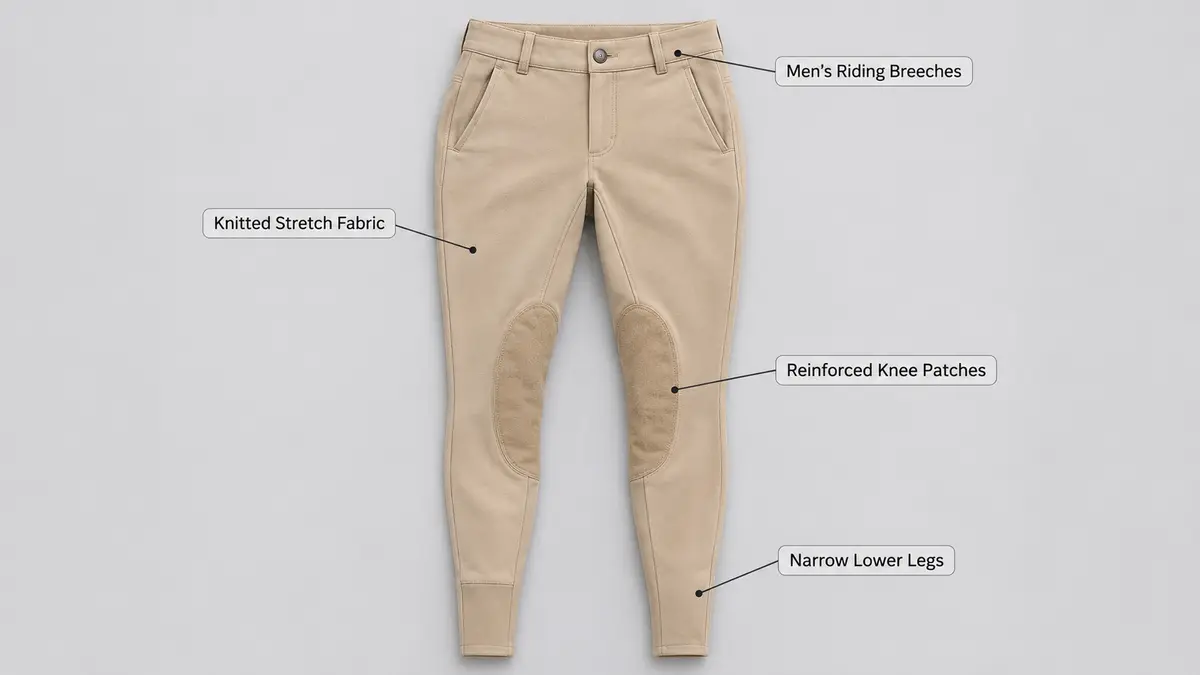
State the fibre composition, knit structure, fabric weight, stretch directions and recovery requirements. Specify waist, rise, thigh, knee, inside leg and ankle measurements with agreed tolerances. Approve fit in a seated riding position as well as standing, checking crotch pressure, waistband movement and calf bulk inside riding boots.
Choose knee patches or a full-seat grip panel, then define its material, coverage, position and attachment. Approve silicone print or sewn-panel samples after stretching and washing. Specify seam placement away from pressure areas, pocket depth, zip operation, belt loops and ankle finish. Keep a sealed approved garment for comparison with production.
For sale in Great Britain, the label must show fibre content, including fur and other animal parts. Agree care instructions separately as a purchasing specification. Demonstrate compliance with applicable product safety regulations before sale, and describe the intended use clearly rather than making unsupported protective claims.
Worked duty example
Illustrative example, not a quote: Illustrative order: 500 pairs of men's cotton knitted riding breeches; FOB value and freight are illustrative. under 6103 42 00 00, invoiced at £7,000 free on board, with £700 of freight and insurance to the UK. The customs value is £7,700. Duty at 12% is £924. Import VAT at 20% is charged on the customs value plus duty, £8,624, so it is £1,724.80. Import taxes total £2,648.80; a VAT-registered importer can usually reclaim the VAT, so the lasting cost is the £924 of duty. The import duty and VAT guide explains each step.
Inspection checklist
Fit and recovery: measure production garments against the size chart; check seated movement, waistband recovery, knee bagging and ankle comfort inside boots.
Grip panels: compare placement and coverage with the approved sample; stretch and wash samples, checking print cracking, peeling, panel lifting and puckered edges.
Fabric and care: check pilling, rubbing colour transfer, shade differences and dimensional change after the agreed care process, including the inside leg and rise.
Assembly and labels: inspect crotch seams, loose threads, zips, fasteners and belt-loop attachment; compare fibre labels with composition evidence. Repeat agreed checks on arrival using the inspection guide.
Working out your own order? Send us the product on WhatsApp and we reply the same working day: WhatsApp us
What goes wrong
A standing fit sample can hide a short back rise or restrictive crotch when the wearer sits in a saddle. Poor recovery leaves baggy knees and a loose seat. Thick ankle seams can press inside boots, while misplaced knee patches miss the intended contact area.
Grip prints can crack or peel after stretching and washing; sewn seat panels can distort the surrounding knit. Bulk fabric substitutions can change fit, shrinkage and colour transfer. Record the approved materials and care process in the order, compare production with sealed samples, and investigate differences before accepting the batch.
Cambridge China Bridge sources these products for UK businesses, checking the factory and the documents before shipment. See factory verification. For own-brand ranges, see sourcing for brands.
Frequently asked questions
What is the UK import duty on men's knitted riding breeches from China?
The relevant supplied lines carry a flat 12% duty for goods from China, with no recorded anti-dumping or countervailing duty and no suspensions.
Do men's knitted riding breeches need fibre labels?
Check the approved wording against the production materials.
How should I check the fit of riding breeches?
Approve samples standing and in a seated riding position. Check the rise, crotch, waistband, knee placement and ankle bulk inside boots, then repeat measurements after washing.
What should I test on silicone grip breeches?
Stretch and wash production samples using the agreed care method. Check cracking, peeling, grip placement, colour transfer and distortion of the surrounding knitted fabric.