Sourcing men's knitted pea coats from China
Men's knitted pea coats from China under heading 6101 carry 12% UK duty across the relevant fibre lines, with no anti-dumping or countervailing duty recorded. Fibre content must be labelled for sale in Great Britain; specify the knit, lapels and button attachments, then check fit and shrinkage. Cambridge China Bridge sources men's knitted pea coats.
Buying from China for a business? How our UK China sourcing agent service works · China sourcing agent for small orders and first imports
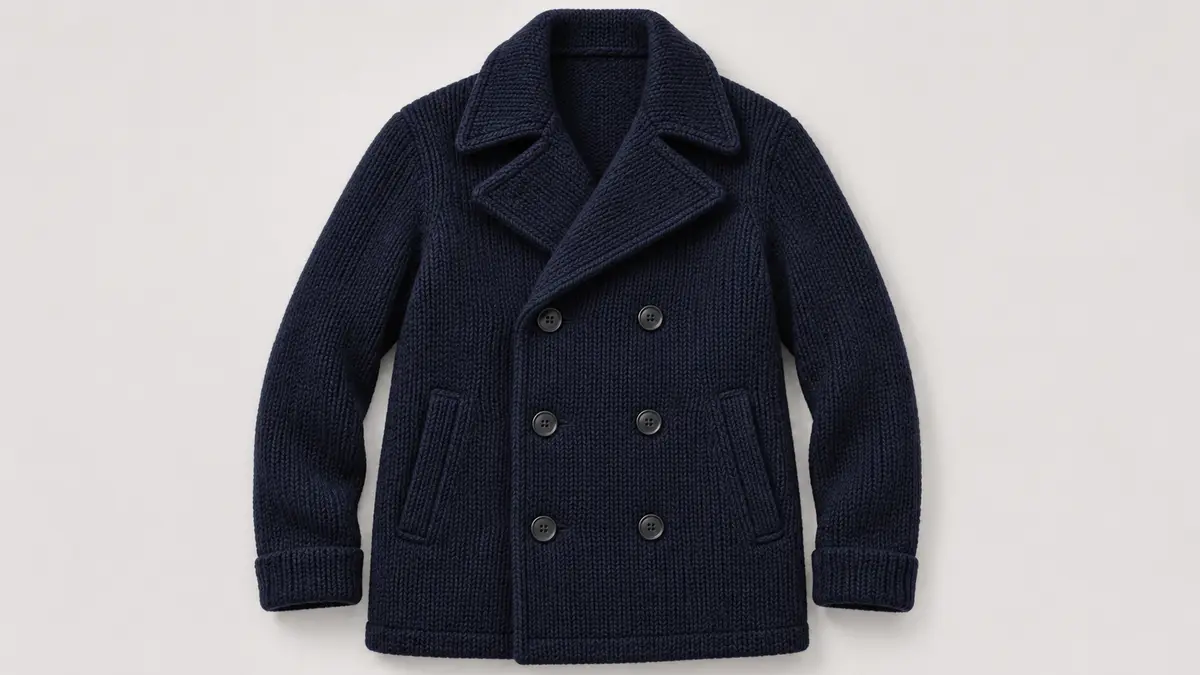
UK duty on men's knitted pea coats
Read from the UK Trade Tariff on 2 October 2026, heading 6101 covers men's or boys' knitted or crocheted outerwear, including overcoats, car coats and similar articles. This guide focuses on men's knitted pea coats. The relevant cotton, man-made fibre, wool or fine animal hair and other textile material lines all carry 12% duty from China. The supplied records show no anti-dumping or countervailing duty and no suspensions.
The tariff attaches cat and dog fur and seal product import controls, with CITES controls on the other textile material lines. Cat and dog fur products cannot be imported or exported. Seal products brought into Great Britain to trade must have a seal catch certificate; confirm eligibility under the Inuit and other indigenous communities exemption with your customs broker before ordering. For CITES-listed animal materials, confirm the species and applicable import and export documentation with your customs broker before ordering from China.
Confirm the commodity code using the actual fibre composition, knitted construction and garment design. Provide a sample or clear construction photographs rather than relying on the name 'pea coat'. For the wider heading, see men's knitted car coats.
| Goods | Commodity code | Duty | Anti-dumping or countervailing duty on China |
|---|---|---|---|
| Men's cotton knitted pea coats | 6101 20 10 00 | 12% | None |
| Men's man-made fibre knitted pea coats | 6101 30 10 00 | 12% | None |
| Men's wool or fine animal hair knitted pea coats | 6101 90 20 19 | 12% | None |
| Men's knitted pea coats of other textile materials | 6101 90 20 90 | 12% | None |
Specify the knit, lapels and double-breasted front
Specify fibre composition, yarn count, knitting gauge, stitch structure and finished garment weight. Approve the surface finish and handle on a physical sample. Define body length, chest, shoulders, sleeves, lapel width, front overlap and button positions in a graded measurement chart. State whether the coat is lined and how the front and lapels are supported.
For sale in Great Britain, the label must show fibre content, including fur and other animal parts. Consumer products must be safe in normal or reasonably foreseeable use. Check buttons and trim for sharp edges and agree attachment checks. Treat cleaning instructions, pilling, shrinkage and colour transfer as purchasing specifications, with acceptance criteria agreed before production.
Worked duty example
Illustrative example, not a quote: Illustrative order: 500 men's man-made fibre knitted pea coats; FOB value and freight are illustrative, not a quotation. under 6101 30 10 00, invoiced at £18,000 free on board, with £1,500 of freight and insurance to the UK. The customs value is £19,500. Duty at 12% is £2,340. Import VAT at 20% is charged on the customs value plus duty, £21,840, so it is £4,368. Import taxes total £6,708; a VAT-registered importer can usually reclaim the VAT, so the lasting cost is the £2,340 of duty. The import duty and VAT guide explains each step.
Inspection checklist
Knit and shade: compare production garments with the sealed sample; inspect dropped stitches, snagging, pilling, uneven density and shade differences across cartons.
Fit and front: measure chest, shoulders, sleeves and body length; fasten the coat and check front overlap, lapel symmetry, collar roll and hem level.
Buttons and lining: check button attachment, buttonhole recovery, pocket seams and lining ease; move the arms to identify pulling or a lining that lifts the hem.
Cleaning and arrival: clean samples by the agreed method and recheck dimensions, twisting and lapel shape; inspect damp cartons and compare fibre labels with approved wording. Plan checks using the inspection guide.
Working out your own order? Send us the product on WhatsApp and we reply the same working day: WhatsApp us
What goes wrong
A knitted front can stretch around heavy buttons, leaving the overlap uneven. Unsupported lapels may curl, while an overly tight lining can pull up the hem. Yarn substitutions can change handle, pilling and shrinkage even when the colour looks similar. Pressing can temporarily conceal distortion that returns after cleaning.
Keep sealed yarn and garment samples, approve the button reinforcement and lining construction, and compare cleaned production samples with the measurement chart. Record substitutions for approval before shipment and repeat the agreed checks on arrival.
Cambridge China Bridge sources these products for UK businesses, checking the factory and the documents before shipment. See factory verification. For own-brand ranges, see sourcing for brands.
Frequently asked questions
What is the UK import duty on men's knitted pea coats from China?
The relevant lines under heading 6101 all carry 12% duty from China.
Do men's knitted pea coats need fibre labels?
Agree the wording before production and check it against the actual materials.
How do I stop knitted pea coat fronts stretching?
Specify a stable knit, front support and reinforcement at button attachments. Check the coat fastened, then repeat fit and overlap checks after cleaning by the agreed method.
What should I check on lined knitted pea coats?
Check lining ease at the shoulders, sleeves and hem. Move the arms and fasten the coat to identify pulling, then clean a sample to check whether shell and lining change differently.