Sourcing men's knitted culottes from China
Men's knitted culottes from China carry a flat 12% UK import duty across the listed fibre lines, with no recorded trade remedy or suspension. Fibre composition must be labelled; confirm acceptable fibre names with the relevant authority. Agree leg width, drape and washed measurements before production. Cambridge China Bridge sources men's knitted culottes.
Buying from China for a business? How our UK China sourcing agent service works · China sourcing agent for small orders and first imports
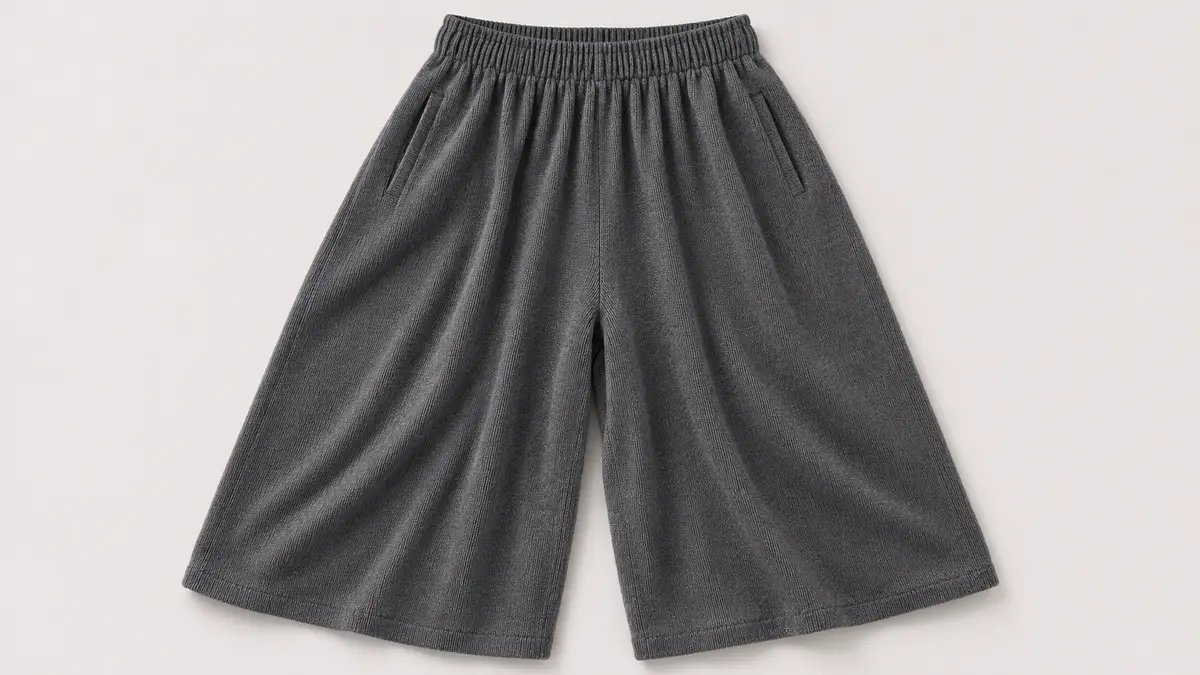
Duty on men's knitted culottes
Read from the UK Trade Tariff on 1 October 2026, the listed trouser lines under heading 6103 carry 12% duty for goods from China. No anti-dumping or countervailing duty, or suspension, is recorded. The heading covers men's or boys' knitted or crocheted suits, ensembles, jackets, blazers, trousers, bib and brace overalls, breeches and shorts other than swimwear.
The tariff attaches cat and dog fur and seal-product import controls, plus CITES import controls on the listed wool and other-material trouser lines. Imports containing cat or dog fur are banned. Seal products can be imported and sold only in limited cases under strict conditions. For animal-derived materials in a shipment from China, identify the species and confirm the applicable restrictions and documents, including any CITES requirements, with your customs broker before ordering.
Confirm the commodity code from the actual fabric construction, fibre composition and garment design. Send your broker a sample or clear photographs rather than relying on the name culottes. The rows here are relevant trouser lines for checking classification. See the men's knitted shorts guide for wider heading coverage.
| Goods | Commodity code | Duty | Anti-dumping or countervailing duty on China |
|---|---|---|---|
| Men's knitted cotton culottes | 6103 42 00 00 | 12% | None |
| Men's knitted culottes of synthetic fibres | 6103 43 00 00 | 12% | None |
| Men's knitted culottes of other textile materials, trouser construction | 6103 49 00 10 | 12% | None |
| Men's knitted culottes of wool or fine animal hair | 6103 41 00 00 | 12% | None |
Specify the wide leg, drape and waistband
Define the fibre blend, knit construction, fabric weight, opacity, stretch recovery and shrinkage limits. Approve the drape on a worn sample: fabric that hangs well on a hanger may cling around the seat or collapse between the legs. Set waist, hip, rise, inside leg, hem opening and pleat measurements, with agreed tolerances across the size range.
Specify pleat direction, pocket depth, waistband construction, elastic recovery and fastening security. Check that pockets do not distort the silhouette and that the crotch allows sitting and walking. Compare bulk fabric results with the label artwork, and approve care instructions against a finished garment put through the proposed care process.
Worked duty example
Illustrative example, not a quote: Illustrative order: 3,000 pairs of men's knitted cotton culottes under 6103 42 00 00, invoiced at £21,000 free on board, with £1,800 of freight and insurance to the UK. The customs value is £22,800. Duty at 12% is £2,736. Import VAT at 20% is charged on the customs value plus duty, £25,536, so it is £5,107.20. Import taxes total £7,843.20; a VAT-registered importer can usually reclaim the VAT, so the lasting cost is the £2,736 of duty. The import duty and VAT guide explains each step.
Inspection checklist
Fit and silhouette: measure waist, hip, rise, inside leg and hem openings against the size chart; check leg balance and pleat alignment while standing, sitting and walking.
Fabric and care: compare bulk fabric with the retained sample for drape, opacity and shading; check shrinkage, seam twisting, pilling and colour transfer after the agreed care process.
Construction: stretch crotch and seat seams, inspect pocket reinforcement and hems, and check that the waistband recovers without rolling or twisting.
Labels and packing: compare fibre declarations with fabric results, check size and care artwork, and reconcile colours and quantities with the packing list. Record arrival defects using the inspection guide.
Working out your own order? Send us the product on WhatsApp and we reply the same working day: WhatsApp us
What goes wrong
A lighter bulk knit can turn an approved flowing shape into a clingy or see-through garment. Uneven shrinkage changes the cropped length and twists the legs. Heavy pockets pull the side seams forward, while poorly secured pleats open across the waist and seat.
Approve a washed production sample and retain it for arrival comparison. Check the silhouette across the size range rather than judging only a flat sample. Record agreed measurements, fabric performance and pocket construction in the order so that changes can be identified before shipment.
Cambridge China Bridge sources these products for UK businesses, checking the factory and the documents before shipment. See factory verification. For own-brand ranges, see sourcing for brands.
Frequently asked questions
What is the UK import duty on men's knitted culottes from China?
The listed heading 6103 trouser lines carry 12% duty for goods from China. The supplied tariff facts record no anti-dumping or countervailing duty and no suspension.
Which commodity code should I use for men's knitted culottes?
Confirm the code from the knit construction, fibre composition and garment design. Give your customs broker a sample or photographs; the product name alone does not settle classification.
What must the fibre label show?
Show fibre composition and confirm acceptable fibre names with the relevant authority. Compare the declaration with bulk fabric results rather than copying the development sample's label.
How do I check that knitted culottes keep their shape?
Put a finished production sample through the proposed care process. Recheck waist, rise, leg length and hem width, then inspect drape, pleats, seam twisting and waistband recovery.