Sourcing medical examination lights from China
Medical examination lights from China carry 2% to 4% UK duty on the selected lighting lines, depending on construction and material. If supplied as medical devices, they must be registered with the MHRA before placement on the Great Britain market. Cambridge China Bridge sources medical examination lights.
Buying from China for a business? How our UK China sourcing agent service works · China sourcing agent for small orders and first imports
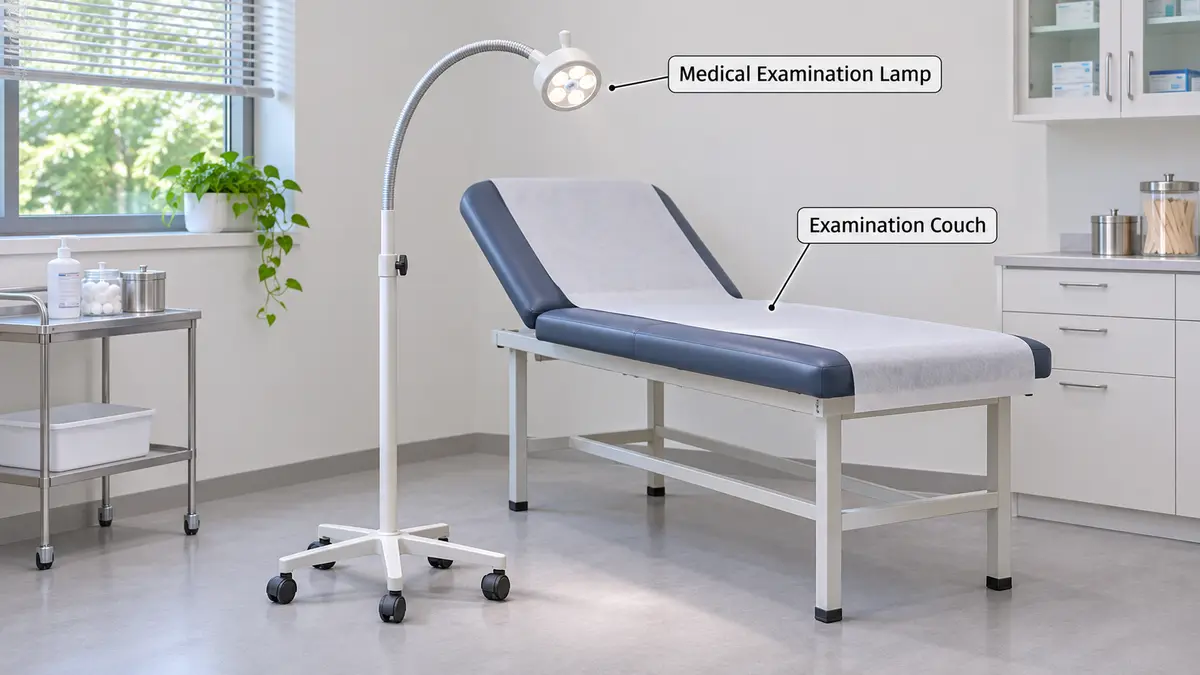
Medical examination light duty: 2% to 4%
Read from the UK Trade Tariff on 28 October 2026, the selected lines within heading 9405 carry 2% to 4% duty for goods from China. The heading covers luminaires, lighting fittings, illuminated signs and related parts. This guide covers complete medical examination lights proposed for classification as lighting fittings. The selected lines show no anti-dumping or countervailing duties and no suspensions.
Every selected line carries a DCMS Export Licence entry. Official guidance states that importing objects of cultural interest into Great Britain has no licensing requirement. Ask your customs broker how to handle the attached entry for the actual goods from China.
Treat the table as candidate classifications. Send the intended use, mounting arrangement, material, photographs and light-source design when confirming the commodity code. Distinguish floor-standing, wall-mounted and other fittings, and designs solely for LED sources. For related products within the wider heading, see medical examination penlights.
| Goods | Commodity code | Duty | Anti-dumping or countervailing duty on China |
|---|---|---|---|
| Floor-standing lights solely for LED sources, of plastics or ceramics | 9405 21 40 00 | 4% | None |
| Floor-standing lights solely for LED sources, of other materials, not hand-made | 9405 21 90 90 | 2% | None |
| Wall or ceiling lights solely for LED sources, of other materials, not hand-made | 9405 11 90 90 | 2% | None |
| Other plastic lights solely for LED sources, excluding searchlights and spotlights | 9405 42 31 00 | 4% | None |
| Other lights solely for LED sources, not plastic or hand-made, excluding spotlights | 9405 42 39 90 | 2% | None |
| Other floor-standing lights of other materials, not solely for LED sources | 9405 29 90 90 | 2% | None |
Specify the examination field and adjustable arm
Describe the examination task and working distance. Agree illuminance across the examination field, colour rendering, colour temperature, shadow behaviour and dimming performance against an approved sample. Request measurements at the agreed distance and settings. Specify whether the light source is replaceable, how the head is cleaned and which cleaning agents the supplier has tested.
Specify arm reach, head movement, handle design and cable routing through moving joints. For mobile lights, agree base footprint, castor brakes and stability with the arm extended. For wall or ceiling versions, agree the mounting plate, fixing arrangement and installation information. Check access to the driver and replacement parts.
Establish medical-device status before ordering. For devices placed on the Great Britain market, registration with the MHRA is required beforehand; manufacturers outside the UK must appoint a UK responsible person. Manufacturers must hold clinical data supporting medical-device claims. Ask for the model-specific declaration, assessment documents and proposed marking for review through testing and certification. Match the documents to the intended use and supplied construction.
Worked duty example
Illustrative example, not a quote: Illustrative order: 50 metal floor-standing medical examination lights solely for LED sources, not hand-made under 9405 21 90 90, invoiced at £22,000 free on board, with £3,500 of freight and insurance to the UK. The customs value is £25,500. Duty at 2% is £510. Import VAT at 20% is charged on the customs value plus duty, £26,010, so it is £5,202. Import taxes total £5,712; a VAT-registered importer can usually reclaim the VAT, so the lasting cost is the £510 of duty. The import duty and VAT guide explains each step.
Inspection checklist
Light field: compare output, uniformity, colour and dimming with the approved sample at the agreed working distance; check for distracting shadows and visible flicker.
Positioning: extend and reposition the arm, release the handle and check for head drift, joint play, base tipping and castor-brake movement.
Assembly and cleaning: inspect cable protection at joints, strain relief, head seals and accessible edges; check the agreed cleaning method on representative surfaces.
Arrival and documents: inspect arm restraints, head protection and mounting hardware after unpacking; match model labels, instructions, component records and medical-device registration details to the delivered goods.
Working out your own order? Send us the product on WhatsApp and we reply the same working day: WhatsApp us
What goes wrong
A lamp can appear bright at close range yet leave an uneven field at the intended examination distance. Weak joints let the head drift during use, while a narrow mobile base can become unstable when the arm is extended. Test the complete assembly in its intended working positions.
A substituted driver or light source can alter colour, flicker and heat. Cleaning agents can cloud the lens or damage handles. Freeze the component list and cleaning instructions, require approval before substitutions and review the supporting documents after changes. Keep photographs and batch records for arrival defects.
Cambridge China Bridge sources these products for UK businesses, checking the factory and the documents before shipment. See factory verification. For own-brand ranges, see sourcing for brands.
Frequently asked questions
What is the UK import duty on medical examination lights from China?
The selected heading 9405 lighting lines carry 2% to 4% duty, depending on material and construction. No anti-dumping or countervailing duties or suspensions are listed for these lines.
Do medical examination lights need MHRA registration?
Manufacturers outside the UK must appoint a UK responsible person.
What light performance should I specify?
Agree the working distance, illuminance across the examination field, colour rendering, colour temperature, shadow behaviour and dimming performance. Compare measurements with an approved sample.
How do I check an examination light's arm and base?
Assemble the complete light, extend and reposition the arm, then release the handle. Check head drift, joint play, cable pinching, tipping and castor-brake movement in the intended working positions.