Sourcing liquid polysulphide polymers from China
Liquid polysulphide polymers in primary forms fall within heading 3911, whose supplied China duty rates are uniformly 0%. Confirm the residual commodity line from the chemistry. Polymers are exempt from UK REACH registration, but their monomers may need registration. Cambridge China Bridge sources liquid polysulphide polymers.
Buying from China for a business? How our UK China sourcing agent service works · China sourcing agent for small orders and first imports
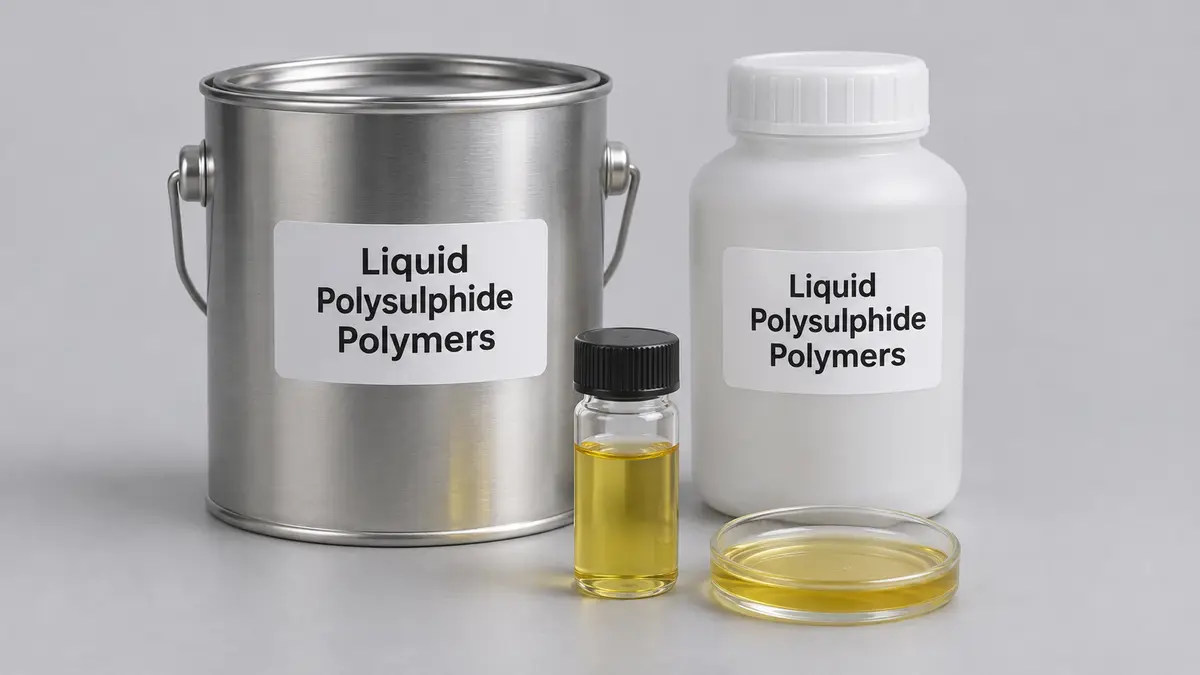
0% duty, with chemistry checked first
Read from the UK Trade Tariff on 1 October 2026, heading 3911 covers polysulphides and other listed polymers in primary forms. The table repeats the other condensation-polymer line for different purchasing specifications, subject to confirmation of the polymer chemistry. These are procurement descriptions, not separately named tariff grades. See the wider heading guide.
The supplied lines carry 0% duty for goods from China, with no anti-dumping or countervailing measures and no listed suspensions. The tariff attaches import and export waste controls. For a Chinese waste shipment entering England under notification controls, consent from the Environment Agency and the other competent authorities is needed before shipment. Ask your customs broker to confirm the requirements if the material is recovered, discarded or sold as off-specification stock.
Identify the main monomer and give your broker the composition, manufacturing chemistry, additives and supplied form. Confirm whether the other condensation-polymer line applies rather than another residual line. A formulated sealant needs its own classification check. Use finding your commodity code before ordering.
| Goods | Commodity code | Duty | Anti-dumping or countervailing duty on China |
|---|---|---|---|
| Other condensation polymers: liquid polysulphide, lower-viscosity grade | 3911 90 19 90 | 0% | None |
Specify viscosity, thiol content and curing behaviour
Specify the liquid polymer grade, terminal thiol content, viscosity with its test temperature and method, density, water content and permitted additives. State whether you want the base polymer or a formulated mixture. Agree shelf life, storage conditions, drum lining and a batch certificate of analysis.
Trial the sample with your intended curing agent, fillers and substrates. Agree checks for working time, cure, hardness, adhesion and resistance to the liquids encountered in use. Keep the approved sample and test method so a replacement grade can be compared.
Polymers themselves are exempt from UK REACH registration, but monomers and reactants may need registration. Obtain their identities and your supply chain's registration position. Check chemical classification, labels, packaging and the safety data sheet before supply in Great Britain. Arrange testing and certification support around the actual composition and use.
Worked duty example
Illustrative example, not a quote: Illustrative order: one tonne of liquid polysulphide polymer, assuming classification as an other condensation polymer under 3911 90 19 90, invoiced at £3,000 free on board, with £1,500 of freight and insurance to the UK. The customs value is £4,500. Duty at 0% is £0. Import VAT at 20% is charged on the customs value plus duty, £4,500, so it is £900. With no duty, the only import tax is the VAT, which a VAT-registered importer can usually reclaim. The import duty and VAT guide explains each step.
Inspection checklist
Identity: check the manufacturer, grade and batch against the purchase order, certificate of analysis and safety data sheet.
Liquid condition: check a representative sample for skinning, gel particles, sediment and separation; compare viscosity and thiol content using the agreed methods.
Cure trial: check the received batch with the agreed curing agent and formulation, including adhesion to your intended substrates.
Drums: check seals, leakage, lining compatibility, net contents, batch labels and production dates. Record the findings using your inspection brief.
Working out your own order? Send us the product on WhatsApp and we reply the same working day: WhatsApp us
What goes wrong
A similar grade name can conceal different viscosity or thiol content. The material may mix differently, cure unevenly or give poor adhesion in your formulation. A certificate without the test conditions makes comparison difficult. Damaged seals, contamination or ageing can leave gel particles that disrupt dispensing.
Approve the actual formulation trial before bulk purchase and compare each incoming batch with the retained sample. Hold suspect drums apart while investigating. Missing monomer information leaves the registration position unresolved, even when the polymer itself is exempt.
Cambridge China Bridge sources these products for UK businesses, checking the factory and the documents before shipment. See factory verification. For repeat volumes, see container programmes.
Frequently asked questions
What is the UK import duty on liquid polysulphide polymers from China?
The supplied heading 3911 lines carry 0% duty from China, with no anti-dumping or countervailing measures. Confirm the exact residual line from the polymer chemistry.
Do liquid polysulphide polymers need UK REACH registration?
Polymers themselves are exempt, but monomers and reactants may need registration. Obtain their identities and confirm your supply chain's registration position.
Which specifications should I give the Chinese factory?
Give the grade, viscosity and test conditions, thiol content, water content, additives, storage conditions and packaging. Agree a cure trial in your own formulation.
Can I approve a batch using its certificate alone?
Compare the certificate with agreed methods and test a representative sample. Check viscosity, thiol content and curing behaviour, then inspect drum seals and batch labels.