Sourcing knitted speed-skating suits from China
Knitted speed-skating suits from China classified under heading 6114 carry a flat 12% UK duty across the supplied fibre lines, with no recorded anti-dumping or countervailing duty. Fibre content must be labelled for sale in Great Britain. Approve fit in a skating crouch and check seam stretch. Cambridge China Bridge sources knitted speed-skating suits.
Buying from China for a business? How our UK China sourcing agent service works · China sourcing agent for small orders and first imports
UK duty on knitted speed-skating suits
Read from the UK Trade Tariff on 30 September 2026, heading 6114 covers other garments, knitted or crocheted. The supplied cotton, man-made fibre, wool or fine animal hair and other textile material lines all carry 12% duty for goods from China. No anti-dumping or countervailing duty or suspensions are recorded. The table lists material alternatives; select the line matching the actual suit.
The tariff attaches cat and dog fur and seal product controls to all supplied lines, plus CITES controls to the other textile material lines. Cat and dog fur products cannot be imported. Seal products for sale in Great Britain must have a seal catch certificate; confirm eligibility under the Inuit and other indigenous communities exemption with the relevant authority or your customs broker. For CITES-listed animal materials from China, confirm the species and applicable permit requirements with your customs broker before ordering.
Confirm the commodity code from the complete garment specification, knit construction and fibre composition. Heading 6114 is residual, so the supplier's description alone does not settle classification. For the wider heading, see the knitted cycling skinsuit guide.
| Goods | Commodity code | Duty | Anti-dumping or countervailing duty on China |
|---|---|---|---|
| Knitted speed-skating suits of man-made fibres | 6114 30 00 00 | 12% | None |
| Knitted speed-skating suits of cotton | 6114 20 00 00 | 12% | None |
| Knitted speed-skating suits of wool or fine animal hair | 6114 90 00 10 | 12% | None |
| Knitted speed-skating suits of other textile materials | 6114 90 00 90 | 12% | None |
Specify fit in the skating crouch
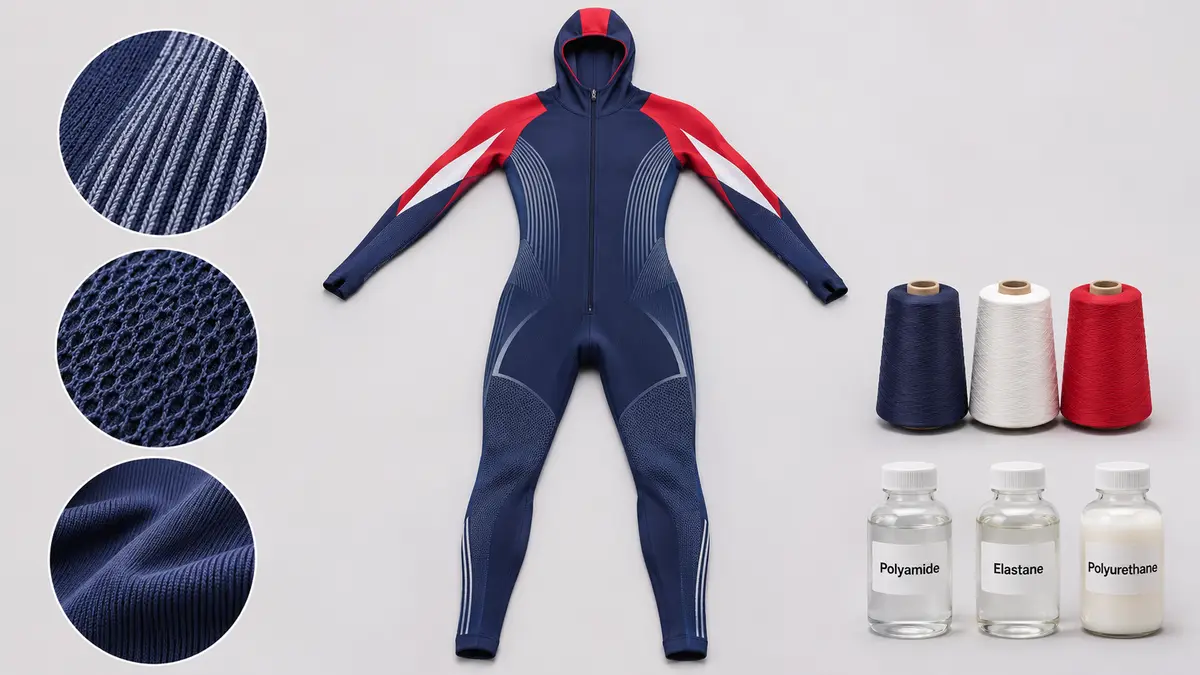
Specify fibre composition, fabric weight, stretch direction and recovery for each panel. Define torso length, sleeve reach, hip and thigh fit, ankle finish, zip position and any integrated hood or thumb loops. Approve samples across the size range with the wearer crouching and extending the arms, rather than judging fit only while standing.
For sale in Great Britain, fibre content must be labelled and consumer products must be safe. Agree label wording, care instructions and bulk fabric checks before production. Define seam placement to avoid rubbing at the crotch, underarms and knees. Treat any blade-cut resistance claim as a separate specification needing suitable test evidence; ordinary stretch fabric should not be accepted as proof of protection.
Worked duty example
Illustrative example, not a quote: Illustrative order: 500 knitted speed-skating suits of man-made fibres; FOB value and freight are illustrative, not a quotation. under 6114 30 00 00, invoiced at £18,000 free on board, with £1,200 of freight and insurance to the UK. The customs value is £19,200. Duty at 12% is £2,304. Import VAT at 20% is charged on the customs value plus duty, £21,504, so it is £4,300.80. Import taxes total £6,604.80; a VAT-registered importer can usually reclaim the VAT, so the lasting cost is the £2,304 of duty. The import duty and VAT guide explains each step.
Inspection checklist
Fit: measure torso, sleeves, hips and inside leg against the approved chart; check shoulder reach, zip tension and knee movement in the skating crouch.
Fabric: compare bulk panels with sealed samples; check stretch recovery, opacity when stretched, shade matching and colour transfer after washing and perspiration checks.
Assembly: stretch crotch, underarm and knee seams; operate the zip and inspect its ends, neck guard, ankle finish and any thumb loops for rubbing or weak stitching.
Labels and arrival: compare fibre wording with composition evidence, check size markings and team artwork, then inspect delivered cartons for damp, staining and quantity errors. Use the inspection guide to plan checks.
Working out your own order? Send us the product on WhatsApp and we reply the same working day: WhatsApp us
What goes wrong
A suit can fit upright but pull across the shoulders and crotch in a racing crouch. Insufficient torso length, poorly oriented stretch panels and seams that do not extend with the fabric restrict movement. A zip that looks tidy on a hanger can buckle or press into the neck when the wearer bends.
Bulk fabric substitutions can change recovery, opacity and fit. Team graphics may distort over stretched panels, while dye transfer can stain neighbouring colours. Keep approved fabric and finished suit samples, agree checks after washing, and repeat the movement and seam checks on production garments and delivered stock.
Cambridge China Bridge sources these products for UK businesses, checking the factory and the documents before shipment. See factory verification. For own-brand ranges, see sourcing for brands.
Frequently asked questions
What is the UK import duty on knitted speed-skating suits from China?
The supplied heading 6114 lines all carry 12% duty for goods from China. No anti-dumping or countervailing duty or suspensions are recorded. Confirm the line using the suit's fibre composition and construction.
Do speed-skating suits need fibre labels?
For sale in Great Britain, the label must show fibre content, including fur and other animal parts where present. Check the wording against the bulk fabric composition.
How should I check a speed-skating suit's fit?
Check fit in a skating crouch with the arms extended. Compare torso length, shoulder reach, hips and inside leg with the approved chart, and watch for zip tension or restricted knee movement.
Does a knitted speed-skating suit protect against blade cuts?
Do not infer blade-cut protection from stretch, thickness or the product name. If protection is part of your brief, request suitable test evidence for the actual material and finished construction.