Sourcing knitted ski suits from China
Knitted ski suits from China carry a flat 12% UK import duty, with no trade remedy or suspension listed in the supplied tariff data. Fibre content must be labelled, and consumer garments sold in Great Britain must be safe in normal or reasonably foreseeable use. Cambridge China Bridge sources knitted ski suits.
Buying from China for a business? How our UK China sourcing agent service works · China sourcing agent for small orders and first imports
UK duty on knitted ski suits
Read from the UK Trade Tariff on 1 October 2026, heading 6112 covers knitted or crocheted tracksuits, ski suits and swimwear. Its ski-suit line, 6112 20 00 00, carries 12% duty for goods from China. The supplied record lists no anti-dumping or countervailing duty, suspension or attached import control for this line.
The table shows buyer variants sharing the same ski-suit commodity line, rather than separate tariff subdivisions. The wider heading ranges from 8% to 12%, but the lower rate belongs to certain swimwear lines. See the knitted sports tracksuits guide for the wider heading.
HMRC guidance says ski suits should clearly be intended for cross country or alpine skiing. Confirm the commodity code with your broker using the actual garment, fabric construction and how any matching garments are presented. Use the import duty and VAT guide when preparing the landed-cost calculation.
| Goods | Commodity code | Duty | Anti-dumping or countervailing duty on China |
|---|---|---|---|
| Knitted ski suits, men's | 6112 20 00 00 | 12% | None |
Specify fabric, ski fit and weather performance
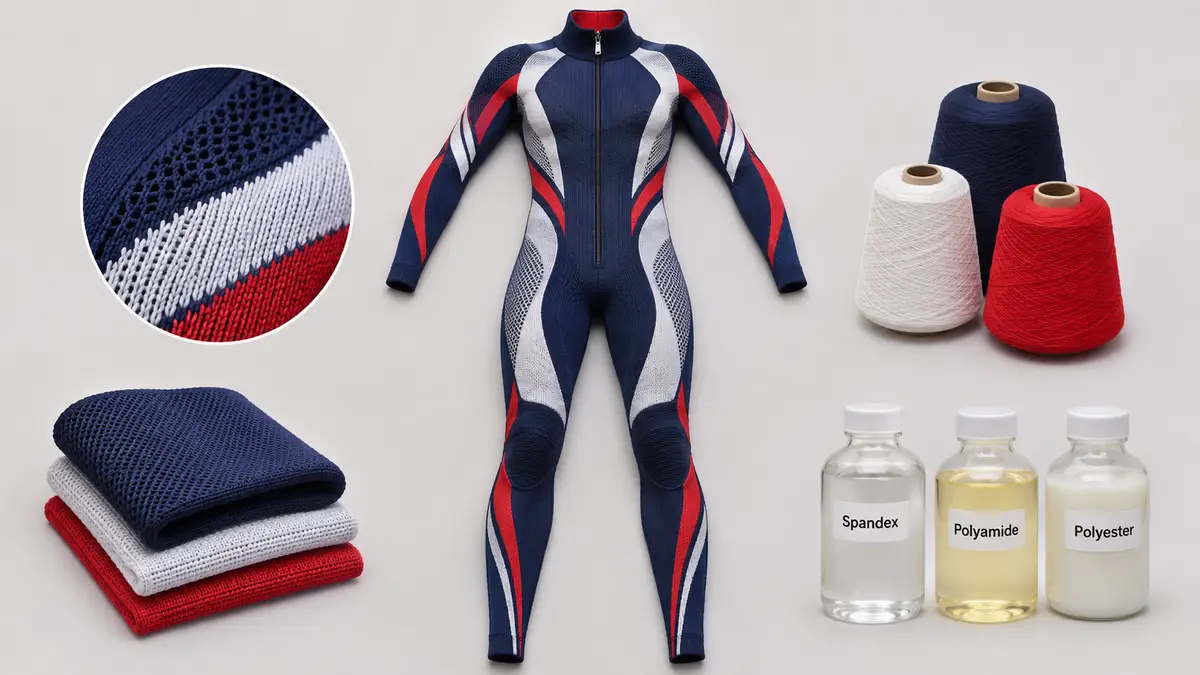
Specify the knitted outer fabric, fibre blend, fabric weight, stretch direction and recovery, lining and insulation. Approve chest, hip, sleeve, body and inside-leg measurements on samples worn over the intended base layers. Check bending, reaching and crouching so the crotch and shoulders do not restrict movement.
Agree boot-opening width, snow cuffs, hood adjustment, pocket positions and zip operation with gloves. Where waterproofness or breathability is claimed, agree the test method, acceptance criteria and whether testing covers fabric, seams or the finished suit. Ask for reports identifying the exact material and construction.
For sales in Great Britain, the fibre label must show fibre content, including any fur or other animal parts. Consumer garments must be safe in normal or reasonably foreseeable use. Approve label wording before production and assess children's hood cords, snagging points and detachable trims.
Worked duty example
Illustrative example, not a quote: 500 knitted ski suits, illustrative order under 6112 20 00 00, invoiced at £18,000 free on board, with £1,200 of freight and insurance to the UK. The customs value is £19,200. Duty at 12% is £2,304. Import VAT at 20% is charged on the customs value plus duty, £21,504, so it is £4,300.80. Import taxes total £6,604.80; a VAT-registered importer can usually reclaim the VAT, so the lasting cost is the £2,304 of duty. The import duty and VAT guide explains each step.
Inspection checklist
Fabric and labels: compare bulk fabric and fibre evidence with the approved specification and composition label. Check shade consistency, lining coverage and insulation distribution.
Fit and recovery: measure samples across ordered sizes, try them over base layers and check knee, seat and elbow recovery after stretching. Repeat measurements after the agreed care process.
Seams and closures: check skipped stitches, stretched seams, crotch reinforcement, zip snagging and secure snaps. Where seam sealing is specified, inspect tape adhesion around curved seams and zip junctions.
Packing and arrival: check size assortments, matching garment components, carton quantities, dampness and mould against the packing list. Use the quality inspection guide to agree these checks before shipment.
Working out your own order? Send us the product on WhatsApp and we reply the same working day: WhatsApp us
What goes wrong
A sample can fit while the bulk suit restricts movement because the knit stretches differently or the lining is too tight. Other faults include bagging at the knees, twisted legs, exposed seams that rub, and zips that catch the lining. Compare bulk garments with the approved sample before accepting the shipment.
Fabric-only waterproof reports can leave seam leakage unexamined. Where applicable, check taped seams after the agreed care process and test the finished construction. Do not accept a catalogue description as evidence that the garment meets the ski-suit classification; send the broker photographs and construction details.
Cambridge China Bridge sources these products for UK businesses, checking the factory and the documents before shipment. See factory verification. For own-brand ranges, see sourcing for brands.
Frequently asked questions
What is the UK import duty on knitted ski suits from China?
The supplied tariff record gives 12% for 6112 20 00 00, with no anti-dumping or countervailing duty, suspension or attached import control listed.
Do knitted ski suits need fibre labels?
For Great Britain, the label must show fibre content, including any fur or other animal parts. Agree the wording and check it against the bulk material.
How do I check a ski suit fits over base layers?
Try the approved sample over the intended layers. Check reaching, crouching, crotch clearance, sleeve reach and boot openings, then compare bulk garments with the agreed measurements.
Is a fabric waterproof test enough for a ski suit?
It does not assess every finished seam or closure. Agree what the claim covers and obtain matching evidence for the fabric, seam construction and finished garment where applicable.