Sourcing knitted shirt fronts from China
Knitted shirt fronts from China fall within a heading carrying 8% to 12% UK duty, depending on classification. Confirm whether the item is a finished accessory or a garment part, and check its fibre label against the actual yarn. Cambridge China Bridge sources knitted shirt fronts.
Buying from China for a business? How our UK China sourcing agent service works · China sourcing agent for small orders and first imports
UK duty and classification for knitted shirt fronts
Read from the UK Trade Tariff on 30 September 2026, heading 6117 covers knitted or crocheted clothing accessories and their parts. Other accessories carry 12% duty from China, elasticated or rubberised accessories 8%, and parts 12%. The supplied records show no anti-dumping or countervailing duty and no suspensions. The table includes the scarf line for comparison, rather than treating every design as a shirt front.
The tariff attaches CITES, cat and dog fur, and seal product import controls. Cat and dog fur products are banned. Seal products brought into Great Britain to trade must have a seal catch certificate; confirm with the relevant authority whether the Inuit and other indigenous communities exemption applies. For an order from China containing animal materials, identify the species and ask your customs broker to confirm applicable CITES permits and seal documentation before ordering.
Send your broker photographs, fibre composition, construction and intended use to confirm the commodity code. Distinguish a detachable accessory from a panel supplied for sewing into a garment; do not select the elasticated line merely because ordinary knitting stretches. Compare the detachable woven shirt-front guide when specifying fabric construction.
| Goods | Commodity code | Duty | Anti-dumping or countervailing duty on China |
|---|---|---|---|
| Other knitted accessories: candidate for finished shirt fronts | 6117 80 80 00 | 12% | None |
| Elasticated or rubberised knitted accessories: check construction | 6117 80 10 00 | 8% | None |
| Knitted garment parts: distinguish assembly panels from finished accessories | 6117 90 00 00 | 12% | None |
| Knitted scarves and similar articles: comparison for scarf-like designs | 6117 10 00 00 | 12% | None |
Specify neckline coverage and how the front stays in place
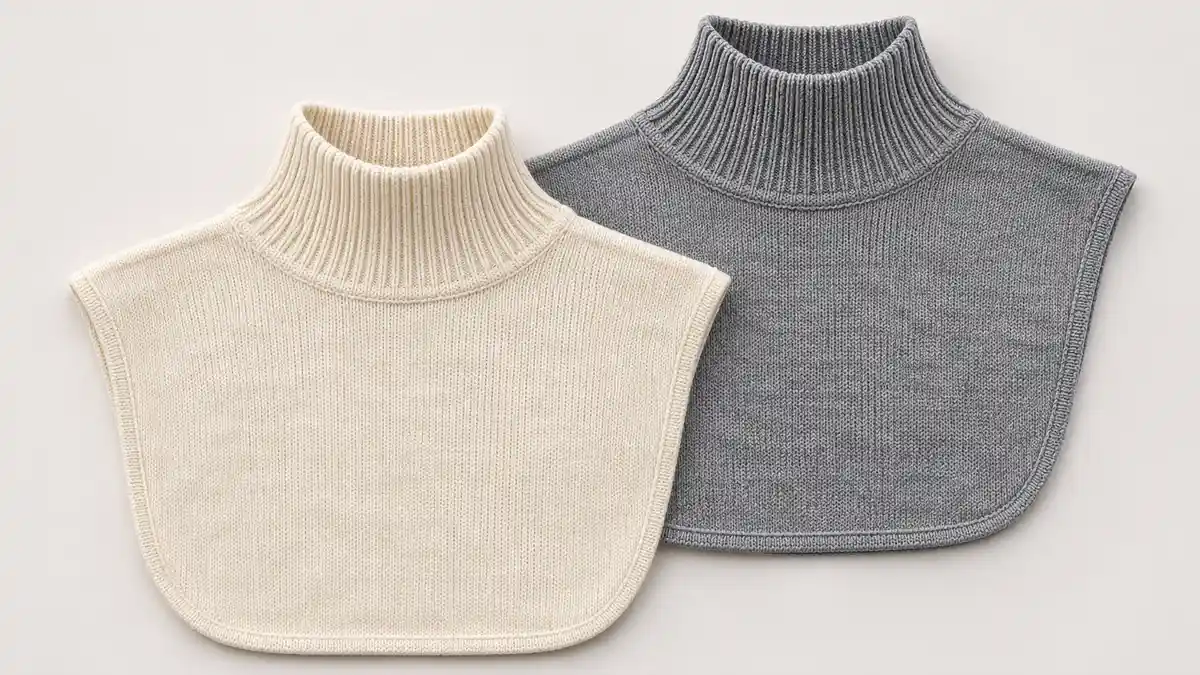
Describe a detachable knitted front worn beneath another garment. Specify the collar shape, neck opening, front and back coverage, shoulder width and edge finish. State whether it pulls over the head or opens with buttons or another fastening. Approve it beneath the intended outer garment, checking that the edges remain hidden and the front stays flat when the wearer moves.
Specify fibre composition, yarn, stitch structure, finished weight and measurements with agreed tolerances. For sale in Great Britain, the label must show fibre content, including fur and other animal parts. Agree care instructions and acceptance criteria for pilling, colour transfer and wash shrinkage. Keep both washed and unwashed approval samples.
Worked duty example
Illustrative example, not a quote: Illustrative order: 500 wool knitted shirt fronts, assuming classification as other accessories; FOB value and freight are illustrative. under 6117 80 80 00, invoiced at £7,000 free on board, with £700 of freight and insurance to the UK. The customs value is £7,700. Duty at 12% is £924. Import VAT at 20% is charged on the customs value plus duty, £8,624, so it is £1,724.80. Import taxes total £2,648.80; a VAT-registered importer can usually reclaim the VAT, so the lasting cost is the £924 of duty. The import duty and VAT guide explains each step.
Inspection checklist
Fit and coverage: measure the neck opening, collar height, shoulder width and panel lengths against the approved sample; try the front beneath the intended outer garment.
Knitting and assembly: inspect dropped stitches, holes, curling edges, bulky seams and loose yarn ends; operate fastenings and check their attachment.
Wash and recovery: wash production samples using the agreed care method; compare neckline recovery, panel shape, twisting, pilling and colour transfer.
Labels and arrival condition: compare fibre labels and composition evidence with the order; check shades across cartons, dampness, snagging and packing damage. Plan sampling through the inspection guide.
Working out your own order? Send us the product on WhatsApp and we reply the same working day: WhatsApp us
What goes wrong
A front can look correct laid flat yet ride up beneath a jumper, expose its shoulder edges or leave a gap at the neckline. A tight neck opening can make dressing awkward, while loose ribbing can sag after washing. Heavy button bands and thick seams can show through the outer garment.
Bulk yarn substitutions can change softness, stretch and pilling. Approve the wearing trial and washed sample before production, retain a sealed reference, and repeat the fit and wash checks on production samples and on arrival.
Cambridge China Bridge sources these products for UK businesses, checking the factory and the documents before shipment. See factory verification. For own-brand ranges, see sourcing for brands.
Frequently asked questions
What is the UK import duty on knitted shirt fronts from China?
The supplied heading has 8% duty for elasticated or rubberised accessories and 12% for other accessories and parts. Confirm the shirt front's classification. No anti-dumping or countervailing duty is recorded.
Does a knitted shirt front need a fibre label?
Agree the wording before production and check it against the actual yarn.
How do I check whether a knitted shirt front fits?
Try it beneath the intended outer garment. Check neck comfort, shoulder coverage and whether the front rides up or its edges show during movement. Repeat after washing.
What should I send a factory for a knitted shirt-front order?
Send a measured drawing, fibre composition, stitch description, collar shape, fastening details and colour references. Include an approved wearing sample and agreed wash and pilling acceptance criteria.