Sourcing knitted cycling jerseys from China
Knitted cycling jerseys from China in the selected man-made fibre and ordinary wool lines pay 12% UK duty; the wider heading ranges from 10% to 12%. Fibre composition must be labelled. Specify riding fit, pocket support and zip construction before approving production. Cambridge China Bridge sources knitted cycling jerseys.
Duty on knitted cycling jerseys
Read from the UK Trade Tariff on 30 September 2026, heading 6110 covers jerseys, pullovers, cardigans, waistcoats and similar knitted or crocheted articles. The selected cycling jersey lines carry 12% duty on goods from China, with no anti-dumping or countervailing duty and no suspensions recorded. The wider heading includes a 10% line for jerseys and pullovers containing at least 50% wool and weighing 600 g or more per article.
The tariff attaches cat and dog fur import and export controls and seal product import controls to the selected lines. Cat and dog fur products cannot be imported or exported. Seal products for sale in Great Britain must qualify under the Inuit and other indigenous communities exemption and have a seal catch certificate. Other fine animal hair lines also carry CITES controls: listed specimens require permits. Confirm any animal-derived material and declaration requirements with your customs broker before ordering from China.
Confirm the commodity code from the actual garment, fibre composition and construction rather than its cycling description. The polo shirts and knit shirts guide explains neighbouring knitted shirt classifications. Use the import duty and VAT guide to budget the illustrative order.
| Goods | Commodity code | Duty | Anti-dumping or countervailing duty on China |
|---|---|---|---|
| Man-made fibre jerseys, men's or boys' | 6110 30 91 00 | 12% | None |
| Man-made fibre jerseys, women's or girls' | 6110 30 99 00 | 12% | None |
| Other wool jerseys, men's or boys' | 6110 11 30 00 | 12% | None |
| Other wool jerseys, women's or girls' | 6110 11 90 00 | 12% | None |
Specify the jersey in a riding position
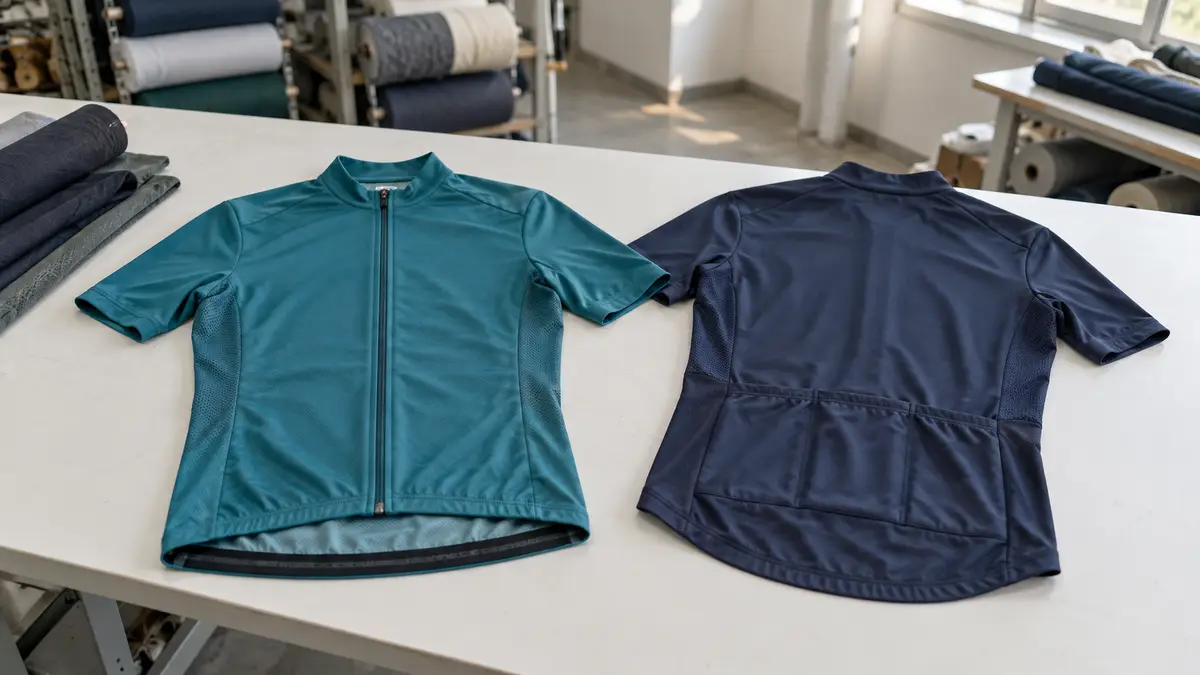
Agree whether the jersey is close-fitting or relaxed, then specify chest width, front and back length, sleeve opening and stretch recovery. Approve fit while leaning forward with arms extended. Specify the main fabric, mesh panels, fibre blend, fabric weight, hem gripper and zip type, including a guard where the zip meets the neck. For ice hockey teamwear, see our knitted ice hockey jersey sourcing guide.
Set rear pocket position, opening and reinforcement against the intended load. Approve printed artwork on a sewn sample so logos and colour blocks align across seams. Agree wash checks for shrinkage, colour transfer and gripper adhesion. Fibre content must appear on the label; check the wording against the ordered blend.
Worked duty example
Illustrative example, not a quote: Illustrative order of 500 men's polyester knitted cycling jerseys under 6110 30 91 00, invoiced at £7,000 free on board, with £700 of freight and insurance to the UK. The customs value is £7,700. Duty at 12% is £924. Import VAT at 20% is charged on the customs value plus duty, £8,624, so it is £1,724.80. Import taxes total £2,648.80; a VAT-registered importer can usually reclaim the VAT, so the lasting cost is the £924 of duty. The import duty and VAT guide explains each step.
Inspection checklist
Fit: measure each sampled size against the approved chart and check back coverage, sleeve pressure and hem movement in a riding position.
Pockets and seams: load the rear pockets as agreed, check sagging and stitch security, and stretch seams to expose skipped stitches or broken thread.
Zip and gripper: operate the zip on the finished jersey, check neck contact and waviness, and compare hem grip before and after washing.
Print and labels: compare panel alignment and colours with the approved sample, check colour transfer, and verify fibre labels and size markings. Use the quality inspection guide to define the inspection brief.
Working out your own order? Send us the product on WhatsApp and we reply the same working day: WhatsApp us
What goes wrong
A jersey can fit when standing but pull across the shoulders or expose the lower back when riding. Loaded rear pockets can drag the hem down, while a stiff zip makes the front buckle. Approve a sewn sample with the intended fabric and trims before production.
Bulk fabric may stretch differently from the sample, printed panels can mismatch at seams, and hem grippers may peel after washing. Compare production samples with the approved jersey and repeat the agreed fit, pocket and wash checks on arrival.
Cambridge China Bridge sources these products for UK businesses, checking the factory and the documents before shipment. See factory verification. For own-brand ranges, see sourcing for brands.
Frequently asked questions
What is the UK import duty on knitted cycling jerseys from China?
The selected man-made fibre and ordinary wool lines under heading 6110 carry 12%. The wider heading ranges from 10% to 12%. No anti-dumping or countervailing duty is recorded in the supplied tariff data.
Do cycling jerseys need fibre composition labels?
Yes. The label must show fibre content. Approve the wording against the ordered fabric blend and check the labels on production garments.
How should I check cycling jersey sizing?
Measure against the approved size chart, then check fit with arms extended in a riding position. Check back coverage, shoulder movement, sleeve openings and hem grip.
What should I test on rear jersey pockets?
Use the agreed intended load to check sagging, opening access, seam strength and whether the pockets pull the hem down. Repeat the check after the agreed wash trial.