Sourcing iodine monochloride from China
Neat iodine monochloride from China falls within a residual chloride line carrying 4% UK duty, with no suspension or trade remedy recorded. Chemicals must be correctly labelled and packaged before being placed on the GB market. Agree assay and batch evidence before shipment. Cambridge China Bridge sources iodine monochloride.
Buying from China for a business? How our UK China sourcing agent service works · China sourcing agent for small orders and first imports
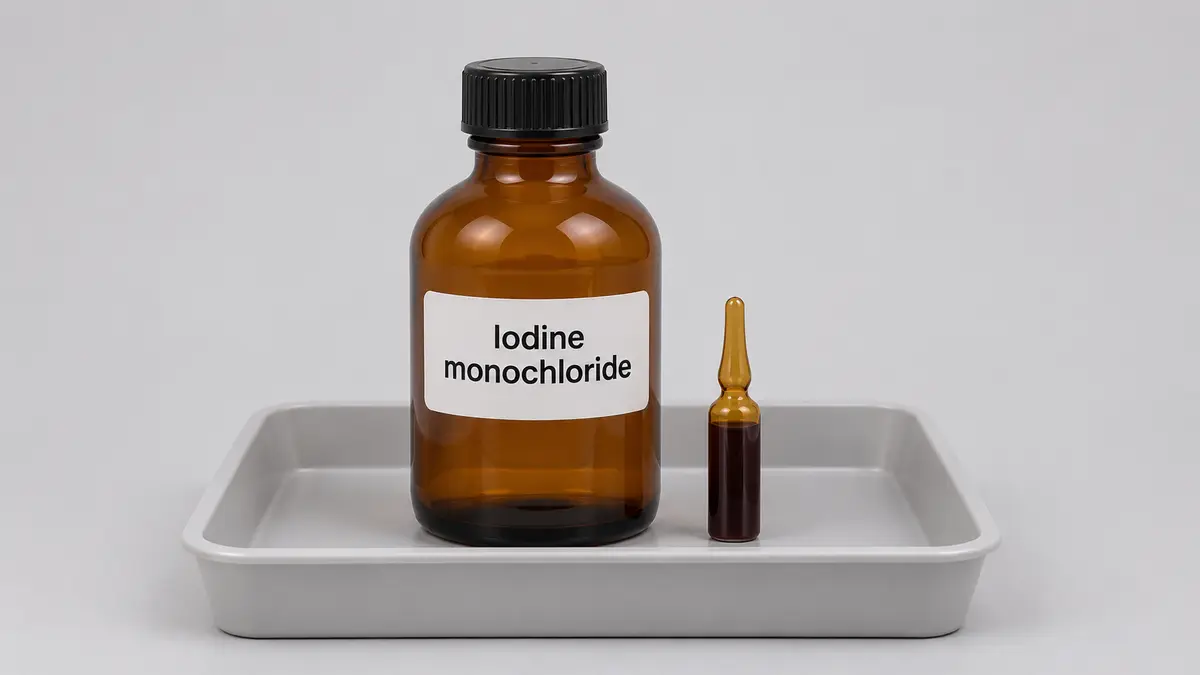
Iodine monochloride duty and controls
Read from the UK Trade Tariff on 29 September 2026, heading 2812 covers halides and halide oxides of non-metals. For neat iodine monochloride, the candidate line is 2812 19 90 00, other chlorides and chloride oxides. The table shows purchasing specifications within this same line, rather than separate tariff categories. See the wider non-metal halides guide.
The supplied tariff record gives 4% duty for goods from China on this line, with no anti-dumping or countervailing measure and no suspension. It attaches import and export waste controls. For material imported from China as waste under notification controls, the exporter must apply to the dispatch country's competent authority for consent. Confirm the applicable waste requirements, including any return shipment, with your customs broker.
Give your broker the composition, intended use and packaging to confirm the commodity code. Identify whether the purchase is neat iodine monochloride or a prepared solution before using this line. Review your UK REACH position before ordering.
| Goods | Commodity code | Duty | Anti-dumping or countervailing duty on China |
|---|---|---|---|
| Neat iodine monochloride, technical grade | 2812 19 90 00 | 4% | None |
Specify neat iodine monochloride and its assay
Write the chemical identity, intended use, assay method and acceptance limits into the order. Ask for results covering iodine monochloride content, free iodine, moisture and agreed impurities. A supplier's grade name alone does not define what your process or analytical method will accept.
State whether you need the neat substance or a solution. For a solution, specify the solvent and concentration and obtain a separate classification review. Agree container material, closure compatibility, seal protection and storage instructions with the supplier.
A safety data sheet is required when a hazardous chemical is supplied for use at work. Obtain the sheet for the actual product being ordered and compare its identity with the quotation, batch certificate and container label.
Worked duty example
Illustrative example, not a quote: 25 kg of neat iodine monochloride; order quantity, FOB value and freight are illustrative under 2812 19 90 00, invoiced at £2,000 free on board, with £980 of freight and insurance to the UK. The customs value is £2,980. Duty at 4% is £119.20. Import VAT at 20% is charged on the customs value plus duty, £3,099.20, so it is £619.84. Import taxes total £739.04; a VAT-registered importer can usually reclaim the VAT, so the lasting cost is the £119.20 of duty. The import duty and VAT guide explains each step.
Inspection checklist
Identity: check that the order, analysis certificate and container labels describe the same iodine monochloride product, without an undeclared solvent.
Assay: match the certificate to the shipped batch and verify content, free iodine and agreed impurities against the contract. Arrange independent testing through testing and certification.
Packaging: check unopened seals, closures, container damage and signs of leakage. Follow the safety data sheet when arranging receipt and sampling.
Traceability: reconcile batch identifiers, net contents and package counts with the packing list. Record discrepancies before accepting the delivery.
Working out your own order? Send us the product on WhatsApp and we reply the same working day: WhatsApp us
What goes wrong
A neat-substance order can be confused with a prepared iodine monochloride solution. Other rejection points include an assay reported on a different basis, free iodine outside the agreed limit, mismatched batch certificates and leaking closures. Appearance alone cannot establish identity or assay.
Approve the specification and test method before production, then compare arrival results with the same acceptance criteria. Keep leaking containers and disputed batches out of routine use while a competent chemical adviser assesses the next step.
Cambridge China Bridge sources these products for UK businesses, checking the factory and the documents before shipment. See factory verification. For repeat volumes, see container programmes.
Frequently asked questions
What is the UK import duty on iodine monochloride from China?
The supplied tariff record gives 4% on candidate code 2812 19 90 00, with no anti-dumping or countervailing measure and no suspension. Confirm the classification of your actual product.
Can I use the same commodity code for iodine monochloride solution?
Obtain a separate classification review using the solvent, concentration and intended use. This guide's tariff line is for the neat substance.
What should an iodine monochloride analysis certificate show?
Ask for the shipped batch identifier, assay result and method, free iodine, moisture and agreed impurities. Compare results with written acceptance limits.
Does a small laboratory order need a safety data sheet?
Obtain the sheet for the actual product and check it against the label and batch documents.