Sourcing intramedullary nails from China
Intramedullary nails entered as fracture appliances under heading 9021 carry 0% UK duty from China, with no anti-dumping duty. For sale in Great Britain, plan conformity assessment, a UK responsible person and registration with the medicines regulator before placing devices on the market. Cambridge China Bridge sources intramedullary nails.
Zero duty on fracture appliances
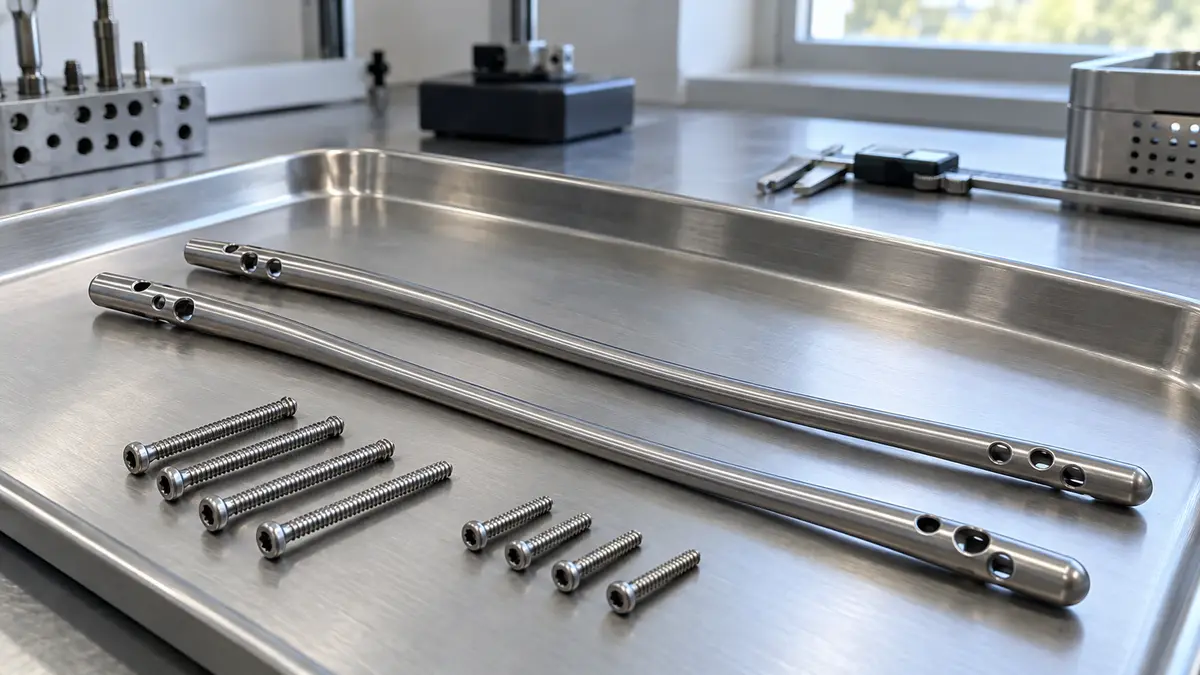
Read from the UK Trade Tariff on 30 September 2026, heading 9021 covers orthopaedic and fracture appliances alongside other devices that compensate for a defect or disability. Intramedullary nails intended for fracture fixation should be assessed against 9021 10 90 00, splints and other fracture appliances. The table shows product variants within that same tariff line. For another orthopaedic product, see our guide to sourcing hip replacement implants.
That line carries 0% duty for goods from China. The supplied tariff record lists no anti-dumping or countervailing duty, suspension or attached import control for it. Other lines in the heading carry cat and dog fur controls, but these are not attached to the fracture-appliance line.
Confirm the commodity code from the intended purpose and product documentation, especially where a shipment includes instruments or separate components. See bone fixation plates for the wider heading.
| Goods | Commodity code | Duty | Anti-dumping or countervailing duty on China |
|---|---|---|---|
| Fracture appliances: femoral intramedullary nails | 9021 10 90 00 | 0% | None |
Nail geometry and device documentation
Specify the intended bone and surgical approach, material grade, diameter and length range, curvature, cannulation, locking-hole positions and compatible screws. Identify the matching targeting jig, insertion handle and extraction tools by catalogue reference. Agree drawings and tolerances rather than accepting a statement that parts fit another supplier's system.
For the Great Britain market, medical devices must be registered with the medicines regulator before placement on the market. Confirm with the MHRA the conformity assessment appropriate to the device class and whether a UK responsible person is required where the manufacturer is outside the UK. Ask for documentation covering the actual nail family and supplied variants.
Agree whether the nails arrive sterile or require sterilisation before use. Request material certificates, mechanical performance evidence, biological safety evidence and, for sterile supply, sterilisation and packaging validation. Use testing and certification support to define the evidence to review before ordering.
Worked duty example
Illustrative example, not a quote: Illustrative mixed-size batch of intramedullary nails for a specialist distributor under 9021 10 90 00, invoiced at £40,000 free on board, with £2,500 of freight and insurance to the UK. The customs value is £42,500. Duty at 0% is £0. Import VAT at 20% is charged on the customs value plus duty, £42,500, so it is £8,500. With no duty, the only import tax is the VAT, which a VAT-registered importer can usually reclaim. The import duty and VAT guide explains each step.
Inspection checklist
Geometry: measure diameter, length, curvature and locking-hole positions against approved drawings using inspection samples separate from saleable sterile packs.
Interfaces: check the approved nail, screw, jig and insertion-handle combination for alignment, engagement and removal.
Materials and finish: match material certificates to production batches; inspect samples for burrs, damaged threads, surface contamination and inconsistent finish.
Packaging and identity: check seals, catalogue references, batch identification and expiry information against the order and release documents. Quarantine damaged sterile packs.
Working out your own order? Send us the product on WhatsApp and we reply the same working day: WhatsApp us
What goes wrong
A nail can match the ordered diameter yet have incompatible locking geometry or an insertion connection that does not fit the supplied instruments. Mixed catalogue references, substituted materials and incomplete batch records also make acceptance difficult.
Do not accept intact-looking packaging as proof of validated sterility. Separate dimensional inspection from the review of sterilisation evidence, and hold stock where seals, batch identity or documents do not match. Set these checks in the inspection brief.
Cambridge China Bridge sources these products for UK businesses, checking the factory and the documents before shipment. See factory verification. For components and parts, see sourcing for manufacturers.
Frequently asked questions
What is the UK import duty on intramedullary nails from China?
Under 9021 10 90 00, the supplied tariff record shows 0% duty, with no anti-dumping or countervailing duty. Confirm that the nail's intended purpose supports this classification.
What documents do Chinese intramedullary nails need for sale in Great Britain?
Plan conformity assessment for the device class, a UK responsible person for the overseas manufacturer and registration with the medicines regulator before market placement.
Can I use nails with another manufacturer's instruments?
Do not assume compatibility. Require drawings and evidence for the intended nail, locking screw, targeting jig and insertion-handle combination.
How should I inspect sterile intramedullary nails?
Review sterilisation and packaging validation, inspect saleable packs without opening them, and use separate inspection samples for dimensions, finish and instrument fit.