Sourcing hybrid rayon-polyester cord from China
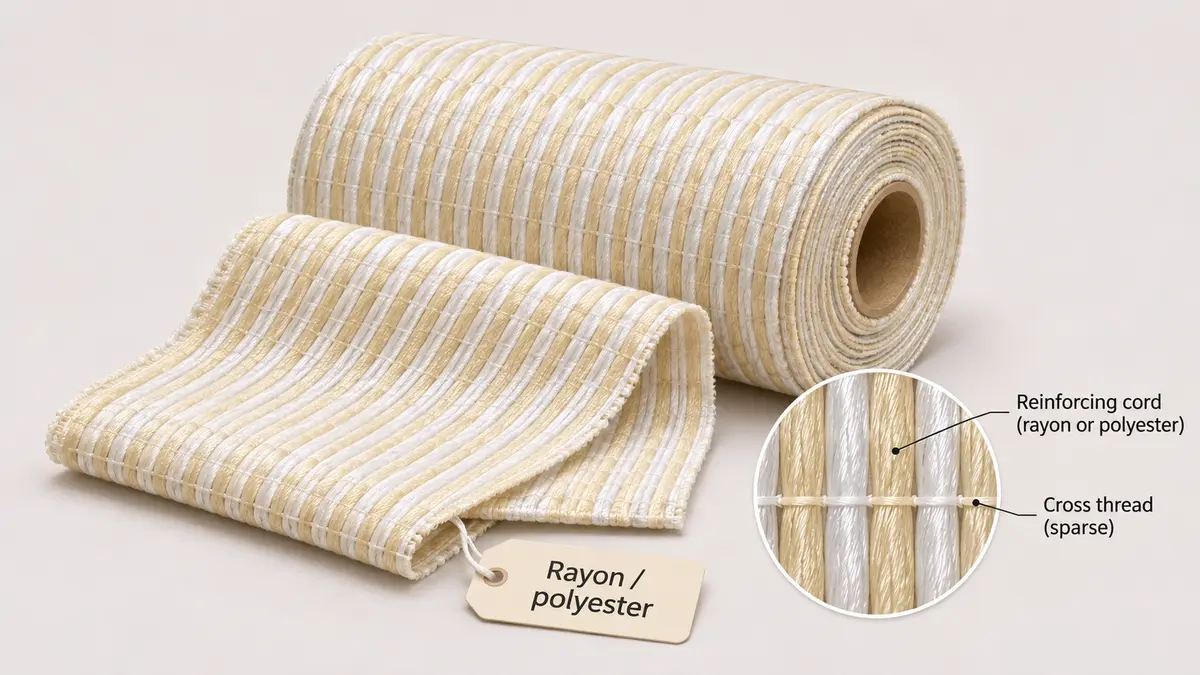
Hybrid rayon-polyester tyre cord fabric from China carries 0% UK duty across the relevant heading 5902 lines. Confirm the code from composition and treatment, and check UK REACH information for the finished fabric before supplying it. Cambridge China Bridge sources hybrid rayon-polyester tyre cord fabric.
Buying from China for a business? How our UK China sourcing agent service works · China sourcing agent for small orders and first imports
0% duty on the relevant tyre cord fabric lines
Read from the UK Trade Tariff on 6 October 2026, heading 5902 covers tyre cord fabric made from high-tenacity nylon or other polyamide, polyester or viscose rayon yarn. For a rayon-polyester hybrid, the polyester and other-fabric lines shown are candidates for classification, rather than interchangeable codes.
All the displayed lines carry 0% duty for goods from China. The supplied tariff snapshot lists no anti-dumping or countervailing duties, suspensions or attached import controls. Rubber-impregnated fabric and the corresponding other fabric lines have the same duty rate.
Give your customs broker the fibre breakdown by weight, cord construction and treatment details to confirm the commodity code. Describe the actual treatment rather than relying on the word dipped. For related heading coverage, see the hybrid nylon-polyester tyre cord guide.
| Goods | Commodity code | Duty | Anti-dumping or countervailing duty on China |
|---|---|---|---|
| Polyester tyre cord fabric, impregnated with rubber | 5902 20 10 00 | 0% | None |
| Polyester tyre cord fabric, other | 5902 20 90 00 | 0% | None |
| Other tyre cord fabric, including rayon, impregnated with rubber | 5902 90 10 00 | 0% | None |
| Other tyre cord fabric, including rayon, other | 5902 90 90 00 | 0% | None |
Specify the rayon-polyester cord construction
State whether rayon and polyester yarns are combined within each cord or arranged separately in the fabric. Specify their proportions by weight, each yarn's linear density, ply arrangement, twist direction and twist level. Include ends per unit width, weft construction, fabric width, roll length and whether supplied greige or treated.
Agree breaking strength, elongation at a stated load, heat shrinkage and adhesion using your rubber compound and curing conditions. Record the dip system, dip pick-up, storage conditions and shelf life. Approve a sample with its test results before accepting production.
Ask for a UK REACH substance statement covering the finished fabric and its adhesive treatment. When supplying an article containing a Candidate List substance above 0.1% by weight, you must give the business recipient sufficient information for safe use. Use the supplier's chemical information to assess this duty.
Worked duty example
Illustrative example, not a quote: Illustrative order: 8,000 square metres of hybrid rayon-polyester tyre cord fabric, assuming classification as polyester fabric impregnated with rubber has been confirmed under 5902 20 10 00, invoiced at £14,000 free on board, with £1,200 of freight and insurance to the UK. The customs value is £15,200. Duty at 0% is £0. Import VAT at 20% is charged on the customs value plus duty, £15,200, so it is £3,040. With no duty, the only import tax is the VAT, which a VAT-registered importer can usually reclaim. The import duty and VAT guide explains each step.
Inspection checklist
Construction: compare the rayon-polyester arrangement, fibre declaration, yarn specification and twist with the approved sample; check roll labels against the production lot.
Performance: compare lot results for breaking strength, elongation and heat shrinkage with the agreed limits; test treated fabric adhesion using your compound and curing conditions.
Fabric: check width, cord spacing, weft spacing and usable length; look for missing cords, loose filaments, knots, uneven treatment and contamination.
Arrival and storage: inspect sealed wrapping for tears, moisture and crushed roll edges; check production dates and agreed shelf life before releasing rolls. Record findings using the quality inspection guide.
Working out your own order? Send us the product on WhatsApp and we reply the same working day: WhatsApp us
What goes wrong
A supplier may match the overall fibre proportions while changing the cord arrangement or twist. That can change processing behaviour despite a similar headline strength result. Reject unapproved changes to yarn sources, construction or treatment, and compare production samples with the approved construction.
Adhesion can fail when the dip system does not suit your rubber compound, treatment varies or rolls age in damp or hot conditions. Agree the test method and acceptance limits before ordering, retain lot samples and investigate failed adhesion before using the fabric in tyre production.
Cambridge China Bridge sources these products for UK businesses, checking the factory and the documents before shipment. See factory verification. For own-brand ranges, see sourcing for brands.
Frequently asked questions
What is the UK import duty on hybrid rayon-polyester tyre cord fabric from China?
The relevant heading 5902 lines carry 0% duty in the supplied tariff snapshot. No anti-dumping or countervailing duty is listed.
Which commodity code should I use for a rayon-polyester hybrid?
Ask your broker to confirm it from the fibre breakdown, cord construction and treatment. The polyester and other-fabric lines are candidates; the hybrid name alone does not settle the code.
Does dipped tyre cord fabric count as rubber-impregnated?
Do not choose the code from the word dipped alone. Obtain the treatment composition and process description, then have your broker confirm the appropriate line.
How do I check whether the fabric suits my rubber compound?
Test adhesion with your own compound and agreed curing conditions. Compare strength, elongation and shrinkage with the approved sample, and keep the results linked to the production lot.