Sourcing hot-foil coding ribbons from China
Hot-foil coding ribbons from China classified in heading 9612 carry 0% UK duty across the listed ribbon lines. UK REACH applies to substances in mixtures and articles; match the coating to the packaging and test it in your heated-type coder. Cambridge China Bridge sources hot-foil coding ribbons.
Buying from China for a business? How our UK China sourcing agent service works · China sourcing agent for small orders and first imports
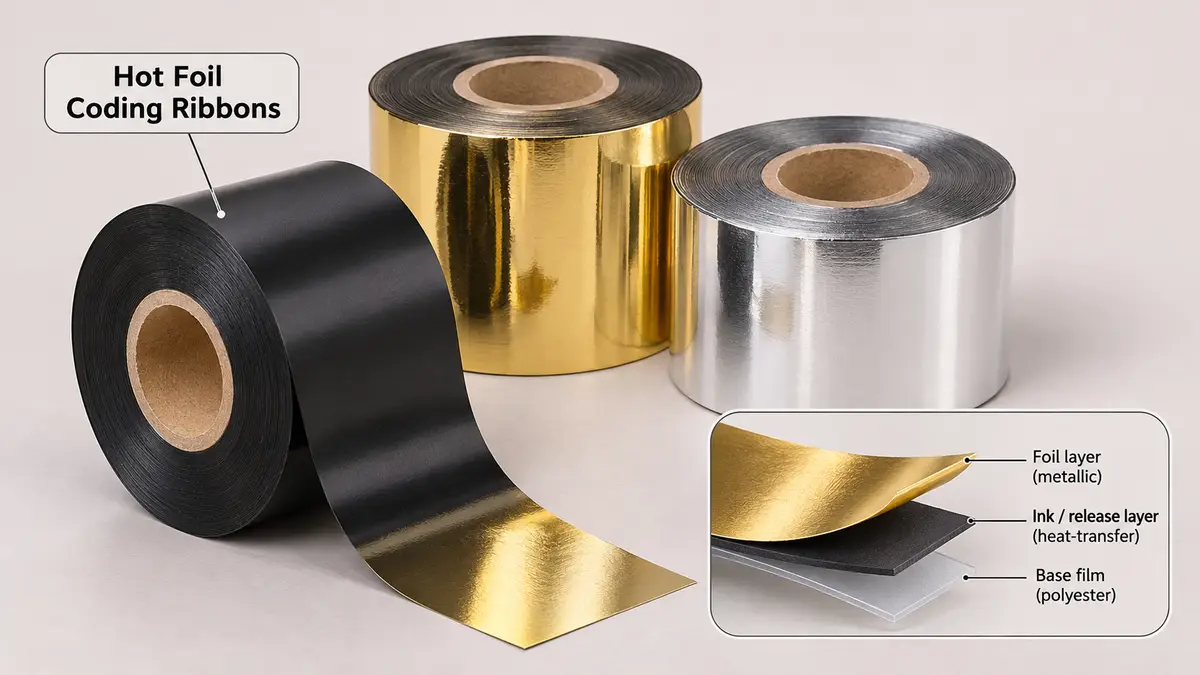
UK duty on hot-foil coding ribbons
Read from the UK Trade Tariff on 3 October 2026, heading 9612 covers ribbons prepared for giving impressions, whether supplied on spools or in cartridges, and ink pads. This guide concerns ribbons used with heated type to print dates and batch details on packaging. See the wider ribbons and ink pads guide.
Every ribbon line in the supplied tariff record carries 0% duty for goods from China. The record lists no anti-dumping or countervailing duty, suspensions or attached import controls. The comparison rows distinguish other ribbon technologies; they are not alternative descriptions of hot-foil coding ribbon.
For a plastic-backed coding ribbon, check 9612 10 10 90 against its construction and use; consider 9612 10 80 00 only where the other ribbon descriptions do not fit. Give your broker the backing material, coating details, photographs and operating method. Confirm the commodity code before ordering.
| Goods | Commodity code | Duty | Anti-dumping or countervailing duty on China |
|---|---|---|---|
| Other plastic ribbons, including plastic-backed coding ribbons subject to classification | 9612 10 10 90 | 0% | None |
| Other ribbons, where the coding ribbon does not meet a more specific description | 9612 10 80 00 | 0% | None |
| Comparison only: plastic dye-sublimation ribbons with different coloured segments | 9612 10 10 10 | 0% | None |
| Comparison only: narrow man-made fibre ribbons permanently fitted in cartridges | 9612 10 20 00 | 0% | None |
Specify the coating and heated-type coder
Specify the coder model, heated-type arrangement, packaging material and surface finish, print colour, ribbon width and length, core dimensions, winding direction and coating side. Agree operating settings with the supplier and trial the ribbon using your actual type and packaging. A label-printer ribbon is not a substitute merely because its roll fits.
Agree print sharpness, adhesion and resistance to rubbing, moisture or handling conditions relevant to your packs. Ask for a supplier statement on substances of very high concern in the coating. UK REACH generally applies to substances on their own, in mixtures or in articles.
If you package food yourself, you must use packaging suitable for food use. Ask for evidence covering the ribbon coating with your intended packaging and conditions of use, including migration or transfer testing where relevant. Treat this as a packaging suitability check, rather than accepting a generic food-safe claim.
Worked duty example
Illustrative example, not a quote: 20,000 rolls of plastic-backed hot-foil coding ribbon, illustrative only under 9612 10 10 90, invoiced at £30,000 free on board, with £1,200 of freight and insurance to the UK. The customs value is £31,200. Duty at 0% is £0. Import VAT at 20% is charged on the customs value plus duty, £31,200, so it is £6,240. With no duty, the only import tax is the VAT, which a VAT-registered importer can usually reclaim. The import duty and VAT guide explains each step.
Inspection checklist
Roll fit: measure width, sampled roll length and core dimensions; check winding direction, coating side and smooth feeding through your coder.
Print trial: print date and batch text on the intended packaging using agreed settings; check complete characters, clean edges and consistent transfer.
Adhesion: rub and handle printed samples after cooling; check smearing, flaking and transfer onto adjacent packs under agreed conditions.
Packing and records: check damaged edges, dust, loose winding and blocked layers; match grade, colour and batch labels to the approved sample and supplier documents.
Working out your own order? Send us the product on WhatsApp and we reply the same working day: WhatsApp us
What goes wrong
An unsuitable coating leaves faint or incomplete characters, while excessive heat can distort the packaging. Reversed winding prevents transfer, damaged roll edges disrupt feeding, and loosely wound rolls wander through the coder. A successful trial on the supplier's film does not establish performance on yours.
Approve a sample on your own coder and retain printed packaging for comparison with deliveries. Repeat the trial when the supplier changes the coating or backing. Use the quality inspection guide to turn these checks into an agreed inspection brief.
Cambridge China Bridge sources these products for UK businesses, checking the factory and the documents before shipment. See factory verification. For own-brand ranges, see sourcing for brands.
Frequently asked questions
What is the UK import duty on hot-foil coding ribbons from China?
The supplied tariff record shows 0% duty throughout the ribbon lines in heading 9612, with no listed anti-dumping or countervailing duty. Confirm the precise code from the ribbon's construction.
Can I use thermal transfer ribbon in a hot-foil coder?
Do not choose by roll size alone. Specify ribbon for your heated-type coder and trial it on the actual packaging. Check transfer, adhesion and feeding at the agreed operating settings.
What should I specify when ordering coding ribbon?
Give the coder model, packaging material and finish, print colour, width, length, core dimensions, winding direction and coating side. Agree print and rub tests using your own packaging.
Can hot-foil coding ribbon be used on food packaging?
Assess the coating with the intended packaging and conditions of use. If you package food yourself, the packaging must be suitable for food use. Ask for supporting evidence rather than relying on a generic food-safe claim.