Sourcing hop pellets from China
Hop pellets from China carry 4% UK duty across the ordinary and higher-lupulin lines. Commercial imports into Great Britain require an attestation of equivalence from an authorised agency; organic consignments also need a certificate of inspection. Cambridge China Bridge sources hop pellets.
Buying from China for a business? How our UK China sourcing agent service works · China sourcing agent for small orders and first imports
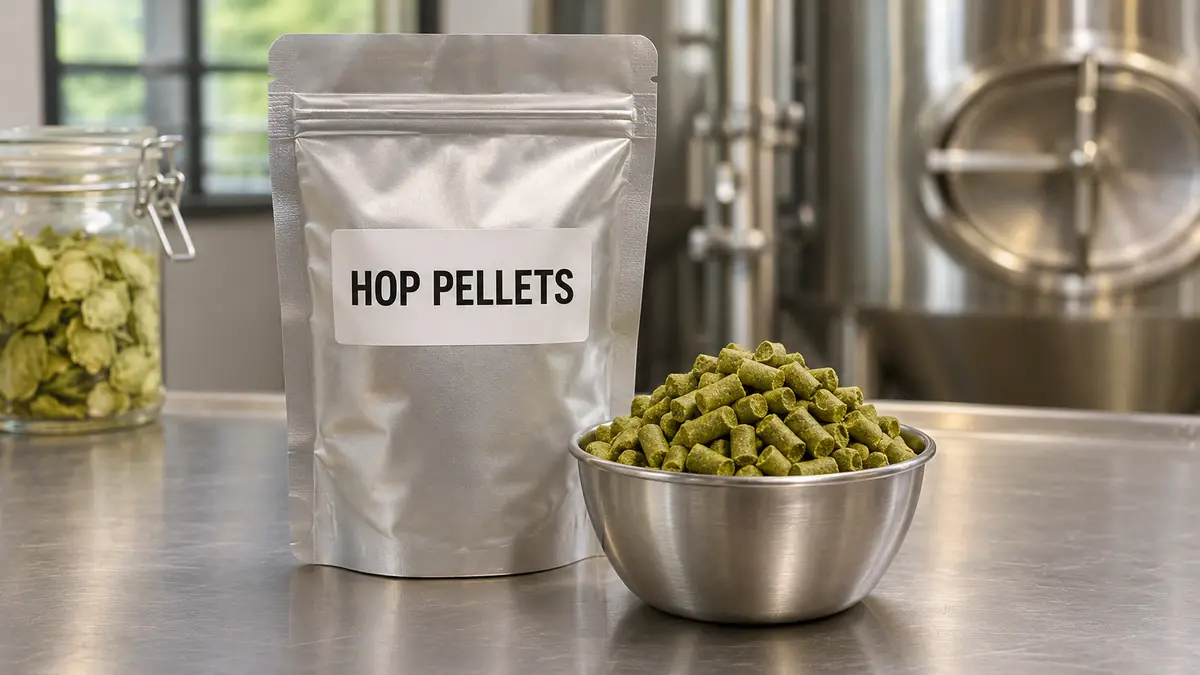
Hop pellet duty and import documents
Read from the UK Trade Tariff on 29 September 2026, ordinary and higher-lupulin hop pellets within heading 1210 carried 4% duty on goods from China. Neither pellet line showed anti-dumping or countervailing duty, or a suspension. The table includes adjacent powder lines for classification comparison; they are not pellet descriptions.
The tariff attaches an attestation document control and an organic import control to both pellet lines. Official guidance requires an authorised-agency attestation of equivalence for commercial imports of Chinese-origin hops into Great Britain. Organic imports from China also require a Great Britain certificate of inspection for each consignment.
Ask the producer whether lupulin has been concentrated, and confirm the commodity code against the actual processing specification. Do not select a powder line simply because the pellets were made from ground hops. See the wider hops sourcing guide for the heading.
| Goods | Commodity code | Duty | Anti-dumping or countervailing duty on China |
|---|---|---|---|
| Hop pellets, other than higher-lupulin pellets | 1210 20 90 99 | 4% | None |
| Higher-lupulin hop pellets | 1210 20 10 99 | 4% | None |
| Ordinary hop powder, other: comparison with pellets | 1210 20 90 90 | 4% | None |
| Higher-lupulin hop powder, other: comparison with pellets | 1210 20 10 90 | 4% | None |
Specify variety, alpha acids and pellet condition
Agree the hop variety, growing origin, harvest year, ordinary or concentrated pellet form, alpha-acid range, moisture and aroma profile. Request batch analysis and a retained sample. For blends, ask the processor to identify the varieties and their proportions rather than accepting a generic brewing-hop description.
Agree sealed oxygen-barrier packaging, vacuum or inert-gas packing, storage conditions and transport arrangements. Ask the laboratory to assess pesticide residues against the applicable Great Britain limits, allowing for processing. Food businesses must comply with pesticide maximum residue levels.
Worked duty example
Illustrative example, not a quote: Illustrative order: 500 kg of ordinary hop pellets for brewery trials under 1210 20 90 99, invoiced at £7,700 free on board, with £900 of freight and insurance to the UK. The customs value is £8,600. Duty at 4% is £344. Import VAT at 20% is charged on the customs value plus duty, £8,944, so it is £1,788.80. Import taxes total £2,132.80; a VAT-registered importer can usually reclaim the VAT, so the lasting cost is the £344 of duty. The import duty and VAT guide explains each step. This assumes the goods are standard-rated for VAT. Most food for human consumption is zero-rated, and animal feed can be too, in which case no import VAT is due, so check the rate for your product in HMRC's VAT Notice 701/14.
Inspection checklist
Identity: match variety, origin, harvest and batch references across bags, analysis reports and purchase documents.
Analysis: compare alpha acids, moisture and the agreed residue testing with the contract and retained sample.
Packing: inspect seals, punctures, lost vacuum, damp cartons and any storage or transport temperature records.
Pellets: check colour, aroma, excessive fines, foreign matter and signs of mould against the approved sample.
Working out your own order? Send us the product on WhatsApp and we reply the same working day: WhatsApp us
What goes wrong
A supplier may substitute a variety or blend, or quote alpha acids from a different batch. Pellets can arrive with excessive dust, weak aroma or an oxidised smell after damaged packaging or unsuitable storage. Colour and smell help screen a lot, but cannot replace batch analysis.
A factory analysis report is not the import attestation. Have the broker check the proposed equivalence document before dispatch, and arrange the separate organic certificate of inspection where relevant. Keep a retained sample and record arrival condition before releasing the batch for brewing.
Cambridge China Bridge sources these products for UK businesses, checking the factory and the documents before shipment. See factory verification. For repeat volumes, see container programmes.
Frequently asked questions
What is the UK import duty on hop pellets from China?
The supplied tariff snapshot shows 4% for both ordinary and higher-lupulin hop pellets from China, with no anti-dumping or countervailing duty or suspension.
Do Chinese hop pellets need an import certificate?
Commercial imports into Great Britain require an attestation of equivalence issued by an authorised agency. Ask your broker to check the document before shipment.
Can I import organic hop pellets from China?
Organic consignments require a Great Britain certificate of inspection. Check the exporter’s certification arrangements before agreeing an organic order.
What should I test before buying hop pellets?
Agree batch checks for alpha acids, moisture and pesticide residues, alongside variety, harvest, aroma and packaging. Compare a retained sample with the delivered lot.