Sourcing hoists, winches and jacks from China
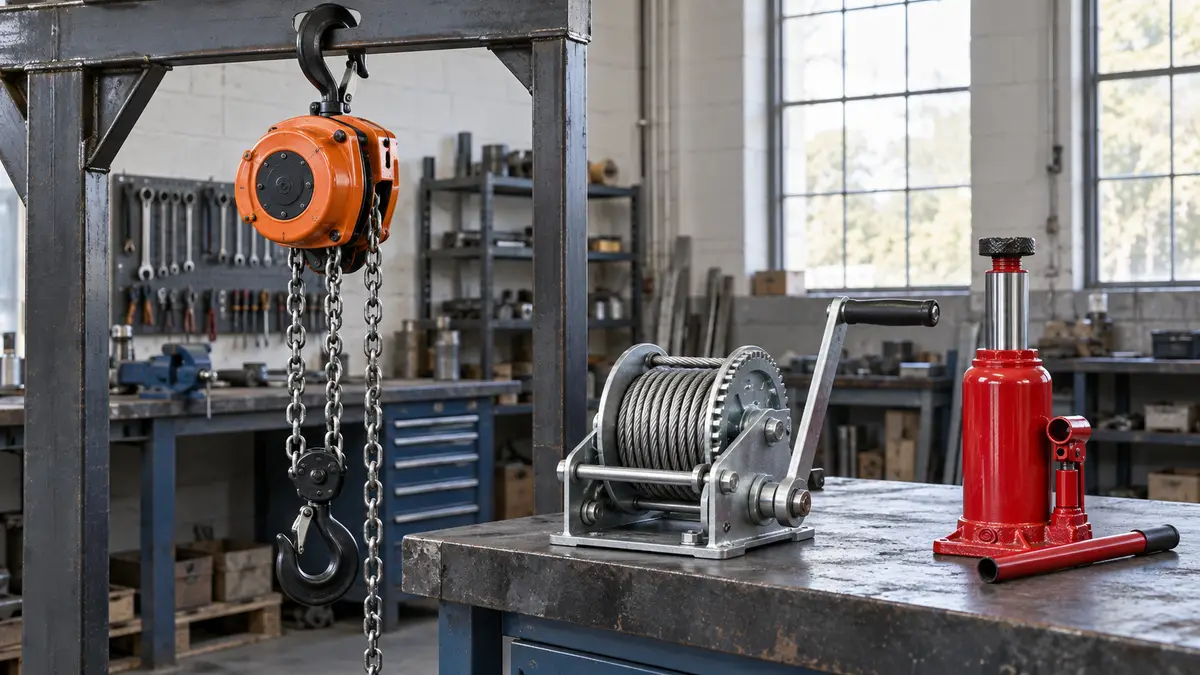
Pulley tackle and hoists, winches and capstans, built-in garage jacking systems, hydraulic jacks and hoists and other jacks from China pay 0% UK duty, electric or manual, with no anti-dumping duty. They are lifting machinery under the machinery safety regulations, and employers must have lifting equipment thoroughly examined under LOLER. Cambridge China Bridge sources hoists, winches and jacks.
Buying from China for a business? How our UK China sourcing agent service works · China sourcing agent for small orders and first imports
Zero duty
Read from the UK Trade Tariff on 25 September 2026, pulley tackle and hoists powered by electric motor or not, winches and capstans powered by electric motor or not, built-in jacking systems of a type used in garages, other hydraulic jacks and hoists, and other jacks carried 0% duty on goods from China, with no anti-dumping measure.
Cranes and forklifts are in other headings; confirm the commodity code.
| Goods | Commodity code | Duty | Anti-dumping duty on China |
|---|---|---|---|
| Pulley tackle and hoists, electric | 8425 11 00 00 | 0% | None |
| Pulley tackle and hoists, other | 8425 19 00 00 | 0% | None |
| Winches and capstans, electric | 8425 31 00 00 | 0% | None |
| Winches and capstans, other | 8425 39 00 00 | 0% | None |
| Built-in garage jacking systems | 8425 41 00 00 | 0% | None |
| Other hydraulic jacks and hoists | 8425 42 00 00 | 0% | None |
| Other jacks | 8425 49 00 00 | 0% | None |
Machinery safety
Hoists, winches and jacks are lifting machinery under the Supply of Machinery (Safety) Regulations 2008, which set extra requirements for lifting, including a static and dynamic test and marking of the rated load. They need UKCA or CE marking, a declaration of conformity and English instructions.
Vehicle jacks and garage lifts are also tested against specific product standards; ask for the report. For bottle jacks, see our hydraulic bottle jack sourcing guide.
LOLER for your customers
The Lifting Operations and Lifting Equipment Regulations 1998 require employers to have lifting equipment thoroughly examined before first use in some cases and at set intervals. Business buyers will ask for a test certificate with each hoist, so agree that the factory supplies one per serial number.
Worked duty example
An invented example rather than a quote: 300 electric chain hoists, commodity code 8425 11 00 00, bought for £48,000 free on board, with £3,200 of freight and insurance, so £51,200 is the value customs works from. No duty is due on electric hoists; import VAT at 20% of £51,200 is £10,240. If you are VAT-registered, that VAT is normally reclaimable. See calculating UK import duty and VAT for the method.
Inspection checklist
Design standard and tests: electric hoists and winches checked against the BS EN 14492 series, manual chain hoists against BS EN 13157 and jacks against BS EN 1494, with the static and dynamic test records at the coefficients required by the Supply of Machinery (Safety) Regulations 2008 matched to each serial number.
Load path: load chain pitch measured over a set length against new chain, chain grade marks checked, hook throat opening recorded as a baseline for wear and the safety latch checked, the brake held under rated load, limit switches and the emergency stop on the pendant tested, and jacks held under load to check for leak-down.
Documents and marking: the working load limit marked on the hoist and hook block, a declaration of conformity and English manual supplied, and the buyer reminded that the Lifting Operations and Lifting Equipment Regulations 1998 require a thorough examination before first use in a workplace unless a valid recent declaration of conformity provides an exemption and safety does not depend on installation or assembly, which the importer's paperwork should support.
Working out your own order? Send us the product on WhatsApp and we reply the same working day: WhatsApp us
What goes wrong
Hoists, winches and jacks fail at the brake, the load chain or rope, and the rating. A brake that slips under the rated load, load chain that is not the grade stated or does not match the pocket wheel, and hooks without a working safety latch are all dangerous. Jacks leak down under load when seals are poor, and capacity labels that overstate the rating are the most serious fault of all.
Witness or repeat the static and dynamic overload tests on samples, check brake holding and limit switches, check chain or rope grade and certificates, check hooks and latches, load-test jacks for leak-down over time, and confirm that each unit has a rated load marking and a test certificate matching its serial number.
Inspection
At inspection, load-test samples at the rated load, check brakes, hooks, safety latches, wire rope or chain, and the capacity marking.
Cambridge China Bridge sources hoists, winches and jacks, with lifting tests, certificates and marking settled before the order. See how our sourcing service works.
Frequently asked questions
What is the UK import duty on electric hoists from China?
Read from the UK Trade Tariff on 25 September 2026, hoists, winches and jacks of heading 8425 carried 0% duty from China, electric or manual.
Do hoists need testing before sale?
Yes. Lifting machinery under the 2008 machinery regulations needs static and dynamic tests and rated load marking.
What does LOLER mean for importers?
Employers must have lifting equipment thoroughly examined, so business buyers expect a test certificate with each unit.
Are cranes in heading 8425?
No. Cranes and forklifts are in other headings.