Sourcing glass edge polishers from China
Glass edge polishing machines from China carry 2% UK duty across the optical and other-glass polishing lines, with no trade remedies recorded. Confirm with the relevant authority which conformity marking, declaration of conformity and English instructions are required for machines supplied in Great Britain. Cambridge China Bridge sources glass edge polishing machines.
Buying from China for a business? How our UK China sourcing agent service works · China sourcing agent for small orders and first imports
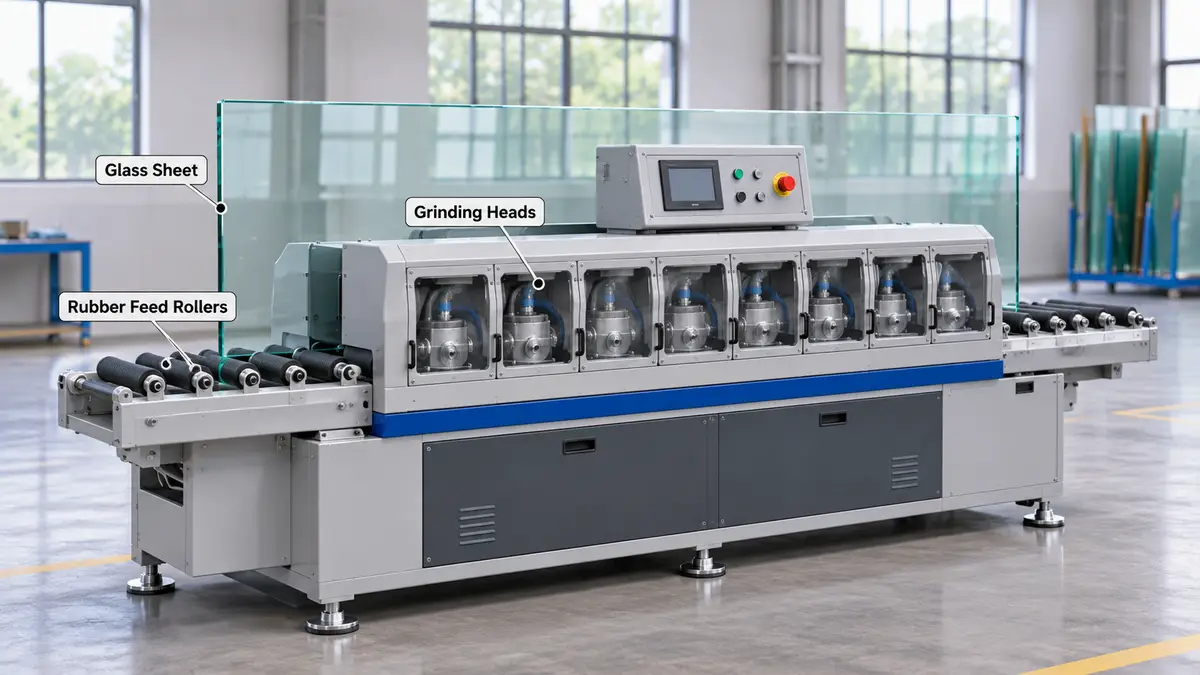
Glass polishing machines: 2% duty
Read from the UK Trade Tariff on 20 November 2026, heading 8464 covers machine tools for mineral materials and cold-working glass. Glass grinding and polishing machines are split between optical glass, 8464 20 11 00, and other glass, 8464 20 19 00. Both carry 2% duty for goods from China. The supplied tariff record lists no anti-dumping or countervailing duty, suspensions or attached import controls.
The table separates machine configurations sharing the same other-glass code; these are not separate tariff subdivisions. Confirm the material and principal operation using the commodity code guide. For the wider heading, see stone and tile cutting machines.
| Goods | Commodity code | Duty | Anti-dumping or countervailing duty on China |
|---|---|---|---|
| Straight-line edge polishers for non-optical glass | 8464 20 19 00 | 2% | None |
| Edge grinding or polishing machines for optical glass | 8464 20 11 00 | 2% | None |
Specify the glass and finished edge
Specify glass type, thickness range, sheet dimensions and weight, edge profile and acceptable finish. Distinguish flat edges with arrises, bevelled edges and shaped edges. Agree sample pieces and acceptance criteria for chips, scratches, polish consistency and dimensional accuracy.
Ask for the wheel sequence, wheel specifications, feed adjustment, conveyor grip, support arrangement, coolant filtration and access for cleaning glass sludge. Confirm the site power supply, control language, electrical drawings and replacement wheels, belts and bearings.
Check guarding and emergency stops as well as the paperwork. Responsible persons must compile the technical file and make it available on request.
Worked duty example
Illustrative example, not a quote: Illustrative order: two glass edge polishing machines under 8464 20 19 00, invoiced at £28,000 free on board, with £4,000 of freight and insurance to the UK. The customs value is £32,000. Duty at 2% is £640. Import VAT at 20% is charged on the customs value plus duty, £32,640, so it is £6,528. Import taxes total £7,168; a VAT-registered importer can usually reclaim the VAT, so the lasting cost is the £640 of duty. The import duty and VAT guide explains each step.
Inspection checklist
Edge finish: process agreed glass samples and inspect for chips, scratches, waviness and uneven polish along the full edge.
Handling: check conveyor grip, support alignment and feed stability across the agreed glass sizes and thicknesses.
Water and electrics: run the coolant system, inspect leaks and filtration, and have a competent person check guarding, emergency stops and electrical earthing.
Documents and packing: match the model to the declaration and English manual; check wheel protection, transit restraints and moisture protection. Arrange quality inspection around the agreed sample trial.
Working out your own order? Send us the product on WhatsApp and we reply the same working day: WhatsApp us
What goes wrong
A polished demonstration piece can conceal poor results on the buyer's glass. Wrong wheel selection, worn conveyor pads or misaligned supports can cause chipped corners, scratches and uneven edge finish. Test the agreed glass and profiles rather than accepting a demonstration on material chosen only by the supplier.
Sludge can obstruct coolant flow, and leaks can reach electrical cabinets. Unclear wheel specifications also make replacement difficult. Agree cleaning access, a wheel schedule and spare-part identification before ordering, then repeat the sample trial after installation and alignment.
Cambridge China Bridge sources these products for UK businesses, checking the factory and the documents before shipment. See factory verification. For machinery and equipment, see machinery imports.
Frequently asked questions
What is the UK import duty on glass edge polishers from China?
The supplied tariff record shows 2% for optical-glass polishing machines, 8464 20 11 00, and other-glass polishing machines, 8464 20 19 00, with no recorded trade remedies.
Do glass edge polishers need CE or UKCA marking?
For supply in Great Britain, confirm with the relevant authority which conformity marking, declaration of conformity and English instructions are required under the machinery safety rules.
How do I check the polishing quality before shipment?
Run your agreed glass types, thicknesses and edge profiles. Inspect the full edge for chips, scratches, waviness and uneven polish, and record results against the purchase specification.
What spare parts should I agree with the factory?
Agree wheel specifications and sequence, conveyor belts or pads, bearings, coolant pump parts and seals. Ask for drawings and part identifiers so replacements match the delivered machine.