Sourcing frozen tubifex worms from China
Frozen tubifex worms considered under heading 0511 carry 0% UK duty from China, with no recorded trade remedy or suspension. Confirm the import route before ordering: official processed-feed guidance does not recognise freezing alone as processing. Cambridge China Bridge sources frozen tubifex worms.
Buying from China for a business? How our UK China sourcing agent service works · China sourcing agent for small orders and first imports
Zero duty, with animal-product controls
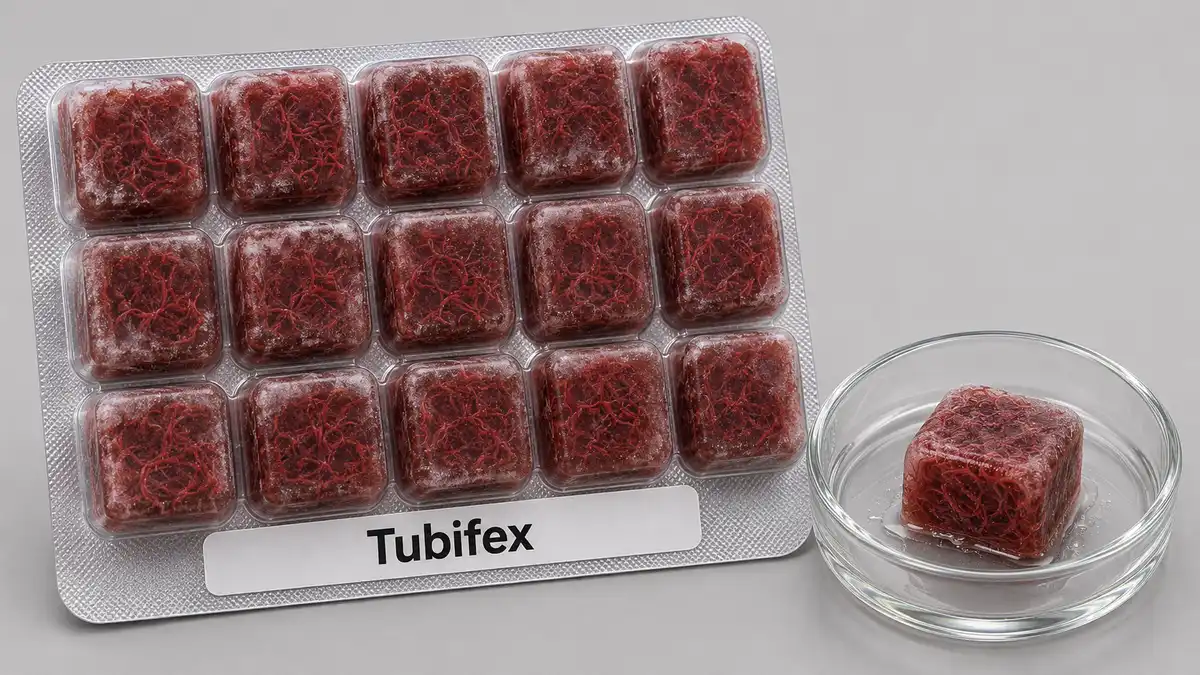
Read from the UK Trade Tariff on 6 October 2026, heading 0511 covers animal products not elsewhere specified and certain dead animals unfit for human consumption. The aquatic-invertebrate other-products line, 0511 91 90 00, carries 0% duty from China, with no anti-dumping or countervailing measure and no suspension recorded. The table shows packing formats under this candidate code.
The tariff attaches veterinary, CITES, invasive alien species and organic-product import controls to this line, plus CITES export control. Animal by-product guidance requires entry through an approved border control post. Ask the customs broker to confirm the common health entry document, supporting documents and applicability of the species and organic controls to the actual Chinese consignment.
Give the broker the scientific species name, ingredients, treatment, packing and intended pet-fish use to confirm the commodity code. Before ordering, ask the Animal and Plant Health Agency to confirm whether the proposed product and Chinese origin qualify for import. For the wider heading, see frozen brine shrimp aquarium feed.
| Goods | Commodity code | Duty | Anti-dumping or countervailing duty on China |
|---|---|---|---|
| Frozen tubifex worms in portioned blister packs | 0511 91 90 00 | 0% | None |
Specify the worms, water content and frozen format
Specify the scientific species name, cultivation or collection source, washing process, ingredients and intended pet-fish use. Distinguish tubifex worms from bloodworms and mixed aquatic feed. Agree worm content, added water, drained appearance, foreign-matter acceptance and batch testing against a retained sample.
Choose portioned blisters, flat packs, blocks or individually frozen worms. Agree net contents, portion consistency, seal strength, carton protection, storage instructions and transport temperature with the supplier. Official pet-fish feed guidance requires secure packaging in new containers and labels indicating that the product is not for human consumption.
Freezing alone does not count as processing under the official processed-finished-feed guidance. Confirm the applicable route rather than describing a frozen-only product as processed feed. For operations in England or Wales, discuss feed-business registration or approval with the local authority before importing and distributing.
Worked duty example
Illustrative example, not a quote: Illustrative order: 5 cartons of frozen tubifex worm blister packs under 0511 91 90 00, invoiced at £1,500 free on board, with £900 of freight and insurance to the UK. The customs value is £2,400. Duty at 0% is £0. Import VAT at 20% is charged on the customs value plus duty, £2,400, so it is £480. With no duty, the only import tax is the VAT, which a VAT-registered importer can usually reclaim. The import duty and VAT guide explains each step.
Inspection checklist
Identity: compare worms and supplier species records with the retained sample; check for substituted larvae, mixed organisms, sediment and foreign matter.
Frozen condition: inspect arrival temperatures and transport records; investigate soft packs, leakage, distorted portions and unusual ice accumulation.
Contents: compare net contents, worm distribution and thawed sample appearance with the specification; review batch microbiological results rather than relying on colour alone.
Packing and records: inspect seals and cartons, check the non-human-consumption label, and match batch marks to supplier and consignment documents.
Working out your own order? Send us the product on WhatsApp and we reply the same working day: WhatsApp us
What goes wrong
Extra water can make a pack look full while reducing its usable worm content. Sediment, broken worms and inconsistent portions undermine the agreed product. Compare representative thawed samples with the retained sample and agree how disputed batches will be assessed.
Damaged seals and temperature excursions create uncertainty about the shipment's condition. Photograph affected packs and retain temperature records before accepting them. A supplier's description of frozen worms as processed feed can also point to the wrong import route; settle the product's identity and admissibility before dispatch.
Cambridge China Bridge sources these products for UK businesses, checking the factory and the documents before shipment. See factory verification. For repeat volumes, see container programmes.
Frequently asked questions
What is the UK import duty on frozen tubifex worms from China?
The supplied tariff reading gives 0% for 0511 91 90 00, with no anti-dumping or countervailing measure and no suspension recorded. Confirm that this code fits the actual product.
Can I import frozen tubifex worms from China?
Do not assume zero duty means permission to import. Ask the Animal and Plant Health Agency to confirm the route for the species, Chinese origin, treatment and intended pet-fish use before ordering.
Does freezing make tubifex worms processed feed?
No. Official processed-finished-feed guidance states that freezing is not a processing method. Confirm the appropriate route for a frozen-only product.
What should I check when frozen tubifex worms arrive?
Check frozen condition, temperature records, pack seals, net contents, sediment, worm identity and batch marks. Compare thawed samples and batch test results with the agreed specification.