Sourcing frozen raw crab meat from China
Frozen raw crab meat from China carries 6% UK duty across the relevant supplied codes, with no recorded trade remedy. Confirm country and plant eligibility, health documentation, pre-notification and border entry arrangements with the port health authority before ordering. Cambridge China Bridge sources frozen raw crab meat.
Buying from China for a business? How our UK China sourcing agent service works · China sourcing agent for small orders and first imports
6% duty on the relevant frozen crab lines
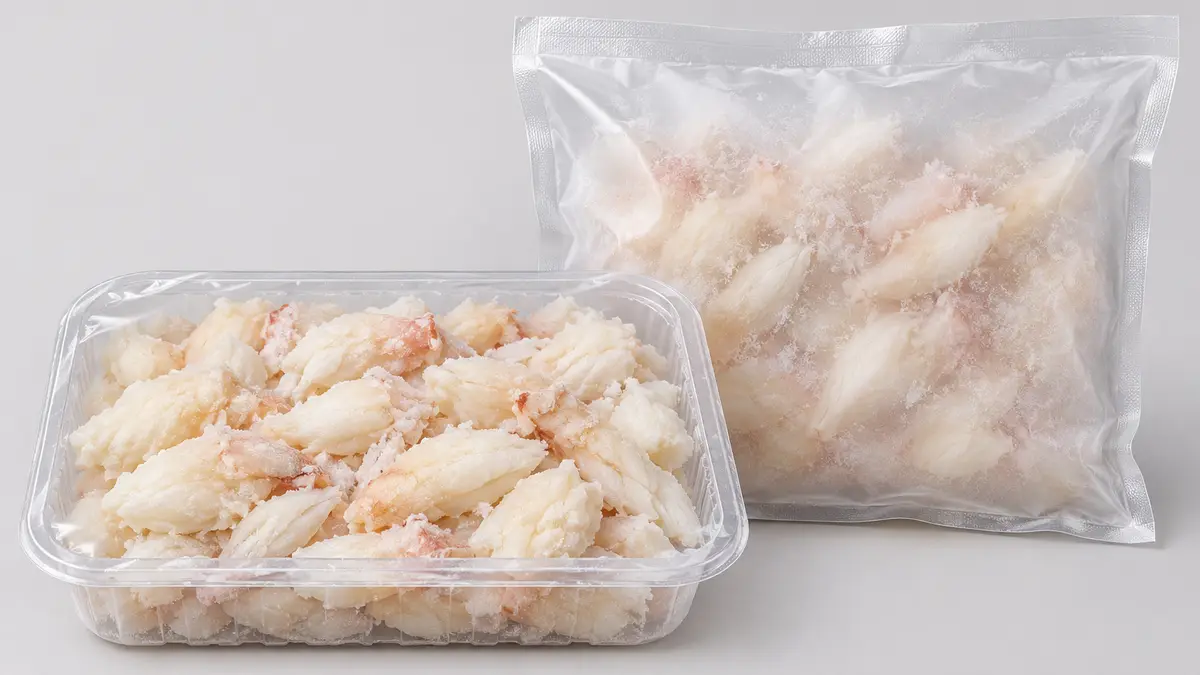
Read from the UK Trade Tariff on 5 October 2026, heading 0306 covers crustaceans, including frozen crab whether in shell or not. This guide concerns uncooked meat removed from the shell. Confirm the scientific species and extraction process: a supplier's description of crab meat does not establish whether it is raw.
The relevant supplied frozen crab codes carry 6% duty for goods from China. No anti-dumping duty, countervailing duty or suspension is recorded on these lines. Both codes carry veterinary, illegal fishing and organic import controls. The veterinary control specifies a Common Health Entry Document for products of animal origin; confirm the declaration documents with your customs broker.
The table separates species within shared codes rather than presenting each species as a separate tariff line. Confirm the commodity code from the species, frozen condition and processing history. Ask your broker to classify cooked or otherwise prepared meat separately. For shell-on purchases, see the frozen crab sections guide.
| Goods | Commodity code | Duty | Anti-dumping or countervailing duty on China |
|---|---|---|---|
| Frozen raw red king crab meat | 0306 14 10 00 | 6% | None |
| Frozen raw meat of other crab species | 0306 14 90 90 | 6% | None |
Specify raw condition, meat grade and thawed yield
Specify the scientific species, capture or farming method, origin of the crab and processing plant. Define claw, leg or body meat, intact pieces or flakes, colour, shell-fragment tolerance, freezing method and pack format. Require the supplier to describe any heating during extraction and all added water, salt or other treatments. Agree a deglazing, thawing and draining method before comparing usable meat yield.
For imports into Great Britain, verify approval for the exporting country and fishery establishment before ordering. Confirm the applicable health certificate, any pre-notification requirements and the appropriate border entry arrangements with the port health authority. Medium-risk products require an export health certificate. Ask the port health authority to confirm the route and documentation for the exact product, especially if offered farmed crab.
Ask the port health authority to confirm whether the wild-caught marine crab needs a validated catch certificate under illegal fishing controls. For organic product from China, confirm with the relevant authority whether each consignment entering Great Britain needs a certificate of inspection. The exporter's control body issues that certificate. Confirm these documents before loading; check Northern Ireland arrangements separately.
Worked duty example
Illustrative example, not a quote: Illustrative hypothetical order: 2 tonnes of frozen raw crab meat under 0306 14 90 90, invoiced at £16,000 free on board, with £1,500 of freight and insurance to the UK. The customs value is £17,500. Duty at 6% is £1,050. Import VAT at 20% is charged on the customs value plus duty, £18,550, so it is £3,710. Import taxes total £4,760; a VAT-registered importer can usually reclaim the VAT, so the lasting cost is the £1,050 of duty. The import duty and VAT guide explains each step. This assumes the goods are standard-rated for VAT. Most food for human consumption is zero-rated, and animal feed can be too, in which case no import VAT is due, so check the rate for your product in HMRC's VAT Notice 701/14.
Inspection checklist
Identity and raw condition: match species, meat grade, processing history, plant details and batch markings to the specification and shipping documents.
Shell and texture: examine samples from different cartons for shell fragments, cartilage, discolouration and excessive flakes; compare texture after the agreed thawing and cooking trial.
Usable weight: deglaze and drain samples using the agreed method, compare usable meat with the declared net weight, and record thawing loss. Confirm the applicable net-weight labelling requirements for glazed products with the relevant authority.
Cold chain and packs: inspect seals, temperature records, freezer burn and signs of thawing; review batch laboratory results, declared treatments, allergen information and storage instructions.
Working out your own order? Send us the product on WhatsApp and we reply the same working day: WhatsApp us
What goes wrong
Raw and cooked meat can be confused when suppliers use the same commercial description. Mixed species, excessive flakes, shell fragments and heavy glaze can also make an apparently comparable offer unsuitable for the buyer's recipe. Keep an approved sample and agree acceptance criteria for the meat after thawing and cooking.
Documents can describe a different species, plant or product form from the cartons. Resolve discrepancies before shipment. On arrival, record temperature and packaging condition before unloading obscures the evidence, and hold questionable batches for assessment. Our inspection guide explains how to organise checks.
Cambridge China Bridge sources these products for UK businesses, checking the factory and the documents before shipment. See factory verification. For repeat volumes, see container programmes.
Frequently asked questions
What is the UK import duty on frozen raw crab meat from China?
The relevant supplied frozen crab codes carry 6% duty for goods from China, with no recorded anti-dumping duty, countervailing duty or suspension.
What documents do I need to import raw crab meat?
Confirm plant and country approval, applicable health certification, pre-notification and border documents. Ask the port health authority whether the wild-caught marine crab also needs a validated catch certificate.
How do I check the weight of glazed crab meat?
Agree a deglazing and draining method, then sample different cartons. Compare the deglazed meat with the declared net weight, confirm the applicable net-weight labelling requirements with the relevant authority, and record thawing loss separately.
How do I confirm crab meat is actually raw?
Ask for the extraction process and heating history in writing. Match the production records and batch description to an approved sample, then assess texture in a controlled cooking trial.