Sourcing frozen cockle meat from China
The supplied frozen cockle meat line carries 10% UK duty, with no anti-dumping duty or suspension. However, Chinese-origin frozen cockle meat cannot be imported into Great Britain for human consumption because China is absent from the approved bivalve-country list. Cambridge China Bridge checks whether a product can be imported before any order is placed.
Buying from China for a business? How our UK China sourcing agent service works · China sourcing agent for small orders and first imports
10% duty does not establish import permission
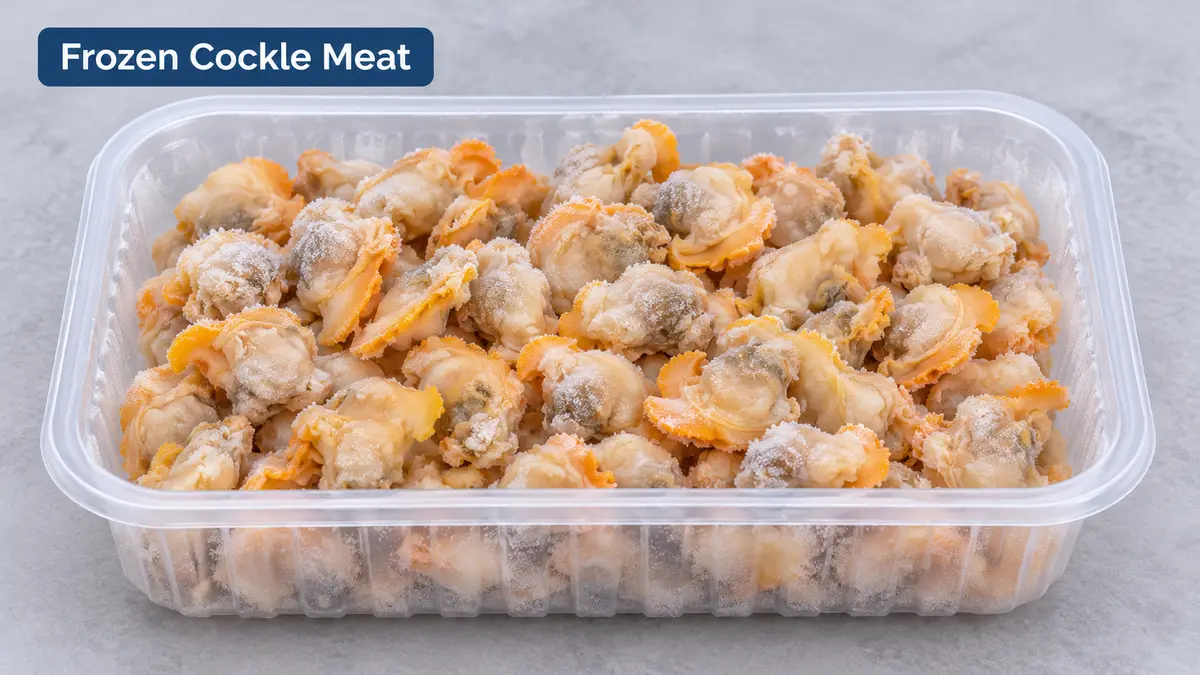
Read from the UK Trade Tariff on 30 September 2026, frozen cockle meat falls within heading 0307, covering molluscs in shell or without shell. The supplied frozen clams, cockles and ark shells line, 0307 72 90 00, carries 10% duty for goods from China, with no anti-dumping or countervailing measure and no suspension. The table repeats that supplied line for different purchasing forms.
The tariff attaches veterinary, CITES import and export, illegal fishing and organic import controls. These controls do not establish country approval. Frozen bivalve molluscs for human consumption must come from a country listed in the legislation's approved list. Confirm with the relevant authority or your customs broker whether China is approved for the proposed frozen cockle meat shipment before ordering.
Give your broker the scientific species name, origin, freezing method and complete processing description to confirm the commodity code. Ask the broker to confirm the veterinary documents and species-specific CITES position rather than treating the tariff flags as permits. See the frozen clam meat guide for the wider product group.
| Goods | Commodity code | Duty | Anti-dumping or countervailing duty on China |
|---|---|---|---|
| Frozen raw cockle meat, individually frozen | 0307 72 90 00 | 10% | None |
Specify cockle species, meat and freezing
Start with country eligibility before requesting a production order. For an eligible alternative supply, specify the scientific species name, harvest origin, raw or cooked state, whole meat or broken pieces, size grade, individually frozen or block frozen form, and packaging. Ask for a processing description rather than accepting 'cockle meat' as the complete specification.
Agree deglazed drained weight, acceptable shell fragments and sand, additive policy, pack seals and batch identification. Compare thawed samples for grit, odour, colour and texture. The inspection checks below apply to an eligible supply; they do not establish whether Chinese-origin cockle meat is eligible for import, which should be confirmed with the relevant authority or your customs broker.
Worked duty example
Illustrative example, not a quote: Illustrative arithmetic only: 2 tonnes of frozen raw cockle meat; not a permitted China-to-Great Britain food shipment under 0307 72 90 00, invoiced at £16,000 free on board, with £1,500 of freight and insurance to the UK. The customs value is £17,500. Duty at 10% is £1,750. Import VAT at 20% is charged on the customs value plus duty, £19,250, so it is £3,850. Import taxes total £5,600; a VAT-registered importer can usually reclaim the VAT, so the lasting cost is the £1,750 of duty. The import duty and VAT guide explains each step. This assumes the goods are standard-rated for VAT. Most food for human consumption is zero-rated, and animal feed can be too, in which case no import VAT is due, so check the rate for your product in HMRC's VAT Notice 701/14.
Inspection checklist
Origin and identity: match species, harvest origin and batch marks across supplier records, cartons and the purchase specification.
Meat and foreign matter: examine thawed samples for shell fragments, sand, broken meat and differences from the approved sample.
Glaze and weight: deglaze and drain samples using the agreed method, then compare actual meat weight with the contracted weight.
Cold chain and packs: review transit temperature records on arrival, inspect seals and look for thawing, clumping and freezer burn.
Working out your own order? Send us the product on WhatsApp and we reply the same working day: WhatsApp us
What goes wrong
The decisive mistake is assuming a tariff code or a factory's general seafood approval allows Chinese-origin cockles into Great Britain. Country approval is product-specific. Freezing or processing does not avoid the rule, which expressly covers frozen and processed bivalve molluscs. Do not place a Great Britain food order on the strength of a duty quotation.
For eligible alternative supplies, inspect for excess glaze, gritty meat, shell fragments, damaged seals and inconsistent thawed texture. Cockles are exempt from catch-certificate requirements, but that exemption does not remove the country restriction. Organic imports must also follow the general importing rules. Ask your broker to resolve the attached controls before committing.
Cambridge China Bridge sources these products for UK businesses, checking the factory and the documents before shipment. See factory verification. For repeat volumes, see container programmes.
Frequently asked questions
What is the UK import duty on frozen cockle meat from China?
The supplied line 0307 72 90 00 carries 10%, with no trade remedy or suspension. This tariff rate does not establish whether Chinese-origin cockle meat is eligible to enter Great Britain for human consumption; confirm eligibility with the relevant authority or your customs broker.
Can I import Chinese frozen cockle meat into Great Britain?
Confirm with the relevant authority or your customs broker whether China is on the approved-country list for the proposed frozen bivalve mollusc shipment for human consumption. A supplier's general seafood approval does not replace that country approval.
Does freezing or cooking make Chinese cockles importable?
No. The country-list rule covers frozen and processed bivalve molluscs as well as live and chilled products.
How do I check the weight of frozen cockle meat?
Agree a deglazing and draining method before buying. Apply it to samples from different cartons and compare the resulting meat weight with the contracted weight.