Sourcing frozen battered okra from China
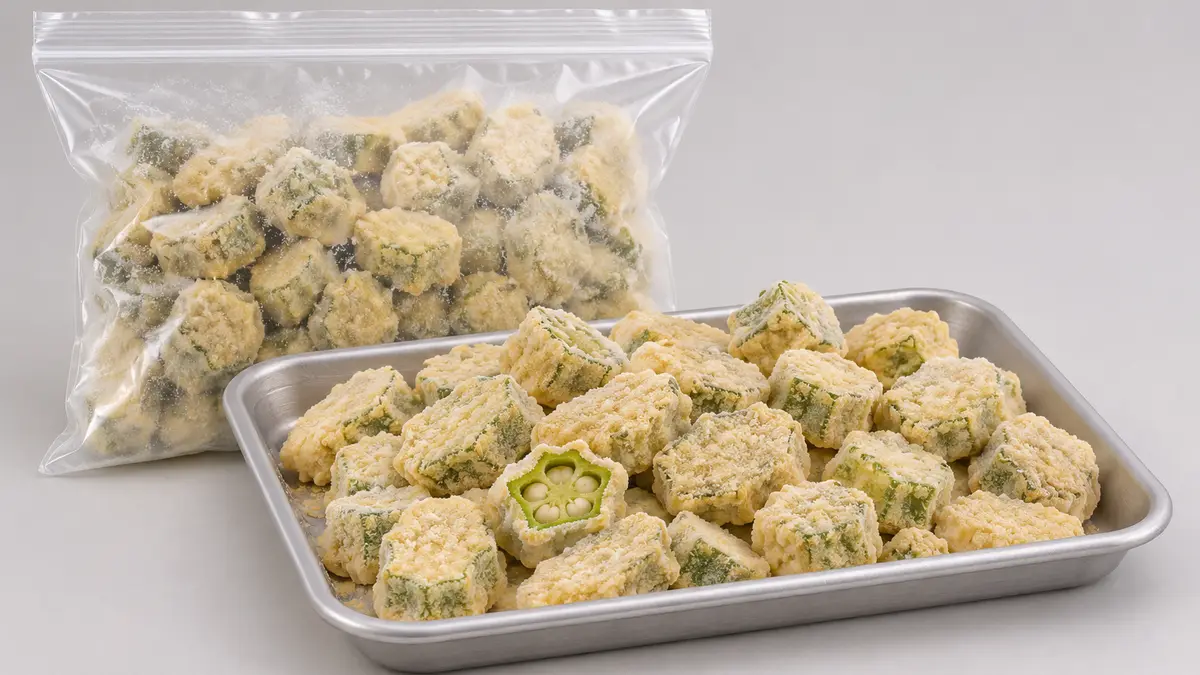
Frozen battered okra and relevant vegetable mixtures from China carry 16% UK duty in the supplied tariff snapshot. Check the complete batter recipe before ordering: dairy-containing versions from China cannot be imported into Great Britain. Cambridge China Bridge sources frozen battered okra.
Buying from China for a business? How our UK China sourcing agent service works · China sourcing agent for small orders and first imports
Duty depends on the product and recipe
Read from the UK Trade Tariff on 30 September 2026, heading 2004 covers frozen vegetables prepared or preserved otherwise than by vinegar or acetic acid, excluding products of heading 2006. Frozen battered okra is a candidate for 2004 90 98 80; vegetable mixtures containing okra are candidates for 2004 90 98 10. Both carry 16% duty from China. The table shows formats that can share a code.
The supplied lines show no anti-dumping or countervailing duty and no suspension. The tariff attaches veterinary control and organic import control. Non-exempt frozen composite products containing milk or eggs need a composite product health certificate, but a certificate does not override the prohibition on dairy products from China. Ask your customs broker to confirm the veterinary requirement and admissibility of the actual recipe. For organic goods, confirm the certificate of inspection requirement; the exporter’s control body issues it.
Give your broker the ingredients, processing description and details of any vegetable mixture before confirming the commodity code. For the wider heading, see the frozen battered courgette guide.
| Goods | Commodity code | Duty | Anti-dumping or countervailing duty on China |
|---|---|---|---|
| Frozen battered okra slices, plant-only recipe | 2004 90 98 80 | 16% | None |
| Frozen battered vegetable mixtures containing okra | 2004 90 98 10 | 16% | None |
Specify the okra cut and batter
Agree whole pods or slices, pod maturity, slice thickness, stem trimming and acceptable fibrous pieces. Specify the okra-to-coating balance, flour blend, seasoning, oil and whether the product is raw-coated or pre-fried. Approve a sample cooked from frozen using the intended kitchen method.
Request the full batter recipe, including compound ingredients, rather than a description such as vegetable coating. Check explicitly for milk powder, whey and egg. Agree coating adhesion, cooked crispness, internal texture, bag size, storage instructions and batch identification. Retail labels must list and highlight allergens. Confirm the other applicable retail-label requirements with the relevant food authority, including the food name, ingredients, net quantity, date mark, storage conditions and responsible business name and address.
Worked duty example
Illustrative example, not a quote: Frozen battered okra in catering bags, a hypothetical illustrative order under 2004 90 98 80, invoiced at £16,000 free on board, with £2,500 of freight and insurance to the UK. The customs value is £18,500. Duty at 16% is £2,960. Import VAT at 20% is charged on the customs value plus duty, £21,460, so it is £4,292. Import taxes total £7,252; a VAT-registered importer can usually reclaim the VAT, so the lasting cost is the £2,960 of duty. The import duty and VAT guide explains each step. This assumes the goods are standard-rated for VAT. Most food for human consumption is zero-rated, and animal feed can be too, in which case no import VAT is due, so check the rate for your product in HMRC's VAT Notice 701/14.
Inspection checklist
Okra: open samples and compare cut, stem removal, tenderness and fibrous pieces with the approved sample.
Coating: check bare patches, loose batter and broken pieces; cook samples from frozen to assess adhesion, crispness and oily texture.
Frozen condition: review shipment temperature records and inspect for ice accumulation, fused pieces, damaged seals and crushed bags.
Labels and batches: match the recipe, declared allergens, net quantity and batch codes to the supplied documents. Use the quality inspection guide to prepare the inspection brief.
Working out your own order? Send us the product on WhatsApp and we reply the same working day: WhatsApp us
What goes wrong
Mature pods can remain woody after cooking. Thick batter can conceal small or broken okra pieces, while poor adhesion leaves loose coating in the bag. Temperature excursions can leave fused pieces and a wet coating that cooks unevenly.
A recipe change can introduce milk powder, whey or egg without an obvious change in appearance. Dairy-containing versions from China cannot be imported into Great Britain. Freeze the approved recipe in the purchase specification, check ingredient documents before dispatch and investigate any mismatch before releasing the batch.
Cambridge China Bridge sources these products for UK businesses, checking the factory and the documents before shipment. See factory verification. For repeat volumes, see container programmes.
Frequently asked questions
What is the UK import duty on frozen battered okra from China?
The supplied tariff snapshot shows 16% for 2004 90 98 80 and relevant vegetable mixtures under 2004 90 98 10, with no trade remedy or suspension. Confirm the code against the actual recipe.
Can I import battered okra containing milk from China?
Dairy-containing versions from China cannot be imported into Great Britain. The official guidance says the dairy prohibition applies regardless of where the dairy ingredients originate.
Does egg in the batter change the import paperwork?
Non-exempt frozen composite products containing egg need a composite product health certificate. Ask your customs broker to confirm whether the Chinese product and its ingredients are admissible before ordering.
How do I check battered okra quality on arrival?
Check frozen condition, bag seals, loose coating, broken pieces and fibrous pods. Cook samples from frozen using the agreed method and compare coating adhesion and texture with the approved sample.