Sourcing fresh nashi pears from China
Fresh nashi pears from China carry 10% UK duty, with no duty variation within the supplied nashi line. Fresh fruit must meet applicable quality and labelling requirements; confirm plant-health documents before shipment to Great Britain. Cambridge China Bridge sources fresh nashi pears.
Buying from China for a business? How our UK China sourcing agent service works · China sourcing agent for small orders and first imports
Duty and import checks for fresh nashi pears
Read from the UK Trade Tariff on 29 September 2026, heading 0808 covers fresh apples, pears and quinces. Fresh nashi pears fall within 0808 30 90 10, which also covers Ya pears. The table shows packing presentations under the same commodity line, rather than separate tariff classifications. See the wider fruit guide for the rest of the heading.
The supplied nashi line carries 10% duty for goods from China, with no anti-dumping or countervailing duty and no suspension listed. It attaches unit-price and organic import controls. Ask your customs broker to confirm unit-price treatment. For organic orders, confirm the consignment inspection-certificate requirements with your broker and organic control body; the exporter’s control body issues the certificate.
Confirm botanical identity, variety and fresh condition before choosing the commodity code. This guide concerns direct imports into Great Britain. Before booking transport, ask your broker to check the plant-health category, phytosanitary documentation and notification arrangements for fresh nashi pears of Chinese origin.
| Goods | Commodity code | Duty | Anti-dumping or countervailing duty on China |
|---|---|---|---|
| Fresh nashi pears | 0808 30 90 10 | 10% | None |
Specify nashi identity, firmness and protective packing
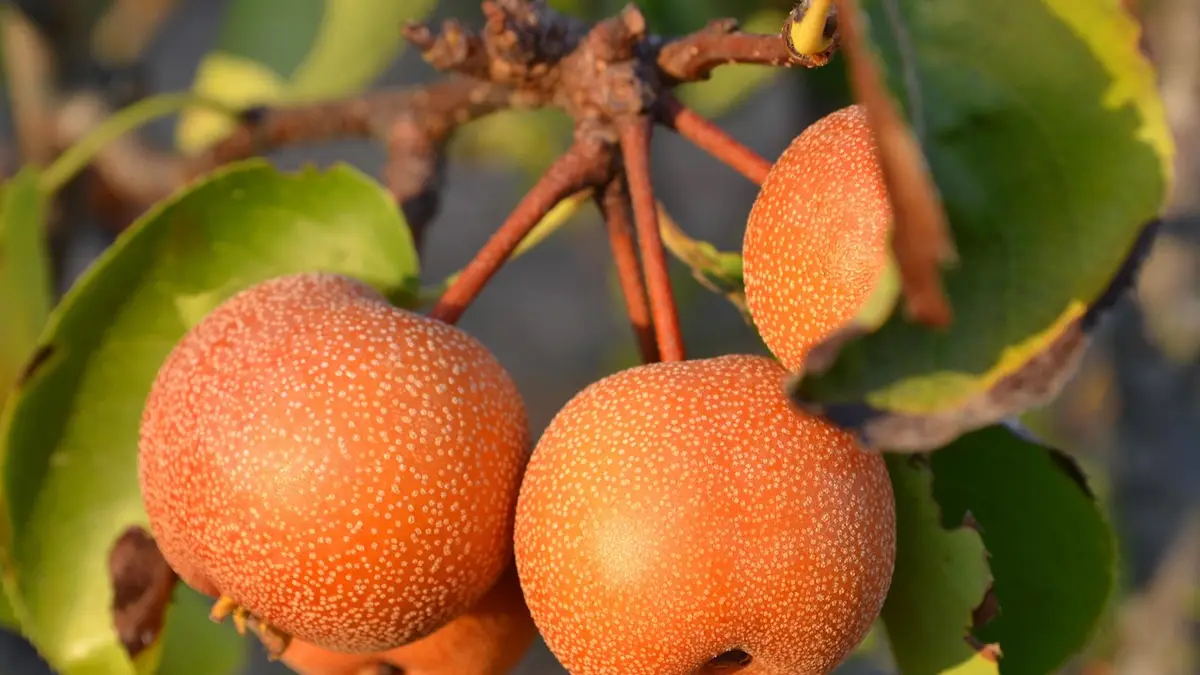
Write the variety and botanical identity into the order specification. Agree fruit size, size uniformity, skin colour, firmness, sweetness and maturity. Define acceptable russeting separately from abrasions, punctures and bruising, using photographs of approved fruit.
Agree orchard and packhouse identification, harvest and packing records, carton net weight, protective sleeves or trays, ventilation and pallet arrangement. Set a variety-specific cooling and transport specification with the packhouse. Request batch-linked pesticide test reports and agree the sampling plan before packing.
Fresh fruit must meet applicable quality and labelling requirements. Have the packhouse submit proposed carton and retail labels for review alongside the fruit specification. Match the stated variety and origin to the packing records.
Worked duty example
Illustrative example, not a quote: 10 tonnes of fresh nashi pears, illustrative only under 0808 30 90 10, invoiced at £20,000 free on board, with £3,800 of freight and insurance to the UK. The customs value is £23,800. Duty at 10% is £2,380. Import VAT at 20% is charged on the customs value plus duty, £26,180, so it is £5,236. Import taxes total £7,616; a VAT-registered importer can usually reclaim the VAT, so the lasting cost is the £2,380 of duty. The import duty and VAT guide explains each step. This assumes the goods are standard-rated for VAT. Most food for human consumption is zero-rated, and animal feed can be too, in which case no import VAT is due, so check the rate for your product in HMRC's VAT Notice 701/14.
Inspection checklist
Identity and size: compare the variety, skin appearance and size distribution with the approved specification; open cartons from different pallet positions.
Flesh and firmness: cut sample pears to check internal browning, breakdown and hidden decay; compare firmness and sweetness with the agreed specification.
Packing and cold chain: check sleeve coverage, tray support, crushed or wet cartons and blocked ventilation; review temperature records and measure arrival pulp temperature.
Batch documents: match carton marks to orchard and packing records, pesticide reports and agreed import documents; check organic inspection certificates where relevant.
Working out your own order? Send us the product on WhatsApp and we reply the same working day: WhatsApp us
What goes wrong
An attractive top layer can hide smaller, bruised or damaged pears underneath. Fruit that looks sound outside may show internal browning when cut. Overmature fruit, crushed trays and weak cartons can leave an order unsuitable for the buyer’s sales programme.
Agree how defects will be recorded and claims assessed before shipment. Photograph opened cartons and cut fruit on arrival, retain batch identification and compare findings with loading records. Use a written inspection plan so the packhouse and receiving team assess the same characteristics.
Cambridge China Bridge sources these products for UK businesses, checking the factory and the documents before shipment. See factory verification. For repeat volumes, see container programmes.
Frequently asked questions
What is the UK import duty on fresh nashi pears from China?
The supplied tariff line 0808 30 90 10 carries 10% duty. No anti-dumping or countervailing duty or suspension is listed.
What import documents should I check before shipping nashi pears?
Ask your broker to confirm the plant-health category, phytosanitary documentation and notification arrangements for fresh nashi pears from China before booking transport.
Can I import organic nashi pears from China?
Confirm the consignment inspection-certificate requirements with your broker and organic control body before ordering. The certificate is issued by the exporter’s control body.
What should I check when nashi pears arrive?
Check variety, size, firmness, bruising and decay. Cut samples for internal browning, review temperature records and inspect sleeves, trays and cartons for pressure damage.