Sourcing fresh cantaloupe melons from China
Fresh cantaloupe melons from China have an 8% standard UK duty, with a suspension to 0% for qualifying goods. Fresh produce must meet quality and labelling requirements; confirm organic consignment inspection certificate requirements with your customs broker or organic control body. Confirm the variety and suspension before shipment. Cambridge China Bridge sources fresh cantaloupe melons.
Buying from China for a business? How our UK China sourcing agent service works · China sourcing agent for small orders and first imports
Cantaloupe classification and duty
Read from the UK Trade Tariff on 29 September 2026, heading 0807 covers fresh melons, including watermelons, and papayas. For cantaloupe, check the exact variety against the named melon lines before using the residual code 0807 19 00 90. The table includes neighbouring melon lines for comparison, rather than treating every line as cantaloupe. See the honeydew and wider melon guide.
The supplied melon lines carry 8% duty for goods from China and an autonomous suspension to 0%, with no recorded anti-dumping or countervailing duty. The suspension excludes mixtures, preparations and products containing these goods as components. The tariff attaches unit-price and organic-import controls. Ask your customs broker to confirm the unit-price requirement and suspension applicability. HMRC's deductive valuation method is based on the selling price in the UK.
For organic claims, ask your broker and organic control body to confirm inspection certificate requirements for each consignment and the China-specific paperwork before loading; the exporter's control body issues the certificate. Plant-health risk categories can change, so confirm the current category for the fruit and origin separately. Use our commodity code guide to prepare the variety description and product photographs for classification.
| Goods | Commodity code | Duty | Anti-dumping or countervailing duty on China |
|---|---|---|---|
| Other fresh melons: candidate line for cantaloupe, subject to variety checks | 0807 19 00 90 | 8% | None |
| Honeydew and other named fresh melon varieties: comparison | 0807 19 00 50 | 8% | None |
| Fresh Galia melons: comparison | 0807 19 00 60 | 8% | None |
| Fresh watermelons: comparison | 0807 11 00 00 | 8% | None |
Specify variety, maturity and flesh condition
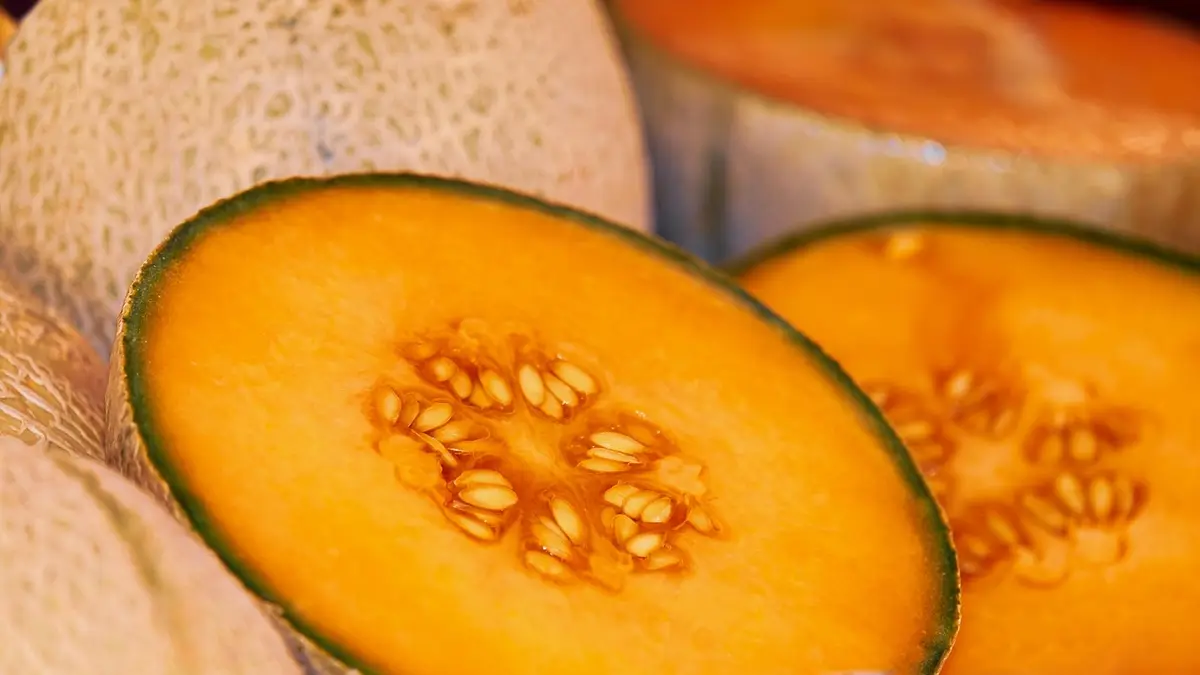
Order whole fresh cantaloupe by cultivar, with photographs of the rind and cut flesh. Agree flesh colour, netting, fruit weight range, carton count, firmness, sweetness measurement method and acceptable defects. A supplier's description of 'Hami melon' alone is insufficient for a precise buying specification.
Agree harvest maturity, packing materials, ventilation, loading condition and a transport temperature suitable for the cultivar. Ask for temperature records and lot-linked pesticide test results. Fresh produce must meet quality and labelling requirements. Build origin information, supplier identification and lot references into your packing brief.
Worked duty example
Illustrative example, not a quote: 5 tonnes of whole fresh cantaloupe melons; illustrative order only under 0807 19 00 90, invoiced at £3,800 free on board, with £1,800 of freight and insurance to the UK. The customs value is £5,600. Duty at 8% is £448. Import VAT at 20% is charged on the customs value plus duty, £6,048, so it is £1,209.60. Import taxes total £1,657.60; a VAT-registered importer can usually reclaim the VAT, so the lasting cost is the £448 of duty. The import duty and VAT guide explains each step. This assumes the goods are standard-rated for VAT. Most food for human consumption is zero-rated, and animal feed can be too, in which case no import VAT is due, so check the rate for your product in HMRC's VAT Notice 701/14.
Inspection checklist
Identity: compare rind, flesh colour and cultivar records with the approved sample and customs description.
Condition: inspect for cracks, bruising, mould, soft stem ends, leaking juice and an abnormal smell; cut a sample to examine internal breakdown.
Maturity: compare firmness, sweetness and flavour with the agreed specification, sampling across cartons rather than selecting attractive fruit.
Packing and records: check carton strength, ventilation, fruit counts, origin information, lot references and temperature records; reconcile organic certificates with the shipment where applicable.
Working out your own order? Send us the product on WhatsApp and we reply the same working day: WhatsApp us
What goes wrong
Fruit can look sound outside while the flesh is watery or breaking down. Uneven maturity leaves some cartons hard and bland while others soften during transport. Compression damage, wet cartons and poor ventilation can conceal deterioration until unloading.
A generic melon name can lead to the wrong comparison sample or customs line. Organic paperwork can also be disconnected from the actual lot. Record defects at arrival, photograph cut fruit and carton markings, and agree how disputed batches will be assessed before ordering. See our quality inspection guide.
Cambridge China Bridge sources these products for UK businesses, checking the factory and the documents before shipment. See factory verification. For repeat volumes, see container programmes.
Frequently asked questions
What is the UK import duty on fresh cantaloupe from China?
The supplied tariff data records 8% standard duty and a 0% autonomous suspension for the relevant melon line. Confirm the variety, code and suspension conditions with your customs broker.
Which commodity code covers fresh cantaloupe melons?
0807 19 00 90 is a candidate residual line. Check the cultivar against the named melon lines first; a generic 'Hami melon' description does not settle classification.
Can I import organic cantaloupe melons from China?
Ask your customs broker or organic control body to confirm inspection certificate requirements for each organic consignment. The exporter's control body issues the certificate. Confirm the supplier's certification and China-specific import paperwork before shipment.
What should I check when fresh cantaloupe arrives?
Check firmness, rind damage, stem-end mould, carton moisture and transport records. Cut representative fruit to check flesh condition, sweetness and flavour against the agreed sample.