Sourcing fishmeal and animal meal from China
UK duty under heading 2301 is 0% across both commodity lines for goods from China. Animal-origin feed from China is prohibited unless covered by the permitted exceptions, so establish eligibility before ordering. Cambridge China Bridge sources fishmeal and animal meal.
Buying from China for a business? How our UK China sourcing agent service works · China sourcing agent for small orders and first imports
Duty and permission to import
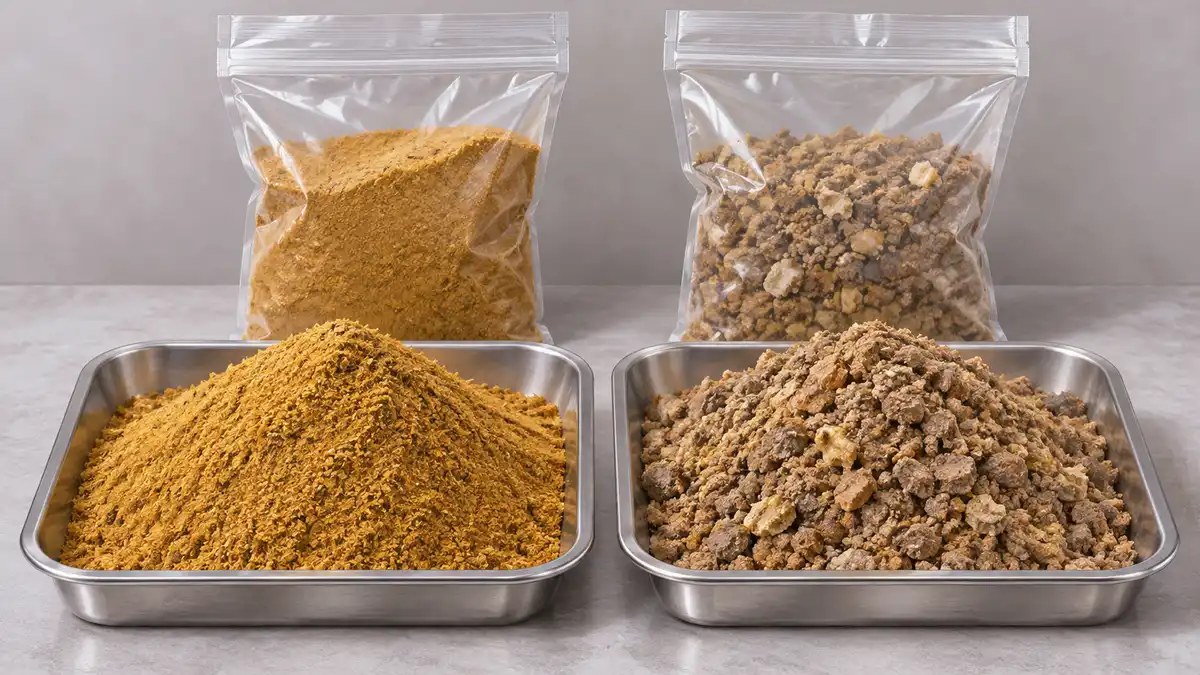
Read from the UK Trade Tariff on 17 November 2026, heading 2301 covers flours, meals and pellets of meat, offal, fish and aquatic invertebrates unfit for human consumption, plus greaves. Both codes carry 0% duty for goods from China, with no anti-dumping or countervailing duty and no listed suspension. The product forms in the table share the commodity codes.
The tariff attaches veterinary, CITES, organic and waste import controls, plus a seal-products control to the meat and greaves line. It also lists CITES and waste export controls. Animal-origin feed from China is prohibited unless listed among the permitted exceptions. A tariff code does not establish permission to import. For CITES and any planned re-export, ask your customs broker to confirm the requirements for the species and destination.
For eligible animal by-products entering Great Britain, use IPAFFS pre-notification and an approved border control post. The veterinary tariff measure calls for a CHED-P. Organic imports from China need a certificate of inspection. For waste, establish its classification and applicable shipment controls; seal products need an applicable exemption. Confirm the commodity code using species, processing, composition and intended use. Ask your broker to confirm documents before shipment.
| Goods | Commodity code | Duty | Anti-dumping or countervailing duty on China |
|---|---|---|---|
| Meat or meat offal meal, unfit for human consumption | 2301 10 00 00 | 0% | None |
| Fishmeal, unfit for human consumption | 2301 20 00 00 | 0% | None |
Specify species, processing and intended use
State the animal species, raw-material origin, rendering or drying process, powder or pellet form and intended customer use. For processed animal protein, fishmeal and other animal proteins follow different permitted-country lists. The producing establishment must be approved to export the product to Great Britain. Ask APHA to confirm whether the precise Chinese product falls within a permitted exception before committing to an order.
Agree crude protein, fat, moisture, ash, salt, particle size and pellet condition in writing. Request batch analysis and independent samples, including checks for contamination and undeclared animal material. For feed use, ask the relevant feed authority to confirm importer registration requirements and the feed material name and statutory declarations required on the label. Compare finished feeds with our pet food and animal feed guide.
Worked duty example
Illustrative example, not a quote: Illustrative only: 12 tonnes of fishmeal, subject to confirmation of import eligibility under 2301 20 00 00, invoiced at £30,000 free on board, with £3,500 of freight and insurance to the UK. The customs value is £33,500. Duty at 0% is £0. Import VAT at 20% is charged on the customs value plus duty, £33,500, so it is £6,700. With no duty, the only import tax is the VAT, which a VAT-registered importer can usually reclaim. The import duty and VAT guide explains each step. This assumes the goods are standard-rated for VAT. Most food for human consumption is zero-rated, and animal feed can be too, in which case no import VAT is due, so check the rate for your product in HMRC's VAT Notice 701/14.
Inspection checklist
Identity: match the declared species, producing plant, batch references and intended use across the specification, bags and shipment documents.
Analysis: compare independently sampled protein, fat, moisture, ash and salt with the contract; retain sealed samples for investigating differences on arrival.
Condition: inspect for wet bags, mould, insects, caking, damaged liners and inconsistent pellet size; record the condition at loading and receipt.
Documents: for eligible processed animal protein, check the appropriate health certificate and the required non-human-consumption label. Match the consignment to the approved establishment and pre-notification.
Working out your own order? Send us the product on WhatsApp and we reply the same working day: WhatsApp us
What goes wrong
A supplier may offer an animal meal without establishing whether that product is permitted from China. Factory approval alone does not resolve the China-specific restriction. Separate import eligibility from commercial quality, and obtain confirmation for the actual species, process and end use before arranging shipment.
Protein below the agreed specification, excess ash, moisture damage and mixed animal material are useful failure checks. Agree independent sampling and a rejection procedure before production. APHA guidance requires fishmeal for animal feed to be sampled for microscopy at the border control post and held pending the result, so account for that hold in your receiving arrangements.
Cambridge China Bridge sources these products for UK businesses, checking the factory and the documents before shipment. See factory verification. For repeat volumes, see container programmes.
Frequently asked questions
What is the UK import duty on fishmeal from China?
Both commodity lines under heading 2301 carry 0% duty for goods from China, with no listed anti-dumping or countervailing duty. This does not establish permission to import.
Can I import Chinese meat meal for animal feed?
Animal-origin feed from China is prohibited unless covered by a listed exception. Do not assume meat meal qualifies. Ask APHA to confirm the precise product before ordering.
Does fishmeal need an approved Chinese factory?
Processed animal protein must come from an establishment approved to export to Great Britain. Country and product eligibility also need checking; plant approval alone is insufficient.
What should I test before accepting a fishmeal batch?
Compare independently sampled protein, fat, moisture, ash and salt with your contract. Check species identity, contamination, bag condition and batch references, and retain sealed samples.
Sources
- UK Trade Tariff — commodity codes and duty
- APHA general information for imports of animal by-products
- APHA import conditions for processed animal protein
- Importing organic food, feed and seed to the UK
- Bringing seal products into Great Britain
- Waste export and import guidance
- HMRC — Food products (VAT Notice 701/14)