Sourcing farriers' hoof knives from China
Farriers' hoof knives from China carry 6% to 8% UK duty across complete fixed-blade knives and separate blades. Confirm applicable workplace-tool safety and safe-use information requirements with the relevant authority. Agree handedness, hook profile and handle security. Cambridge China Bridge sources farriers' hoof knives.
Buying from China for a business? How our UK China sourcing agent service works · China sourcing agent for small orders and first imports
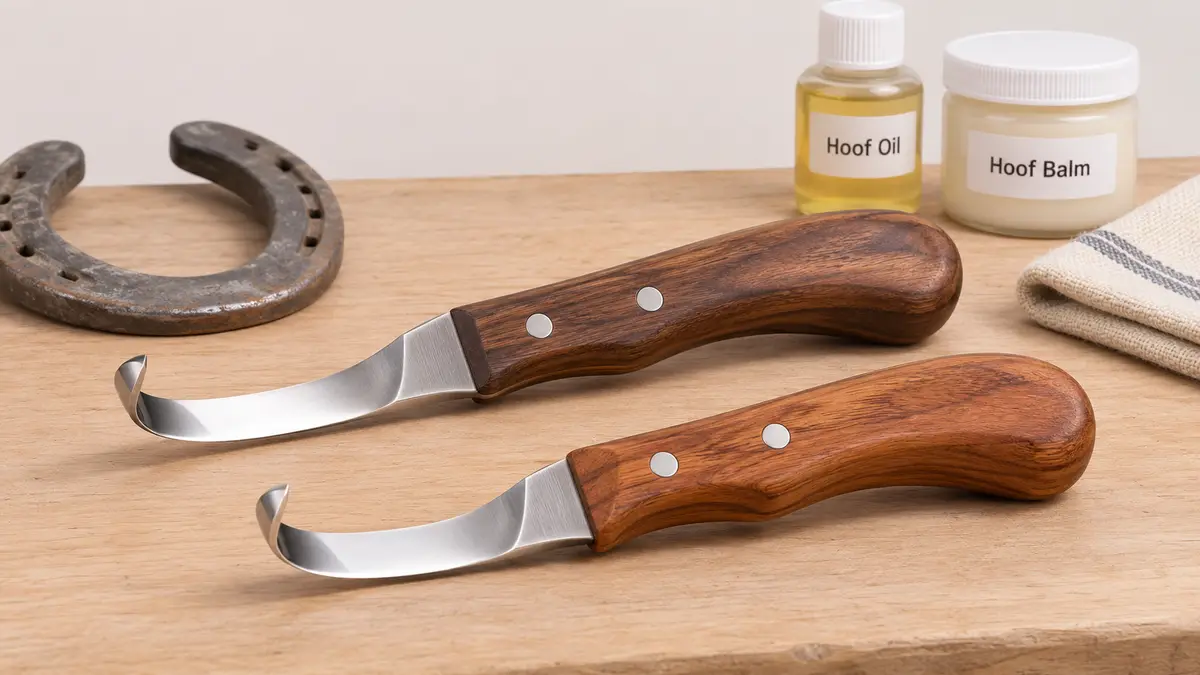
Duty on hoof knives and separate blades
Read from the UK Trade Tariff on 30 September 2026, heading 8211 covers knives with cutting blades and their blades. Complete fixed-blade hoof knives fall under 8211 92 00 00 at 8% duty from China; separate blades fall under 8211 94 00 00 at 6%. The supplied record lists no anti-dumping or countervailing measures or suspensions for these lines. The table shows product variants sharing a code, rather than separate tariff subdivisions.
The UK Trade Tariff attaches ivory import control to the fixed-blade line and CITES import control to both lines. Dealing in elephant ivory items is illegal unless they are registered or have an exemption certificate. CITES specimens require an import permit, including items made from protected animal or plant material. Specify handle materials and obtain species information where relevant; ask your customs broker to confirm the applicable declarations and documents for the goods from China.
Confirm whether the shipment contains complete knives or separate blades using the commodity code guide. For other knives within the wider heading, see the pruning knives guide. Use the import duty and VAT guide when reviewing the illustrative order.
| Goods | Commodity code | Duty | Anti-dumping or countervailing duty on China |
|---|---|---|---|
| Right-handed fixed-blade farrier's hoof knives | 8211 92 00 00 | 8% | None |
| Separate replacement blades for farriers' hoof knives | 8211 94 00 00 | 6% | None |
Specify handedness, hook profile and handle fit
State whether each knife is left-handed, right-handed or double-edged. Supply a drawing showing blade length, width, thickness, curvature, hook opening, bevel and handle shape. Agree steel grade, heat treatment, hardness and sharpening condition. Approve a sample with the intended farrier before accepting the production shape.
Specify tang construction, rivets or bonding, handle material and surface finish. Agree grip checks with gloves and a sharpening method suited to the curved edge. Request instructions covering handling, sharpening, cleaning and recognising damage.
Confirm the applicable knife-sale age restrictions and online age-verification and delivery requirements with Trading Standards before selling. Check each design against the banned knife categories before ordering.
Worked duty example
Illustrative example, not a quote: Illustrative mixed stock order of left-handed and right-handed hoof knives for a farriery supplier under 8211 92 00 00, invoiced at £30,000 free on board, with £2,000 of freight and insurance to the UK. The customs value is £32,000. Duty at 8% is £2,560. Import VAT at 20% is charged on the customs value plus duty, £34,560, so it is £6,912. Import taxes total £9,472; a VAT-registered importer can usually reclaim the VAT, so the lasting cost is the £2,560 of duty. The import duty and VAT guide explains each step.
Inspection checklist
Blade profile: compare handedness, hook opening, curvature and bevel with the approved drawing; check for burrs, cracks and chipped tips.
Material and edge: match material certificates to the agreed steel grade, check sample hardness and trial cutting and resharpening on suitable hoof material under an experienced farrier's supervision.
Handle security: pull and twist the handle to check movement; inspect tang attachment, rivets, splits, sharp seams and grip with gloves.
Arrival condition: check corrosion, blade guards, carton punctures, product identification and safe-use instructions. Agree sampling and acceptance through the inspection guide.
Working out your own order? Send us the product on WhatsApp and we reply the same working day: WhatsApp us
What goes wrong
A blade can look correct but have the wrong bevel orientation or a hook that is awkward to sharpen. Mixed handedness in cartons creates picking errors. Record the approved profile and identify each variant clearly on its packaging.
Soft edges blunt quickly, brittle hooks chip and loose handles reduce control. Wet packing can leave rust around the tang and edge. Compare production samples with the approved knife, inspect attachment security and hold damaged arrivals for assessment.
Cambridge China Bridge sources these products for UK businesses, checking the factory and the documents before shipment. See factory verification. For repeat volumes, see container programmes.
Frequently asked questions
What is the UK import duty on farriers' hoof knives from China?
Complete fixed-blade hoof knives carry 8% duty under 8211 92 00 00; separate blades carry 6% under 8211 94 00 00. The supplied record lists no anti-dumping or countervailing measures for these lines.
What should I specify when ordering hoof knives?
Specify handedness, blade curvature, hook opening, bevel, steel grade, hardness and handle attachment. Approve the shape and sharpening condition with the intended farrier.
Can I sell hoof knives to someone under 18?
Confirm with Trading Standards which knife-sale age restrictions apply to a fixed-blade hoof knife, whether any exception applies, and what age-verification and delivery arrangements are required for online sales.
Why does the tariff show CITES for hoof knives?
Handle material can matter: CITES specimens include items made from protected animal or plant material and require an import permit. Obtain material details and ask your customs broker to confirm the applicable declarations.