Sourcing fanfold corrugated board from China
Fanfold corrugated board from China carries 0% UK import duty under 4808 10 00 00, with no trade remedy recorded. Importers placing board containing virgin wood fibre on the Great Britain market should confirm their timber due diligence obligations with the relevant authority. Specify fold pitch and test feeding on your box-making machine. Cambridge China Bridge sources fanfold corrugated board.
Buying from China for a business? How our UK China sourcing agent service works · China sourcing agent for small orders and first imports
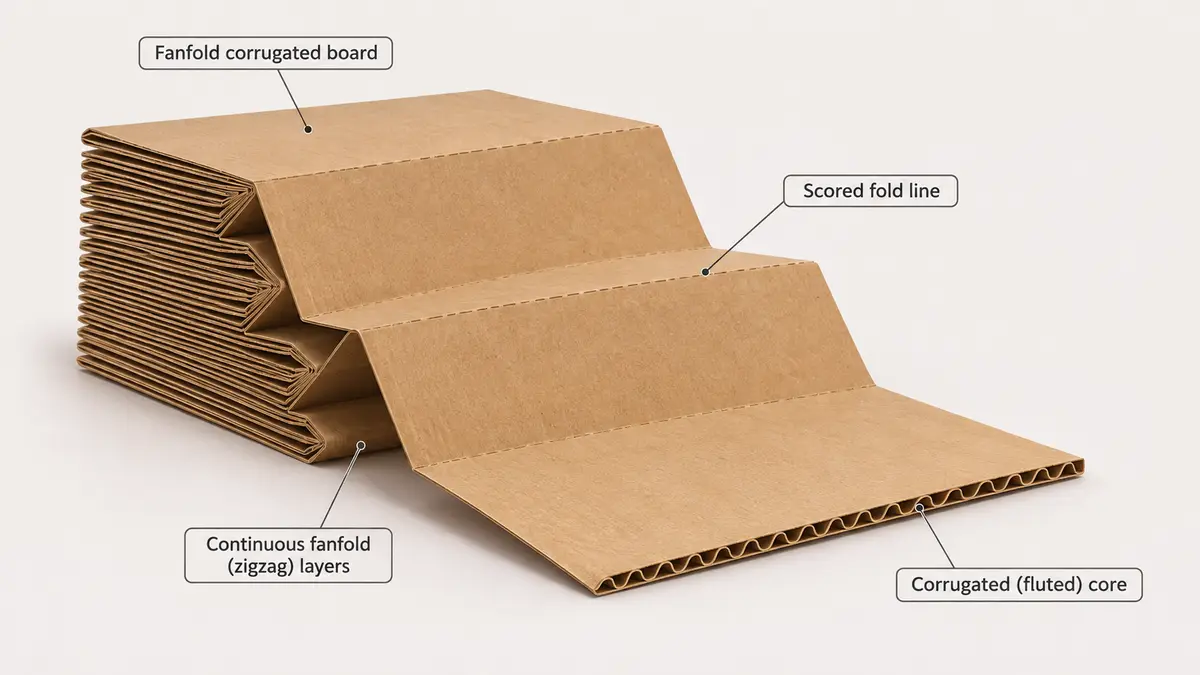
Duty on continuous folded corrugated board
Heading 4808 covers corrugated paper and paperboard in rolls or sheets, alongside creped, crinkled, embossed and perforated papers. This guide concerns continuous corrugated board folded into stacks for feeding into box-making equipment. The table shows product variants sharing the corrugated paper and paperboard line, rather than separate tariff classifications.
Read from the UK Trade Tariff on 30 September 2026, the supplied tariff snapshot records 0% duty for goods from China under 4808 10 00 00. It records no anti-dumping or countervailing duty, suspension or attached import control for that line. Import VAT is separate, normally at 20%.
Confirm the commodity code using the board construction and its condition when imported. Made-up boxes and cartons fall under heading 4819. See the corrugated board and kraft paper guide for the wider heading.
| Goods | Commodity code | Duty | Anti-dumping or countervailing duty on China |
|---|---|---|---|
| Single-wall fanfold corrugated board | 4808 10 00 00 | 0% | None |
Specify fold pitch and machine feeding
Specify board width, distance between folds, flute profile, wall construction, liner and medium grades, grammage and fibre mix. Agree tolerances for thickness, warp and fold position, plus splice construction, marking and permitted frequency. Give the factory your machine's feeding direction and stack arrangement. Approve a sample stack by running it through the actual feeder, cutter and creaser.
Agree edge crush, burst, moisture and water absorptiveness targets with the factory. Compare results on conditioned samples using the same methods. Ask for protective wrapping, supported stack edges and strapping that does not crush the flutes. Record the supplied length and usable quantity separately so damaged folds and splices do not disappear into the order total.
For board containing virgin wood fibre, confirm the timber due diligence obligations of the importer first placing it on the Great Britain market with the relevant authority. Request pulp-source information, species, country of harvest and supporting legality records. For mixed virgin and recycled material, the virgin component needs assessment; a recycled-content claim does not remove that task.
Worked duty example
Illustrative example, not a quote: Illustrative order: 30,000 connected double-wall panels supplied in fanfold stacks under 4808 10 00 00, invoiced at £9,500 free on board, with £2,600 of freight and insurance to the UK. The customs value is £12,100. Duty at 0% is £0. Import VAT at 20% is charged on the customs value plus duty, £12,100, so it is £2,420. With no duty, the only import tax is the VAT, which a VAT-registered importer can usually reclaim. The import duty and VAT guide explains each step.
Inspection checklist
Dimensions: measure width, fold pitch, thickness and warp across samples from different stacks; compare them with the approved specification.
Feeding: run a sample through the intended machine and check fold opening, tracking, splice passage, cutting and creasing without tearing or jams.
Strength: check conditioned edge crush and burst results, grammage, moisture and liner bonding against the agreed grade; inspect folds for cracked liners.
Arrival condition: photograph wet wrapping, crushed flutes, damaged stack edges and loose strapping before unpacking; reconcile stack identification and usable quantity.
Working out your own order? Send us the product on WhatsApp and we reply the same working day: WhatsApp us
What goes wrong
A flat sample can pass while the folded stack fails. Uneven fold pitch, stiff folds or thick splices interrupt feeding. Weak liners split where the board repeatedly bends, and poor bonding opens during conversion. Damp board warps; excessive strapping pressure crushes the flutes. Keep the approved stack and machine-trial record for comparison with production and arrival samples.
Packaging made from the board and supplied in the UK can bring packaging extended producer responsibility obligations. Producers must assess the packaging they supply or import to establish whether they are obligated. Confirm your role before treating raw board, converted packaging and the shipment's protective packaging as the same reporting category.
Cambridge China Bridge sources these products for UK businesses, checking the factory and the documents before shipment. See factory verification. For repeat volumes, see container programmes.
Frequently asked questions
What is the UK import duty on fanfold corrugated board from China?
The supplied tariff snapshot records 0% under 4808 10 00 00, with no anti-dumping or countervailing duty. Import VAT is separate.
Does fanfold board use the same code as finished cardboard boxes?
Corrugated board stock is covered by 4808 10 00 00. Made-up boxes and cartons fall under heading 4819. Confirm classification from the goods as imported.
How do I check fanfold board fits my box-making machine?
Specify width, fold pitch, thickness, feed direction and splices. Run an approved sample stack through your actual feeder, cutter and creaser before accepting production.
Do timber rules apply to recycled fanfold board?
Confirm with the relevant authority whether recovered products qualify for exclusion from timber due diligence requirements. Where board mixes virgin and recycled wood fibre, the virgin component still needs assessment.