Sourcing excavator track rollers from China
Excavator track rollers from China carry 0% UK duty under the relevant other-parts lines of heading 8431. Confirm classification from the roller's construction and intended machine. Plant and equipment must be made safe before replacement work starts. Cambridge China Bridge sources excavator track rollers.
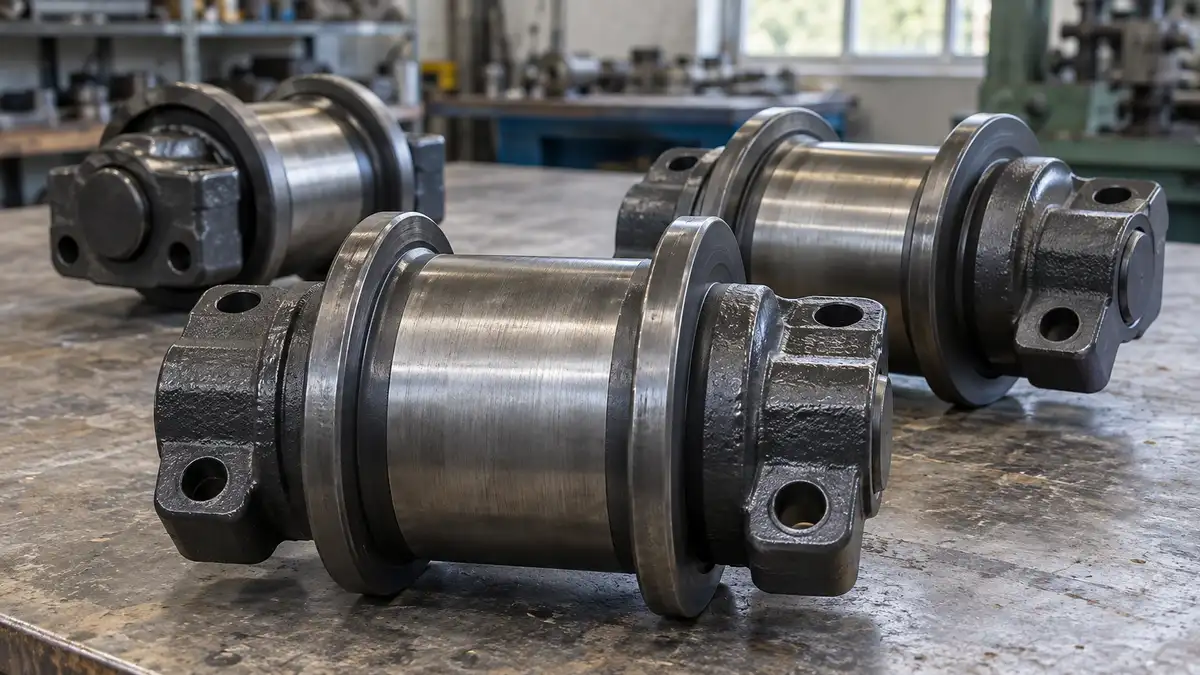
Duty and classification for track rollers
Read from the UK Trade Tariff on 30 September 2026, heading 8431 covers parts suitable solely or principally for the machinery described in that heading. For excavator rollers, the candidate other-parts lines are 8431 49 20 90 for qualifying cast iron or cast steel parts and 8431 49 80 90 for other parts. The table separates bottom and carrier rollers within these shared codes.
Both candidate lines carry 0% duty for goods from China. The supplied tariff extract lists no anti-dumping or countervailing duty, tariff suspension or attached import control for either line. These are roller candidates, not the separate tariff descriptions for steel track shoes. The wider track-parts context is in our excavator steel track chains guide.
Send the customs broker the machine application, assembly drawing, material details and manufacturing method to confirm the commodity code. Do not select a code solely from a supplier's description of the roller shell.
| Goods | Commodity code | Duty | Anti-dumping or countervailing duty on China |
|---|---|---|---|
| Excavator bottom rollers qualifying as cast iron or cast steel parts | 8431 49 20 90 | 0% | None |
| Other excavator bottom rollers, subject to classification | 8431 49 80 90 | 0% | None |
Specify the roller and its machine fit
State the excavator make, model, serial reference and replacement part reference. Identify bottom or carrier rollers and the flange arrangement. Supply a drawing showing shell diameter, tread profile, overall width, shaft ends, mounting centres and bolt holes. Agree tolerances against the machine's mounting arrangement and track chain.
Specify shell and shaft materials, heat treatment, hardness acceptance criteria, hardened depth, bush or bearing construction, seal arrangement and lubricant. Ask for batch-linked material and hardness records. Agree whether mounting bolts are included, and request fitting and lubrication information for the supplied assembly.
For replacement work, plant and equipment must be made safe before maintenance starts. Plan fitting around the machine manufacturer's maintenance instructions rather than treating a matching part reference as sufficient installation information.
Worked duty example
Illustrative example, not a quote: Illustrative order of 40 excavator bottom rollers; FOB and freight in whole pounds under 8431 49 80 90, invoiced at £8,000 free on board, with £1,200 of freight and insurance to the UK. The customs value is £9,200. Duty at 0% is £0. Import VAT at 20% is charged on the customs value plus duty, £9,200, so it is £1,840. With no duty, the only import tax is the VAT, which a VAT-registered importer can usually reclaim. The import duty and VAT guide explains each step.
Inspection checklist
Fit: measure mounting centres, shaft ends, flange profile and tread width against the approved drawing; trial-fit a sample where practical.
Wear surfaces: check batch-linked hardness results, the agreed hardened depth and material records; inspect for cracks, damaged flanges and machining defects.
Assembly: rotate the roller, check agreed bearing play and inspect seals and plugs for damage or lubricant leakage. Repeat these checks on arrival.
Packing: check corrosion protection, separation between rollers and secure restraint. Solid wood packaging used to import into Great Britain must meet the international phytosanitary packaging standard. Record packing condition during inspection.
Working out your own order? Send us the product on WhatsApp and we reply the same working day: WhatsApp us
What goes wrong
A roller sold for the right excavator model can still have different mounting centres or flange geometry. Shallow hardening can cause early wear, while damaged seals, poor shaft finish or excessive bearing play can lead to leakage and seizure. Approve dimensions and acceptance criteria before production, then compare the shipment with that approved specification.
Mixed part references and unrestrained packing make arrival checks harder and can damage sealing surfaces. Require clear part and batch identification, keep suspect rollers separate and document defects before fitting.
Cambridge China Bridge sources these products for UK businesses, checking the factory and the documents before shipment. See factory verification. For machinery and equipment, see machinery imports.
Frequently asked questions
What is the UK import duty on excavator track rollers from China?
The supplied tariff extract gives 0% for 8431 49 20 90 and 8431 49 80 90, with no listed trade remedy or suspension. Confirm which line fits the roller's construction.
Are bottom rollers and carrier rollers interchangeable?
Do not assume so. Confirm roller position, flange profile, dimensions and mounting arrangement against the machine and approved drawing.
What should I ask the Chinese roller factory for?
Ask for an assembly drawing, material details, heat-treatment and hardness records, seal and bearing specifications, lubricant details and batch identification.
How do I check track rollers when they arrive?
Compare part references and dimensions with the approved drawing. Check rotation, bearing play, seal condition, leaks, corrosion and packing damage before fitting.