Sourcing ceramic wall pockets from China
Decorative ceramic wall pockets from China carry UK duty of 2% to 6%, depending on the ceramic body. Consumer products sold in Great Britain must be safe under the General Product Safety Regulations 2005. Check hanging strength, sharp edges and packing before shipment. Cambridge China Bridge sources decorative ceramic wall pockets.
Buying from China for a business? How our UK China sourcing agent service works · China sourcing agent for small orders and first imports
UK duty: 2% or 6%
Read from the UK Trade Tariff on 1 October 2026, heading 6913 covers statuettes and other ornamental ceramic articles. Decorative ceramic wall pockets fall within this family when their character and use are ornamental. Common pottery carries 2% duty from China; porcelain or china, earthenware or fine pottery and other ceramics carry 6%. The supplied tariff record lists no anti-dumping or countervailing duties and no suspensions.
The tariff attaches cat and dog fur and waste import controls. Imports containing cat or dog fur are banned, including decorative additions made from it. If a consignment from China is waste subject to notification controls, shipment requires consent from the competent authorities of dispatch, destination and transit. Confirm the applicable waste procedure with your customs broker. The record also lists cultural-object export licensing and fur and waste export controls; check these with your broker if exporting.
Confirm the body material, manufacturing method and intended use with drawings and a sample before choosing the commodity code. Describe the product as a decorative wall pocket rather than relying on a supplier's description of a vase or planter. See the ceramic decorative wall plaques guide for the wider ornamental heading.
| Goods | Commodity code | Duty | Anti-dumping or countervailing duty on China |
|---|---|---|---|
| Hand-made porcelain or china decorative wall pockets | 6913 10 00 10 | 6% | None |
| Other porcelain or china decorative wall pockets | 6913 10 00 90 | 6% | None |
| Hand-made common pottery decorative wall pockets | 6913 90 10 10 | 2% | None |
| Other common pottery decorative wall pockets | 6913 90 10 90 | 2% | None |
| Other earthenware or fine pottery decorative wall pockets | 6913 90 93 90 | 6% | None |
| Other decorative ceramic wall pockets, such as stoneware | 6913 90 98 90 | 6% | None |
Specify the pocket and hanging arrangement
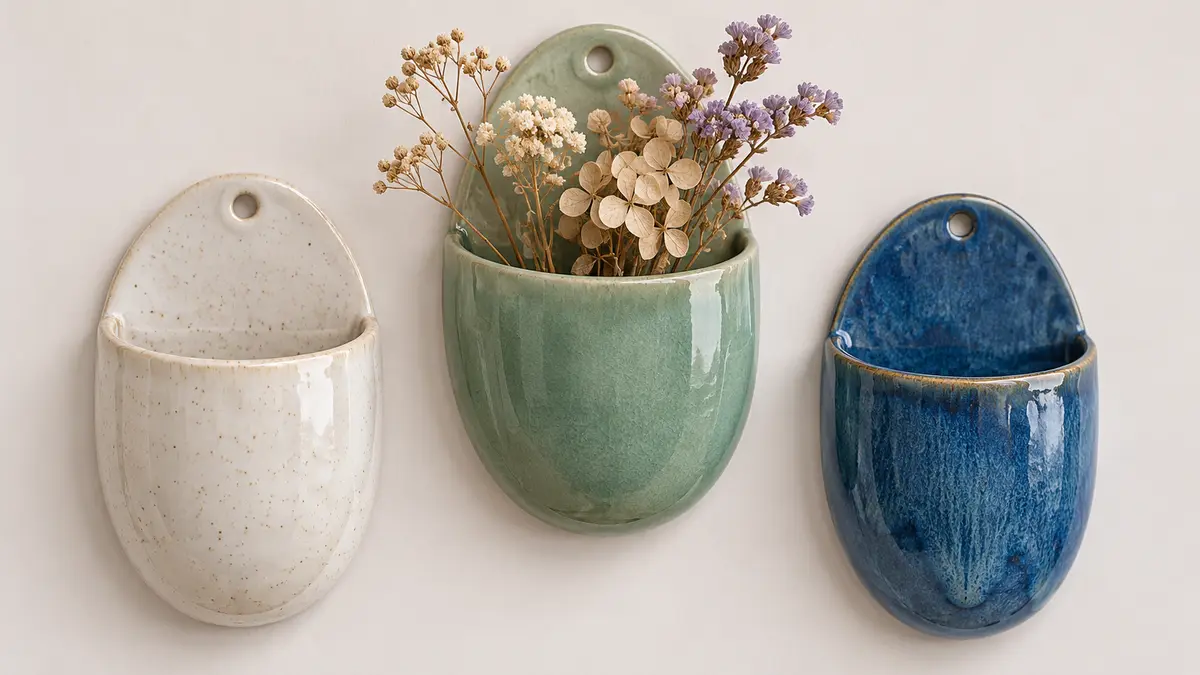
Specify the ceramic body, overall dimensions, pocket opening and depth, empty weight, back profile and hanging-hole or loop geometry. State whether the pocket is intended for dried stems, artificial flowers or water. For water use, agree a leakage test and test the hanging arrangement with the intended contents. Match glaze colour, relief details and decoration to an approved physical sample.
Consumer wall pockets sold in Great Britain must be safe under the General Product Safety Regulations 2005. Assess falling pieces, sharp rims and fractured hanging points. Agree suitable mounting instructions, the intended wall surfaces and whether fixings are supplied. Specify individual cushioning that supports the body without pressing against the rim, projecting decoration or hanging loop.
Worked duty example
Illustrative example, not a quote: 1,000 porcelain decorative wall pockets; illustrative order, with illustrative FOB and freight values under 6913 10 00 90, invoiced at £8,000 free on board, with £1,500 of freight and insurance to the UK. The customs value is £9,500. Duty at 6% is £570. Import VAT at 20% is charged on the customs value plus duty, £10,070, so it is £2,014. Import taxes total £2,584; a VAT-registered importer can usually reclaim the VAT, so the lasting cost is the £570 of duty. The import duty and VAT guide explains each step.
Inspection checklist
Hanging: check hole position, loop integrity and clearance for the agreed fixing; trial the complete arrangement with the intended contents and check that the back sits as specified.
Body and glaze: inspect the rim, pocket interior and hanging point for cracks, chips, sharp edges, pinholes and unintended crazing; compare colour and decoration with the approved sample.
Water use: where specified, test for seepage through the body and leakage around seams; check whether water reaches the wall or fixing.
Packing: check that pieces cannot collide and that inserts protect projections without loading them; inspect the contents after the agreed carton drop test. See quality inspection explained.
Working out your own order? Send us the product on WhatsApp and we reply the same working day: WhatsApp us
What goes wrong
A hanging hole can be partly blocked by glaze or sit too close to a thin edge. Warped backs leave the pocket tilted, and a sample tested empty may fail with its intended contents. Water-holding versions can seep onto the wall even when the outside glaze looks sound. Test the actual mounting arrangement and intended use before approving production.
Raised flowers, narrow rims and hanging loops can break when packing transfers carton pressure onto them. Glaze shades and relief details can also drift between batches. Keep the approved sample available for inspection and agree rejection criteria for cracks, sharp edges, leakage and damaged mounting points.
Cambridge China Bridge sources these products for UK businesses, checking the factory and the documents before shipment. See factory verification. For own-brand ranges, see sourcing for brands.
Frequently asked questions
What is the UK import duty on ceramic wall pockets from China?
Under heading 6913, common pottery carries 2%; porcelain or china, earthenware or fine pottery and other ceramics carry 6%. The supplied tariff record lists no anti-dumping or countervailing duties.
Can decorative ceramic wall pockets hold water?
Specify water use explicitly. Agree a leakage test and test the hanging arrangement with the intended contents. An attractive glaze does not establish that the pocket will retain water.
What safety rules apply when selling ceramic wall pockets?
Assess sharp edges, falling pieces and failure of the hanging point.
What should I check on arrival?
Check rims, relief decoration and hanging points for damage. Trial the agreed fixing, compare glaze with the approved sample and test water retention where specified. Record packing damage before unpacking the batch.