Sourcing crushed oyster shell from China
Crushed oyster shell from China carries 0% UK duty across the relevant lines. Confirm the code and import controls against its intended use and any remaining flesh. Businesses selling it as animal feed must register with local Trading Standards. Cambridge China Bridge sources crushed oyster shell.
Buying from China for a business? How our UK China sourcing agent service works · China sourcing agent for small orders and first imports
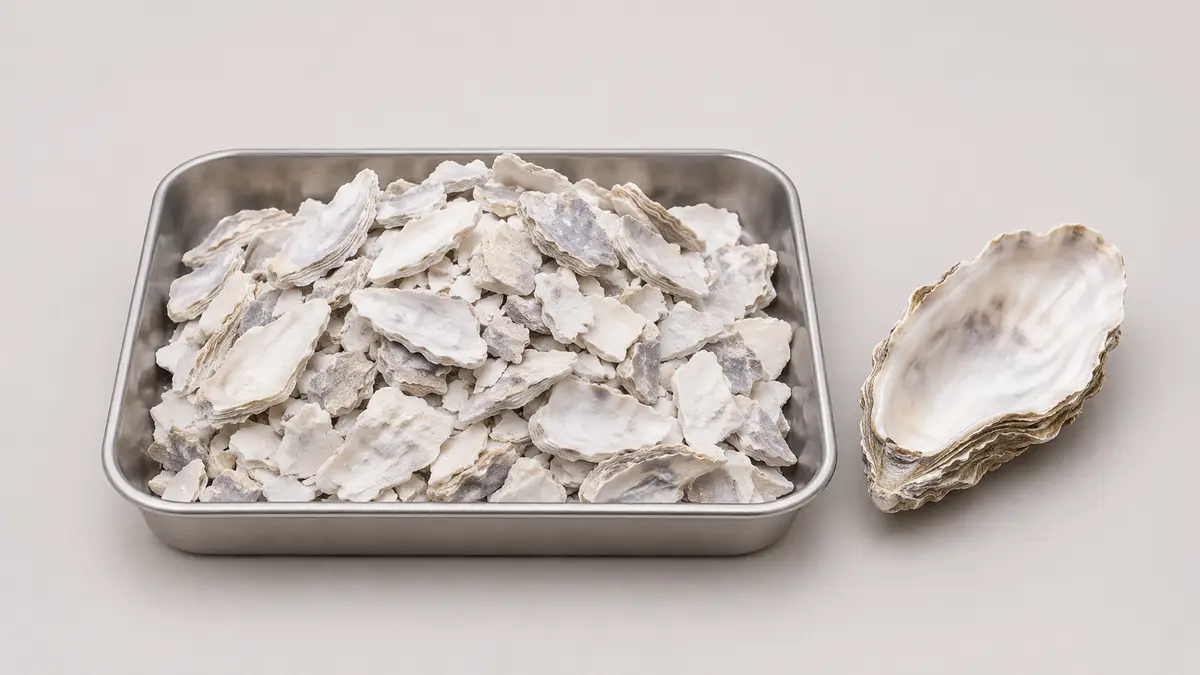
Zero duty, with controls to check by use
Read from the UK Trade Tariff on 29 September 2026, heading 0508 covers unworked or simply prepared shells, including their powder and waste. The relevant lines carry 0% duty for goods from China, with no anti-dumping or countervailing duty and no suspension recorded. The table distinguishes product forms and uses; repeated codes do not represent separate tariff lines.
The tariff attaches veterinary control to the food-use or glucosamine line and the line containing soft tissue or flesh. Ask your customs broker to confirm the common health entry document and supporting requirements for the actual Chinese consignment. It attaches organic import control to all these lines, CITES import control to the other-use line and CITES export control to all these lines. Confirm applicability before shipment.
Treat the other-use code as a candidate for clean crushed shell, subject to confirmation. Give your broker the species, tissue-removal process, particle form and intended use, then check the commodity code. The shells and coral guide covers the wider heading.
| Goods | Commodity code | Duty | Anti-dumping or countervailing duty on China |
|---|---|---|---|
| Clean crushed oyster shell granules, other uses | 0508 00 90 90 | 0% | None |
| Crushed empty oyster shells for glucosamine raw material | 0508 00 90 10 | 0% | None |
| Crushed oyster shells containing soft tissue or flesh | 0508 00 90 20 | 0% | None |
Specify oyster species, grading and intended use
Describe whether you need granules or powder and whether the shell is intended for animal feed, land application or industrial processing. Specify oyster species, source, washing, tissue removal, drying and any heat treatment. Agree sieve grading, fines, moisture, residual salt, foreign matter and packing against a retained sample. For feed applications, agree calcium testing and a suitable contaminant-testing brief.
If you make, sell or use animal feed, register your business with your local Trading Standards office. Do not assume a landscaping specification supports a feed application. For land application, official guidance covering England and Scotland says shellfish shells must be processed unless soft tissue and flesh are removed; confirm the applicable route before supplying shell for that purpose.
If the supplier proposes an organic claim, ask your broker to confirm the tariff's organic control and the applicable certificate of inspection requirements. The exporter’s control body issues that certificate in the country of export. If the species is CITES-listed, confirm import and export documents with the relevant authorities before ordering.
Worked duty example
Illustrative example, not a quote: Illustrative order: 2 tonnes of clean crushed oyster shell for non-feed use under 0508 00 90 90, invoiced at £1,500 free on board, with £900 of freight and insurance to the UK. The customs value is £2,400. Duty at 0% is £0. Import VAT at 20% is charged on the customs value plus duty, £2,400, so it is £480. With no duty, the only import tax is the VAT, which a VAT-registered importer can usually reclaim. The import duty and VAT guide explains each step.
Inspection checklist
Identity: match oyster species, source and processing records to the retained sample; investigate mixed shells or unexplained mineral additions.
Grading: sieve samples from different bags, compare granules and fines with the agreed distribution, and check for oversize fragments.
Cleanliness: check for attached flesh, odour, damp, caking, sand, metal and plastic; compare laboratory results with the agreed specification.
Packing: check bag seals, moisture protection, net contents and batch marks against the packing list; retain arrival samples for comparison.
Working out your own order? Send us the product on WhatsApp and we reply the same working day: WhatsApp us
What goes wrong
A sample can conceal uneven grading across a shipment. Excess powder changes handling, damp material cakes, and poorly cleaned shell can carry odour or visible flesh. A calcium result alone does not establish cleanliness or particle consistency. Compare arrival samples with both the contract and the retained sample.
The description 'crushed oyster shell' leaves important details unresolved. Flesh residues, an organic claim or a change from industrial use to feed can leave the declared route unsuitable. Resolve the actual use and tariff controls before dispatch, and investigate substituted material before accepting the shipment.
Cambridge China Bridge sources these products for UK businesses, checking the factory and the documents before shipment. See factory verification. For repeat volumes, see container programmes.
Frequently asked questions
What is the UK import duty on crushed oyster shell from China?
The relevant lines in heading 0508 carry 0% duty for goods from China, with no anti-dumping or countervailing duty and no suspension recorded. Import controls still need checking.
Which commodity code covers crushed oyster shell?
0508 00 90 90 is a candidate for clean shell for other uses. Food or glucosamine use and shells retaining flesh have separate lines. Confirm the code against the actual material and use.
Can I sell crushed oyster shell as poultry feed?
Businesses making, selling or using animal feed must register with local Trading Standards. Confirm the import route and agree a feed specification and testing brief before ordering.
What should I check when crushed oyster shell arrives?
Check sieve grading, excess fines, damp, caking, odour, flesh residues and foreign matter. Match batch marks and processing records to the shipment, and compare samples with the agreed specification.