Sourcing crab extract from China
Crab extract from China carries UK duty of 0% to 12% under heading 1603, depending on immediate pack size. Veterinary controls apply: check establishment approval and ask your customs broker to confirm pre-notification requirements and the health documents before shipping to Great Britain. Cambridge China Bridge sources crab extract.
Buying from China for a business? How our UK China sourcing agent service works · China sourcing agent for small orders and first imports
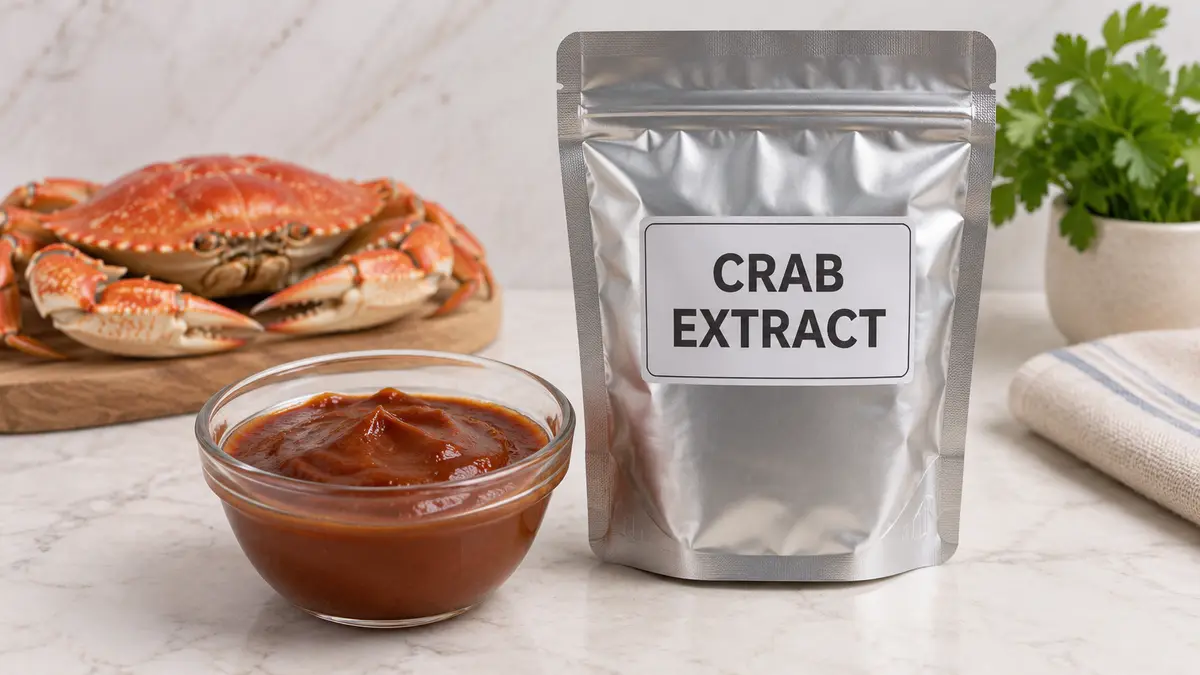
Crab extract duty and seafood import controls
Read from the UK Trade Tariff on 29 September 2026, heading 1603 covers extracts and juices of meat, fish, crustaceans and other aquatic invertebrates. For crab extract containing fishery products, immediate packs with net contents of 1 kg or less fall under 1603 00 10 80 at 12%; larger immediate packs fall under 1603 00 80 10 at 0%. No anti-dumping duty, countervailing duty or suspension is shown. The other table rows are classification comparisons, not interchangeable crab-extract codes.
The tariff attaches veterinary control, organic-product import control and CITES import and export controls. For Great Britain, check establishment approval and ask your customs broker or APHA to confirm pre-notification requirements and the appropriate border entry point. Medium-risk consignments need a health certificate. Ask your broker to confirm the veterinary entry document and China-specific safeguards for the actual wild-caught or farmed raw material. For organic goods, confirm inspection certification with your control body. Ask your broker whether the tariff's CITES controls require documents for the species concerned.
Confirm the commodity code using the full recipe, processing method and immediate pack net weight, rather than the shipping carton's weight. Obtain a classification review where the product is a blended seasoning rather than an extract. See the shrimp extract guide for the wider heading.
| Goods | Commodity code | Duty | Anti-dumping or countervailing duty on China |
|---|---|---|---|
| Crab extract containing fishery products, immediate packs up to 1 kg | 1603 00 10 80 | 12% | None |
| Crab extract containing fishery products, larger immediate packs | 1603 00 80 10 | 0% | None |
| Other extracts, packs up to 1 kg, for classification comparison only | 1603 00 10 89 | 12% | None |
| Other extracts, larger packs, for classification comparison only | 1603 00 80 90 | 0% | None |
Specify crab content, concentration and flavour
Specify the crab species, raw-material origin, wild-caught or farmed status, and whether the extract uses meat, cooking liquor or other crab material. Record crab-derived content, salt, moisture, soluble solids, carriers, added flavourings and preservatives. Distinguish actual crab extract from crab-flavoured seasoning. Agree paste, liquid or powder form and compare samples in the buyer's intended soup, sauce or stock.
Agree flavour strength at a stated dilution, colour, viscosity or powder dispersibility, and acceptable sediment. Request processing records and shelf-life support for the proposed packaging. Specify storage before and after opening, closure integrity and batch identification. Confirm crustacean allergen labelling requirements with the relevant food authority; check the complete formulation for additional allergens.
Worked duty example
Illustrative example, not a quote: Illustrative wholesale batch of crab extract in larger foodservice tubs under 1603 00 80 10, invoiced at £30,000 free on board, with £4,000 of freight and insurance to the UK. The customs value is £34,000. Duty at 0% is £0. Import VAT at 20% is charged on the customs value plus duty, £34,000, so it is £6,800. With no duty, the only import tax is the VAT, which a VAT-registered importer can usually reclaim. The import duty and VAT guide explains each step. This assumes the goods are standard-rated for VAT. Most food for human consumption is zero-rated, and animal feed can be too, in which case no import VAT is due, so check the rate for your product in HMRC's VAT Notice 701/14.
Inspection checklist
Identity and records: match the crab species, formulation, manufacturing establishment and batch markings to the approved specification and shipping documents.
Contents: compare aroma, taste, colour and dispersibility with the retained sample at the agreed dilution. Check salt, moisture and concentration against the purchase specification.
Packaging: inspect tubs, pouches or drums for leakage, swelling, broken seals and contamination around closures. Weigh sampled packs and check storage records against the agreed conditions.
Labels and testing: check ingredients, emphasised crustacean allergens, net quantity, date marking, storage instructions and the UK food business address. Match laboratory reports to the batch and agreed microbiological and contaminant testing.
Working out your own order? Send us the product on WhatsApp and we reply the same working day: WhatsApp us
What goes wrong
A strong sample can be followed by production diluted with salt, water or carriers. Powder may cake or disperse poorly, while paste may separate or develop an unsuitable cooked flavour. Compare production samples in the intended recipe and retain a sealed reference from the accepted batch.
Border problems arise when the buyer relies on a supplier's general certificate without checking the establishment, product and shipment documents. Classification disputes also arise when outer-carton weight is used instead of immediate pack weight. Resolve documents and classification before dispatch, and isolate leaking or swollen packs on arrival.
Cambridge China Bridge sources these products for UK businesses, checking the factory and the documents before shipment. See factory verification. For repeat volumes, see container programmes.
Frequently asked questions
What is the UK import duty on crab extract from China?
The listed duty is 12% for immediate packs of 1 kg or less under 1603 00 10 80, and 0% for larger packs under 1603 00 80 10. No anti-dumping duty, countervailing duty or suspension is shown.
Does crab extract need seafood import documents?
Veterinary control applies. Check establishment approval and confirm pre-notification requirements, the risk category and health documents with your broker before shipping to Great Britain.
Must crab extract be labelled as an allergen?
Confirm with the relevant food authority how crustacean allergens should be declared and emphasised. Check the full recipe for other allergens rather than relying on the product name.
How do I compare crab extract samples?
Use the same dilution and intended recipe. Compare crab flavour, salt, colour, viscosity, sediment and dispersibility, then check production batches against the retained sample and agreed composition.