Sourcing carded cashmere batts from China
Carded cashmere batts from China carry 0% UK import duty, with no anti-dumping or countervailing duty recorded. Fibre labels on resale must state the fibre content. Confirm treatment status and test fibre identity, guard hair and batt consistency. Cambridge China Bridge sources carded cashmere batts.
Buying from China for a business? How our UK China sourcing agent service works · China sourcing agent for small orders and first imports
Zero duty on carded cashmere
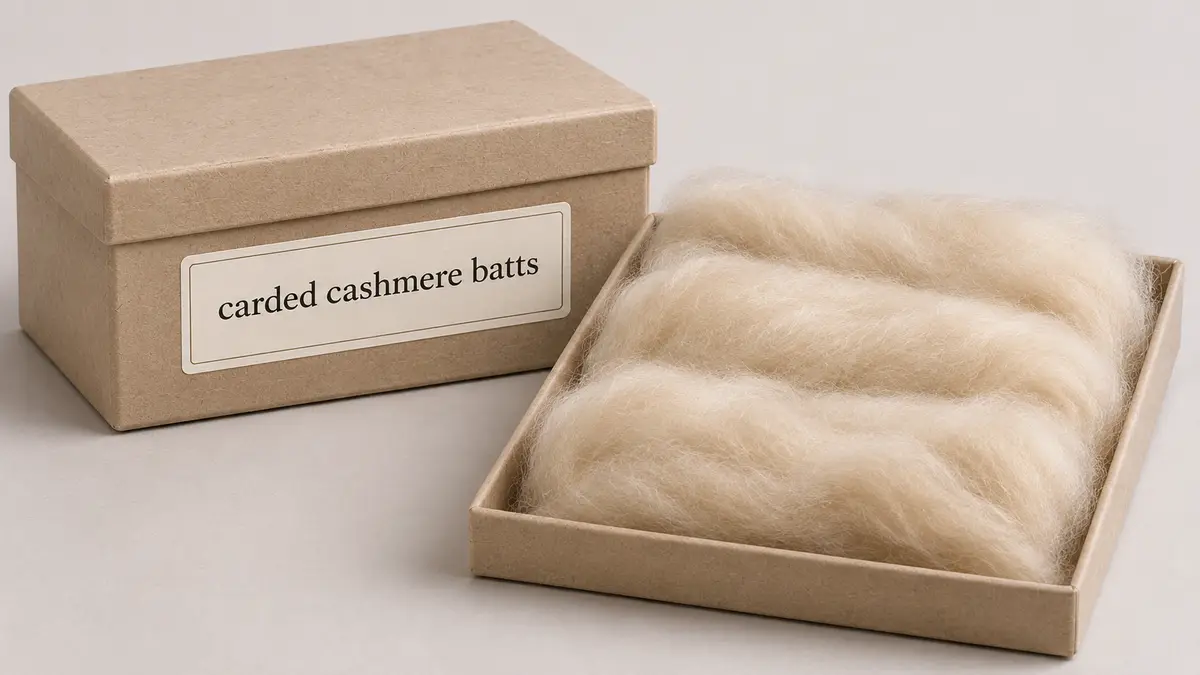
Heading 5105 covers wool and fine or coarse animal hair, carded or combed. Carded cashmere batts fall within 5105 31 00 00, for hair of cashmere goats, carded or combed. The table shows buying forms within that same tariff line. See our wool tops and carded wool guide for the wider heading.
Read from the UK Trade Tariff on 5 October 2026, the supplied record shows 0% duty for cashmere from China, with no anti-dumping or countervailing duty, suspension or attached import control on this line. Official guidance permits treated hair from any country and says no health certificate is required. Confirm with your broker that the supplied material qualifies for the treated-hair route.
Describe the fibre and processing stage accurately. Have your broker check blends or material that has been bonded into a finished sheet before using the cashmere code. Use finding your commodity code to confirm classification before ordering.
| Goods | Commodity code | Duty | Anti-dumping or countervailing duty on China |
|---|---|---|---|
| Undyed white carded cashmere batts | 5105 31 00 00 | 0% | None |
Specify the fibre and the batt
Specify cashmere content, mean fibre diameter and variation, fibre length, short-fibre content, guard hair, vegetable matter and residual grease. Describe whether the batts are undyed or dyed, their dimensions, weight and layer uniformity. Agree how samples will be taken and tested, and retain the approved sample.
Ask the supplier for a commercial document identifying the animal species, origin, treatment or processing method, seller, buyer and quantity. Have your broker review the treatment records before dispatch. For resale as textiles in Great Britain, labels must show fibre content. Match the stated composition to the lot test rather than relying on softness.
Worked duty example
Illustrative example, not a quote: Illustrative order: 200 kg of undyed white carded cashmere batts under 5105 31 00 00, invoiced at £28,000 free on board, with £1,800 of freight and insurance to the UK. The customs value is £29,800. Duty at 0% is £0. Import VAT at 20% is charged on the customs value plus duty, £29,800, so it is £5,960. With no duty, the only import tax is the VAT, which a VAT-registered importer can usually reclaim. The import duty and VAT guide explains each step.
Inspection checklist
Fibre identity: sample across packages and compare laboratory findings for cashmere content and guard hair with the agreed specification.
Layer consistency: open batts and check for thin areas, clumps, neps and differences in thickness or weight against the approved sample.
Colour and cleanliness: compare shade across the lot and look for vegetable matter, foreign fibres, staining and unexpected odour.
Packing and records: check net weight, moisture, package condition and lot identification against the packing list and retained sample.
Working out your own order? Send us the product on WhatsApp and we reply the same working day: WhatsApp us
What goes wrong
Batts can feel soft while containing undeclared wool or excessive guard hair. Short fibres and neps can increase processing waste, while uneven layers give inconsistent material to the next production stage. Test fibre identity and trial the batts in your intended spinning or felting process before accepting the lot.
Damp packing can leave batts yellowed, musty or compacted. Colour and fibre quality can also vary between packages. Keep affected packages identifiable and compare them with the retained sample before mixing the delivery into stock.
Cambridge China Bridge sources these products for UK businesses, checking the factory and the documents before shipment. See factory verification. For repeat volumes, see container programmes.
Frequently asked questions
What is the UK import duty on carded cashmere batts from China?
The supplied tariff record shows 0% under 5105 31 00 00, with no anti-dumping or countervailing duty recorded.
Do carded cashmere batts need a health certificate?
Official guidance says no health certificate is required for treated hair. Confirm with your broker that the treatment records support that route before shipping.
How do I check whether the batts are cashmere?
Have representative samples tested for fibre identity and composition. Compare guard hair, diameter and length with the agreed specification; softness alone is insufficient.
What should I specify for cashmere batts?
Agree fibre content, diameter, length, guard hair, cleanliness, colour, batt dimensions, weight and layer uniformity. Retain an approved sample and trial the intended process.