Sourcing calf milk replacer from China
The selected dairy-feed lines carry £416 to £743 per 1,000 kg, depending on composition. Dairy-based calf milk replacer from China cannot legally be imported into Great Britain; a tariff rate does not grant permission. Cambridge China Bridge checks whether a product can be imported before any order is placed.
Buying from China for a business? How our UK China sourcing agent service works · China sourcing agent for small orders and first imports
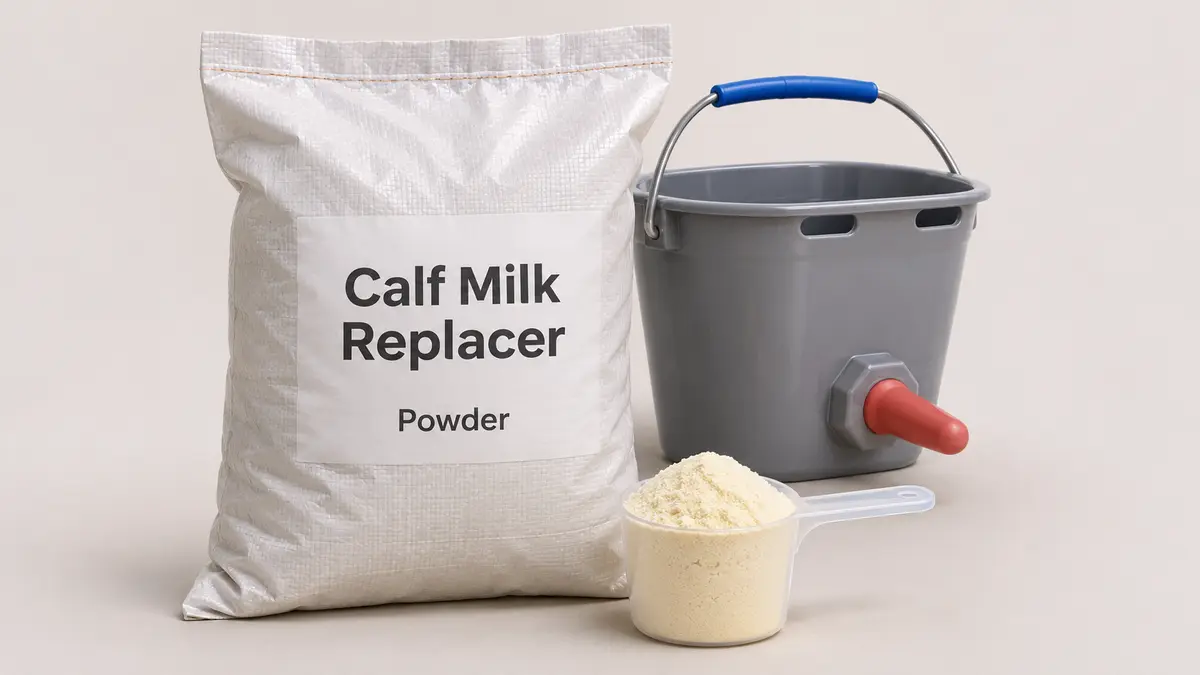
Check import permission before calculating duty
Read from the UK Trade Tariff on 4 October 2026, heading 2309 covers preparations used in animal feeding. Calf milk replacer classification depends on the complete recipe, including starch, sugars and milk products. The selected composition-dependent feed lines carry £416, £443, £743 or £482 per 1,000 kg. These are classification references, not confirmation that a Chinese dairy product can enter Great Britain.
Official guidance prohibits dairy products from China, regardless of where their dairy ingredients originated. Dairy-based calf milk replacer therefore cannot legally be imported into Great Britain. The selected tariff lines list no anti-dumping or countervailing duty and no suspension. They attach veterinary, organic, seal-product and waste import controls, plus an export waste control. Ask your customs broker to confirm the applicable requirements; resolving those controls does not remove the dairy prohibition.
Confirm the commodity code using the ingredient breakdown and laboratory analysis. The supplied file does not contain every possible calf milk replacer composition, so the table is not exhaustive. None of the selected lines has a plain percentage duty, so a percentage-duty worked order cannot be supplied accurately. See the wider animal feed guide for other products within this heading.
| Goods | Commodity code | Duty | Anti-dumping or countervailing duty on China |
|---|---|---|---|
| Feed preparations: starch up to 10%; milk products 10% to under 50% | 2309 90 33 90 | £416.00 per 1000 kg | None |
| Feed preparations: starch over 10% to 30%; milk products 10% to under 50% | 2309 90 43 90 | £443.00 per 1000 kg | None |
| Feed preparations: starch over 10% to 30%; milk products at least 50% | 2309 90 49 90 | £743.00 per 1000 kg | None |
| Feed preparations: starch over 30%; milk products 10% to under 50% | 2309 90 53 90 | £482.00 per 1000 kg | None |
Specify the calf formula and dairy ingredients
Obtain the full ingredient list before requesting production samples. Identify whey, skimmed milk powder, lactose, vegetable protein, fat sources and additives separately. Record each ingredient's origin and the manufacturing location. Confirm import eligibility before committing to a dairy-based formulation from China.
For an alternative supply route whose eligibility has been confirmed, agree crude protein, fat, moisture, ash, mixing instructions and storage conditions. Specify the intended calf feeding stage and ask for evidence supporting feeding instructions. Compare dispersion, sediment and separation using the agreed water temperature and mixing method.
Confirm feed-business registration, feed labelling requirements and the authorisation status of feed additives in Great Britain with the relevant feed authority before importing. Obtain the recipe, additive list and batch analysis before approving label artwork. Agree a sampling and analysis brief through testing and certification support.
Inspection checklist
Identity: compare the ingredient breakdown and dairy origins with the approved specification; investigate substitutions rather than accepting the same protein result as proof of the same formula.
Analysis: independently sample the batch and compare protein, fat, moisture and ash with the contract; agree microbiological and contaminant testing with the laboratory.
Mixing: check wetting, dispersion, lumps, sediment and fat separation against the approved sample using the agreed preparation method.
Arrival: for a legally permitted supply route, check bag seals, damp patches, caking and rancid odour; match batch references and shelf-life markings to the analysis reports.
What goes wrong
The first failure is ordering a Chinese dairy-based product because a tariff code and duty appear available. Dairy products from China remain prohibited even when the dairy ingredients originated elsewhere. Stop the purchase until the product and supply route have been checked.
A changed protein source can leave the headline analysis similar while altering mixing behaviour. Poor fat dispersion leaves a surface layer; moisture ingress causes hard lumps; damaged bags undermine storage. Retain the approved sample and compare independently collected shipment samples through the quality inspection guide.
Cambridge China Bridge sources these products for UK businesses, checking the factory and the documents before shipment. See factory verification. For repeat volumes, see container programmes.
Frequently asked questions
What is the UK import duty on calf milk replacer from China?
They list no trade remedies or suspensions. Dairy-based calf milk replacer from China is prohibited from entering Great Britain.
Can I import dairy-based calf milk replacer from China?
No. Official guidance prohibits dairy products from China. A commodity code, duty payment or satisfactory sample does not make this supply route permissible.
Does using imported whey in a Chinese factory avoid the prohibition?
No. Official guidance states that dairy products from China are prohibited regardless of where they originated. Do not treat overseas dairy ingredients as an exemption.
What should I check in a calf milk replacer sample?
Check ingredient identity, protein, fat, moisture and ash, then compare dispersion, lumps, sediment and separation using the agreed mixing method. Confirm import eligibility before arranging an order.