Sourcing bucket-elevator chains from China
Bucket-elevator chains from China carry 0% UK duty across the relevant heading 7315 lines, with no listed trade remedies. Machinery must be safe before being placed on the Great Britain market or put into service. Specify the chain against the elevator drawings and operating conditions. Cambridge China Bridge sources bucket-elevator chains.
Buying from China for a business? How our UK China sourcing agent service works · China sourcing agent for small orders and first imports
Zero duty on bucket-elevator chains
Heading 7315 covers iron or steel chain and its parts. Bucket-elevator chains can be roller, other articulated-link or welded-link designs. The table gives candidate lines for separately imported chains and chain parts, rather than complete bucket elevators.
Read from the UK Trade Tariff on 1 October 2026, all supplied heading 7315 lines carried 0% duty for goods from China. The supplied records list no anti-dumping or countervailing duty, steel measure, suspension or attached import control.
Confirm the construction and supplied assembly with your customs broker before choosing a commodity code. For broader chain designs and attachments, see conveyor attachment chains.
| Goods | Commodity code | Duty | Anti-dumping or countervailing duty on China |
|---|---|---|---|
| Roller chains for bucket elevators | 7315 11 90 00 | 0% | None |
| Other articulated-link bucket-elevator chains | 7315 12 00 00 | 0% | None |
| Parts of articulated-link bucket-elevator chains | 7315 19 00 00 | 0% | None |
| Welded-link chains for bucket elevators | 7315 82 00 00 | 0% | None |
| Other bucket-elevator chain parts | 7315 90 00 00 | 0% | None |
Pitch, bucket attachments and operating load
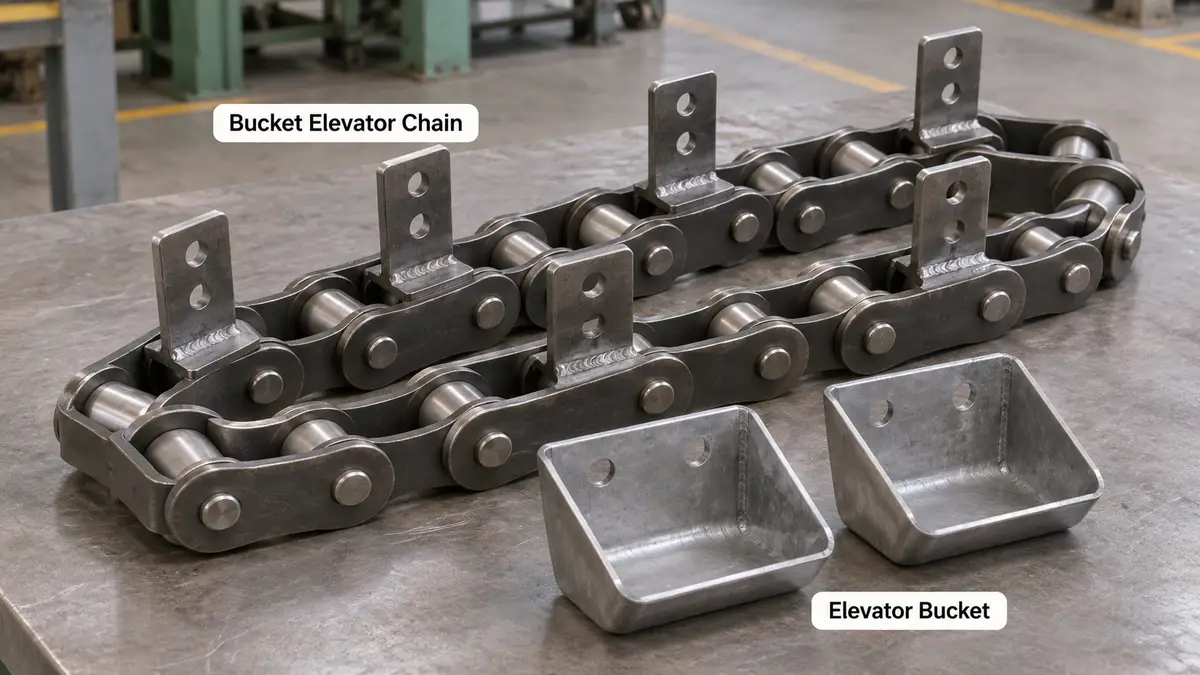
Send the factory the elevator and chain drawings, sprocket or pocket-wheel details, chain pitch, link dimensions and bucket attachment geometry. Specify material grade, heat treatment, hardness, breaking load and the agreed test method. Describe the conveyed material, abrasiveness, temperature, operating load and lubrication conditions.
For paired chains, agree matched measuring lengths under the same measuring load, attachment positions and identification of mating lengths. Include joining links, pin retention and spare attachments in the specification. Approve a sample fitted to the intended wheel and bucket connection before production.
For chain designed for lifting, confirm with the relevant authority whether machinery supply rules apply. Confirm the intended function of your bucket-elevator chain before selecting conformity documents. Workplace equipment remains subject to the Provision and Use of Work Equipment Regulations, including selection, inspection, maintenance and training.
Worked duty example
Illustrative example, not a quote: Illustrative order: 12 tonnes of welded-link bucket-elevator chain for maintenance stock under 7315 82 00 00, invoiced at £21,000 free on board, with £2,400 of freight and insurance to the UK. The customs value is £23,400. Duty at 0% is £0. Import VAT at 20% is charged on the customs value plus duty, £23,400, so it is £4,680. With no duty, the only import tax is the VAT, which a VAT-registered importer can usually reclaim. The import duty and VAT guide explains each step.
Inspection checklist
Dimensions: measure pitch over an agreed length, link or roller dimensions, bucket-hole spacing and attachment alignment against the approved drawing.
Matched lengths: compare mating strands under the agreed measuring load and check that bucket attachments line up throughout each supplied length.
Material and strength: match batch identifiers to material, heat-treatment and breaking-load records; inspect welded links for cracks and articulated links for free movement and secure pins.
Arrival condition: check corrosion, bent attachments, damaged joining links and packing labels before installation. Agree the inspection scope using quality inspection explained.
Working out your own order? Send us the product on WhatsApp and we reply the same working day: WhatsApp us
What goes wrong
Matching the nominal pitch alone can leave a chain incompatible with the wheel profile or bucket fixing. Unequal paired lengths can skew buckets and load the strands unevenly. Misaligned attachments, tight joints and loose pin retention can cause interference or premature wear.
Poor welds or inconsistent heat treatment can cause cracking, elongation or breakage. Ask for batch-linked test records and sample checks against the agreed specification. Record arrival defects before fitting and have the maintenance team assess the chain alongside wheel wear and alignment.
Cambridge China Bridge sources these products for UK businesses, checking the factory and the documents before shipment. See factory verification. For repeat volumes, see container programmes.
Frequently asked questions
What is the UK import duty on bucket-elevator chains from China?
The supplied tariff records show 0% duty on the relevant heading 7315 lines, with no listed anti-dumping or countervailing duty.
Which commodity code covers bucket-elevator chain?
It depends on construction: roller, other articulated-link and welded-link chains have different lines. Chain parts also have separate lines. Confirm the actual goods before declaring.
What should I specify for paired elevator chains?
Specify matched lengths under an agreed measuring load, identical attachment positions, bucket fixing dimensions and identification of mating strands.
Is a breaking-load certificate enough?
It does not establish fit or service life. Also check pitch, wheel compatibility, attachments, heat treatment, pin retention and the batch identity behind the test record.