Sourcing brined aubergines from China
Brined aubergines for processing from China carry 0% UK duty, including vegetable mixtures containing aubergines. Heading 0711 covers provisional preservation only: the goods must be unsuitable for immediate consumption in that state. Organic imports carry additional controls. Cambridge China Bridge sources brined aubergines for processing.
Buying from China for a business? How our UK China sourcing agent service works · China sourcing agent for small orders and first imports
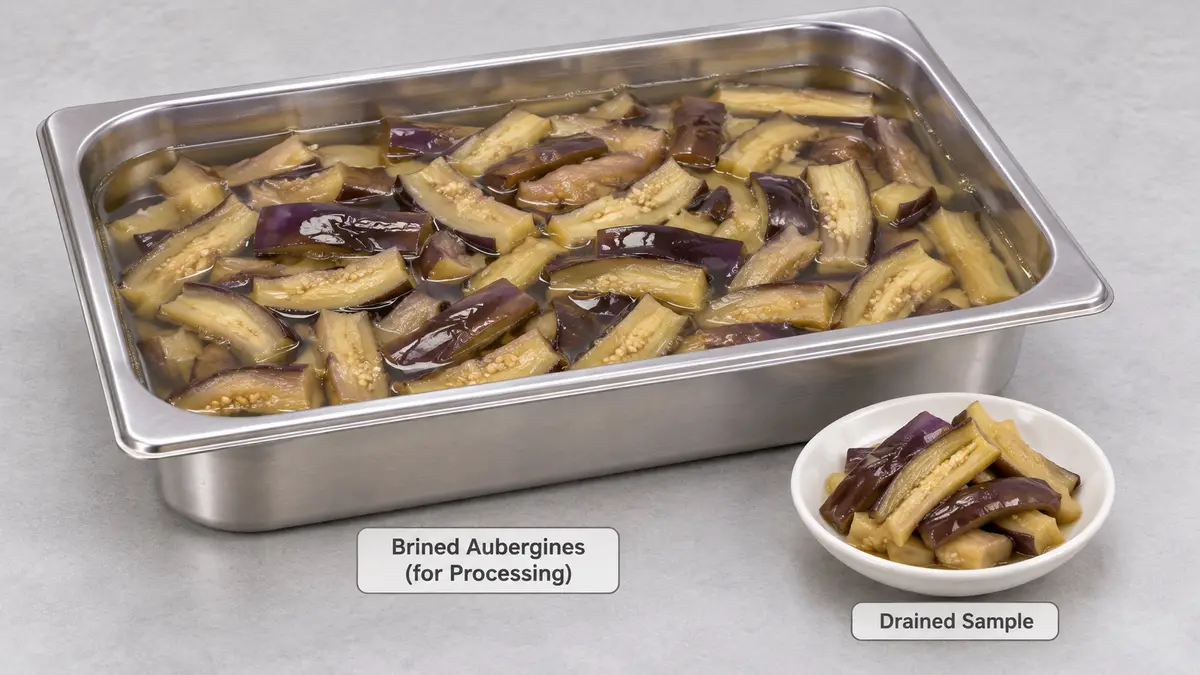
0% duty on brined aubergines for processing
Read from the UK Trade Tariff on 7 October 2026, heading 0711 covers vegetables provisionally preserved but unsuitable in that state for immediate consumption. Brined aubergines fall within other vegetables, 0711 90 80 00; vegetable mixtures fall within 0711 90 90 00. Both carry 0% duty for goods from China, with no anti-dumping or countervailing duty and no suspension listed. The table shows product forms sharing these codes.
The tariff attaches import control of organic products to both codes. An approved UK organic control body must certify organic food and the business importing it. The inspection certificate is issued by the exporter’s control body in the country of export. Before shipping organic aubergines from China, ask your customs broker and control body to confirm the consignment certificate and whether the exporter’s certification is accepted for Great Britain.
Confirm the commodity code using the recipe, preservation method and condition before further processing. Ready-to-eat pickled or preserved aubergines belong in a different classification from provisional preservation. Our brined vegetables guide covers the wider heading. This guide addresses imports into Great Britain.
| Goods | Commodity code | Duty | Anti-dumping or countervailing duty on China |
|---|---|---|---|
| Whole aubergines provisionally preserved in brine | 0711 90 80 00 | 0% | None |
| Vegetable mixtures containing aubergines, provisionally preserved in brine | 0711 90 90 00 | 0% | None |
Specify aubergine texture after desalting
Specify variety, maturity, whole or cut form, skin colour, seed development, firmness and acceptable bruising. For pieces, agree the cut dimensions and tolerance for broken flesh. State whether stalks and calyxes are removed. Approve a sample after the processor’s planned desalting and cooking steps, rather than judging appearance in brine alone.
Agree brine salt content, acidity, any preservatives, drained aubergine weight, drum material and liner, storage conditions and handling instructions. Ask for sulphite, pesticide residue and contaminant results matched to the batch. Confirm the applicable pesticide residue limits with the relevant authority before shipment. Importers must ensure the goods are safe and legal before import, even when further processing is planned.
Worked duty example
Illustrative example, not a quote: Illustrative order: 20 tonnes of brined aubergines for processing in food-grade drums under 0711 90 80 00, invoiced at £9,000 free on board, with £2,500 of freight and insurance to the UK. The customs value is £11,500. Duty at 0% is £0. Import VAT at 20% is charged on the customs value plus duty, £11,500, so it is £2,300. With no duty, the only import tax is the VAT, which a VAT-registered importer can usually reclaim. The import duty and VAT guide explains each step. This assumes the goods are standard-rated for VAT. Most food for human consumption is zero-rated, and animal feed can be too, in which case no import VAT is due, so check the rate for your product in HMRC's VAT Notice 701/14.
Inspection checklist
Flesh and skin: compare drained samples with the approved sample for firmness, discolouration, bruising, tough skin, developed seeds and broken pieces.
Brine and residues: check salt content, acidity and residual sulphur dioxide against the processor’s specification; match laboratory reports to the shipped batch.
Drums and weight: check seals, liners, leakage, brine coverage and drained weight; match product identification and batch details to the packing records.
Processing trial: desalt and cook a sample using the intended process, then assess texture, flavour and usable yield. Record results through the quality inspection process.
Working out your own order? Send us the product on WhatsApp and we reply the same working day: WhatsApp us
What goes wrong
Aubergines can look acceptable in a drum but collapse after desalting or cooking. Mature seeds, tough skin and bruised flesh may become more obvious during processing. A sample approved only in its salted state leaves the processor without an agreed benchmark for the finished texture.
Leaking drums can expose the top layer, while excess brine can conceal a short drained weight. Preservative residues can also exceed what the planned process removes. Agree acceptance on drained product and the processing trial, with residue reports covering the actual shipment.
Cambridge China Bridge sources these products for UK businesses, checking the factory and the documents before shipment. See factory verification. For repeat volumes, see container programmes.
Frequently asked questions
What is the UK import duty on brined aubergines from China?
The supplied tariff reading shows 0% for other vegetables under 0711 90 80 00 and vegetable mixtures under 0711 90 90 00, with no anti-dumping or countervailing duty listed.
Are ready-to-eat pickled aubergines covered by this guide?
No. Heading 0711 covers provisional preservation where the goods are unsuitable for immediate consumption in that state. Ready-to-eat pickled or preserved vegetables have a different classification.
What should I specify for brined aubergines?
Agree variety, maturity, cut form, firmness, skin and seed quality, brine composition, preservatives and drained weight. Approve texture after the intended desalting and cooking process.
Can I import the aubergines as organic?
Organic food and the importing business need approved UK control-body certification. Ask your broker and control body to confirm the Chinese exporter’s certification and consignment inspection certificate before shipping.