Sourcing endotoxin test reagents from China
Bacterial endotoxin test reagents from China carry 0% UK duty across the relevant heading 3822 lines, with no listed trade remedies. Blood-derived laboratory reagents follow blood-product import conditions, so confirm the exact formulation before shipment. Cambridge China Bridge sources bacterial endotoxin test reagents.
Buying from China for a business? How our UK China sourcing agent service works · China sourcing agent for small orders and first imports
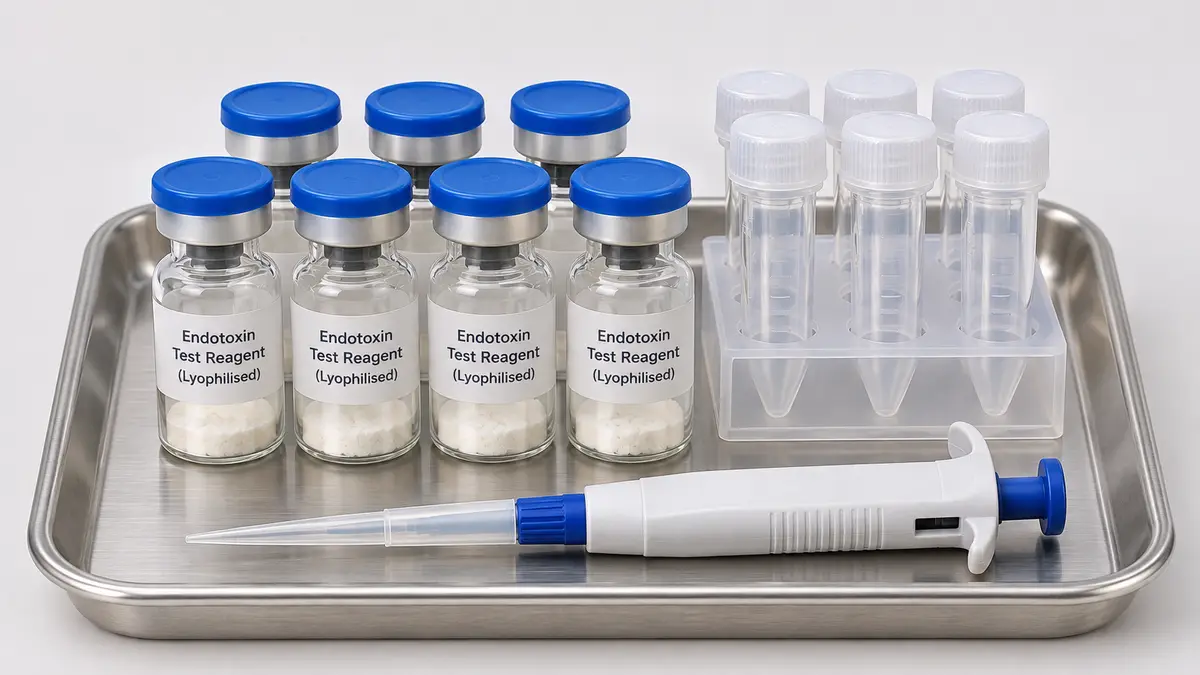
Zero duty, with formulation checks
Read from the UK Trade Tariff on 1 October 2026, heading 3822 covers prepared diagnostic and laboratory reagents, including kits, and certified reference materials. The relevant lines carry 0% duty for goods from China. The supplied tariff record lists no anti-dumping or countervailing duties and no suspensions. The table separates assay formats sharing a code; it is a starting point for classification.
For 3822 90 00 00, the UK Trade Tariff attaches veterinary control and an ozone-depleting-substance release restriction. Blood-derived laboratory reagents follow blood-product import conditions. For a Chinese lysate formulation, ask your customs broker and the Animal and Plant Health Agency to confirm admissibility, health documents and any authorisation before shipment. Confirm the tariff control requirements and ozone declaration with your broker. Importing ozone-depleting substances into Great Britain requires a licence.
Give your broker the composition, intended use, presentation and reference-material certification to confirm the commodity code. Prepared assay kits and separately supplied reference materials may need different classifications. See the wider diagnostic and laboratory reagent guide for the rest of the heading.
| Goods | Commodity code | Duty | Anti-dumping or countervailing duty on China |
|---|---|---|---|
| Prepared gel-clot bacterial endotoxin test reagents | 3822 19 00 90 | 0% | None |
| Certified endotoxin reference materials | 3822 90 00 00 | 0% | None |
Specify the endotoxin assay and reagent source
Specify gel-clot, chromogenic or turbidimetric testing, or a recombinant reagent method. Agree the claimed sensitivity or measuring range, sample types, reader compatibility, reconstitution instructions and contents of each kit. Ask for the reagent source, including horseshoe-crab species where applicable, and a declaration of animal-derived ingredients. Match the control endotoxin standard and its assigned potency to the supplied reagent lot.
State whether the intended use is pharmaceutical quality control, research or human diagnosis. Chemical importers are responsible for hazard classification. For a substance you have not previously imported, consider whether UK REACH registration is required. Obtain composition and safety information before offering the reagent for sale.
Agree storage conditions, transport packaging, remaining shelf life at receipt and handling after reconstitution. Ask for lot-specific certificates of analysis and performance data using your actual sample matrix. Set written acceptance criteria for blanks, controls, recovery and repeatability before ordering.
Worked duty example
Illustrative example, not a quote: 500 bacterial endotoxin test kits, illustrative order only under 3822 19 00 90, invoiced at £5,000 free on board, with £300 of freight and insurance to the UK. The customs value is £5,300. Duty at 0% is £0. Import VAT at 20% is charged on the customs value plus duty, £5,300, so it is £1,060. With no duty, the only import tax is the VAT, which a VAT-registered importer can usually reclaim. The import duty and VAT guide explains each step.
Inspection checklist
Identity: check the assay method, reagent source, lot numbers and kit components against the purchase specification.
Documents: match each certificate of analysis to the vial labels; check sensitivity or measuring range, standard potency, expiry and storage instructions.
Transport: review temperature records against the agreed conditions and inspect seals, vials and freeze-dried contents for damage.
Performance: have your laboratory check blanks, control responses and sample interference before releasing the lot for routine use.
Working out your own order? Send us the product on WhatsApp and we reply the same working day: WhatsApp us
What goes wrong
A reagent can perform with the supplier's standard but give unreliable results with your sample. Sample interference, contaminated dilution water, unsuitable consumables and a mismatched control standard can undermine the assay. Compare trial results with your existing method and investigate unexpected blanks or recovery before accepting a replacement.
Other failures include temperature excursions, short remaining shelf life and undocumented changes to reagent source or formulation. Ask the supplier to notify you before changing the method, ingredients or manufacturing site. Include batch identity, kit completeness and shipping records in the inspection brief.
Cambridge China Bridge sources these products for UK businesses, checking the factory and the documents before shipment. See factory verification. For repeat volumes, see container programmes.
Frequently asked questions
What is the UK import duty on bacterial endotoxin test reagents from China?
The relevant heading 3822 lines carry 0% duty for goods from China.
Can I import horseshoe-crab lysate reagents from China?
Blood-derived laboratory reagents follow blood-product import conditions. Ask the Animal and Plant Health Agency and your broker to confirm the exact formulation, origin and required documents before shipment.
Do endotoxin reagents need UKCA or CE marking?
Confirm with the MHRA whether the intended use brings the reagent within IVD rules and which marking and registration requirements apply. Specify whether the intended use is pharmaceutical quality control, research or human diagnosis before choosing the route.
Can I switch to a different endotoxin reagent supplier?
Compare the proposed reagent with your current method using your own samples. Check sensitivity, control-standard compatibility, interference, recovery and reader settings before accepting the change.