Sourcing artificial topiary trees from China
Artificial topiary trees from China carry 4% UK duty under both material lines of heading 6702. Consumer products must be safe. Specify foliage, trunk and pot construction, and check whether natural components bring CITES controls into scope. Cambridge China Bridge sources artificial topiary trees.
UK duty and material classification
Read from the UK Trade Tariff on 30 September 2026, heading 6702 covers artificial flowers, foliage and fruit, their parts and articles made from them. For artificial topiary trees classified here, the supplied data shows 4% duty for goods from China under both the plastic and other-material lines. It lists no anti-dumping or countervailing measures and no suspensions.
The other-material line carries CITES import and export controls. GOV.UK says permits are required for species listed in Annex A, B or C. If a tree incorporates natural material, identify its species and ask your customs broker to confirm the requirements for the shipment from China. The tariff flag alone does not establish that every artificial tree needs a permit.
Confirm the commodity code using the complete tree's materials and construction, including its trunk and supplied pot. The table shows product variants sharing the available tariff lines. See the artificial flowers and plants guide for the wider heading.
| Goods | Commodity code | Duty | Anti-dumping or countervailing duty on China |
|---|---|---|---|
| Plastic artificial ball-shaped topiary trees | 6702 10 00 00 | 4% | None |
| Artificial ball-shaped topiary trees of other materials | 6702 90 00 00 | 4% | None |
Foliage shape, trunk joints and pot stability
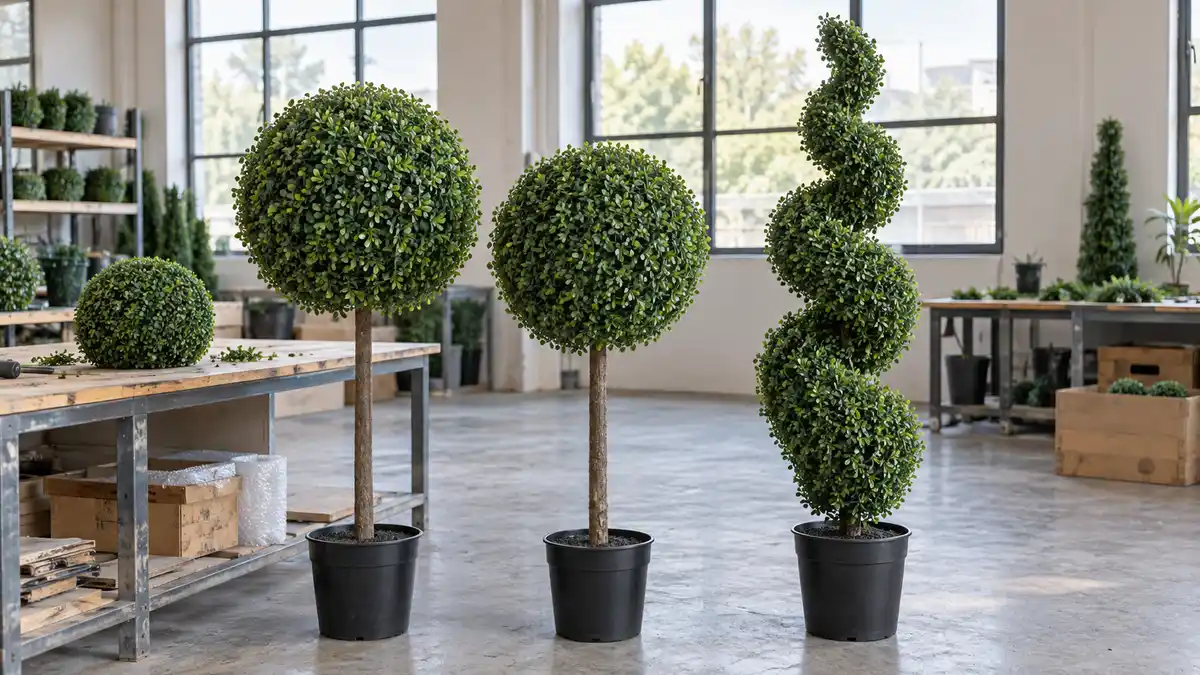
Specify overall height, foliage width, ball or spiral shape, leaf density, colour and trunk finish. Record foliage and trunk materials, branch attachment, detachable joints, pot dimensions and ballast construction. State whether the decorative planter is included or the tree arrives in a nursery-style base pot. Approve a complete assembled sample rather than a photograph of the foliage.
State indoor or outdoor use and request weathering evidence for outdoor foliage and exposed components. Agree the intended planter and anchoring arrangement, then check stability with the supplied base. Hotels, restaurants and event venues often request fire performance evidence; agree their test method and check that the report covers the supplied materials and treatment.
Consumer products must be safe, and compliance with product safety regulations should be demonstrated before sale. Include exposed wire ends, loose foliage, trunk joints and tipping risks in the sample review. Retain the assembled sample for quality inspection.
Worked duty example
Illustrative example, not a quote: Illustrative consignment of plastic ball-shaped artificial topiary trees for a garden retailer under 6702 10 00 00, invoiced at £25,000 free on board, with £3,000 of freight and insurance to the UK. The customs value is £28,000. Duty at 4% is £1,120. Import VAT at 20% is charged on the customs value plus duty, £29,120, so it is £5,824. Import taxes total £6,944; a VAT-registered importer can usually reclaim the VAT, so the lasting cost is the £1,120 of duty. The import duty and VAT guide explains each step.
Inspection checklist
Shape and colour: compare assembled trees with the retained sample in daylight; check roundness, spiral spacing, bare patches and matching greens across the order.
Trunk and base: assemble detachable joints, check rotation and wobble, inspect pot cracks and ballast movement, and check stability in the agreed display arrangement.
Foliage and finish: pull attached leaves and branches, check exposed wire ends, rub dark foliage for colour transfer, and inspect for shedding, odour or sticky coatings.
Packing and recovery: unpack production cartons, reshape foliage using the agreed instructions, and check that crowns recover without broken branches, distorted frames or loose ballast.
Working out your own order? Send us the product on WhatsApp and we reply the same working day: WhatsApp us
What goes wrong
A dense sample can become a sparse production tree when the factory reduces foliage or changes leaf moulds. Ball crowns arrive flattened, spiral frames lose their shape, and detachable trunks lean when joints fit poorly. Record the approved construction and inspect complete production trees after unpacking and assembly.
A light base can make the supplied display unstable, while unsecured ballast can damage the pot in transit. Outdoor foliage may fade or become brittle, and venue fire reports may describe different materials. Resolve these points before shipment and keep the approved sample and reports with the order records.
Cambridge China Bridge sources these products for UK businesses, checking the factory and the documents before shipment. See factory verification. For own-brand ranges, see sourcing for brands.
Frequently asked questions
What is the UK import duty on artificial topiary trees from China?
The supplied tariff data shows 4% under both material lines of heading 6702, with no anti-dumping or countervailing measures and no suspensions.
Can artificial topiary trees be used outdoors?
Specify outdoor use and request weathering evidence for the foliage and exposed components. Agree the planter and anchoring arrangement, and check samples for fading, brittleness and instability.
Do artificial topiary trees need fire testing?
Hotels, restaurants and event venues often request fire performance evidence. Agree the required test before production and check that the report covers the supplied materials and treatment.
How do I check artificial topiary trees on arrival?
Unpack and assemble them, reshape the crowns, compare foliage density and colour with the retained sample, and check trunk joints, pot damage, loose ballast and stability.