Sourcing aluminium tear-off caps from China
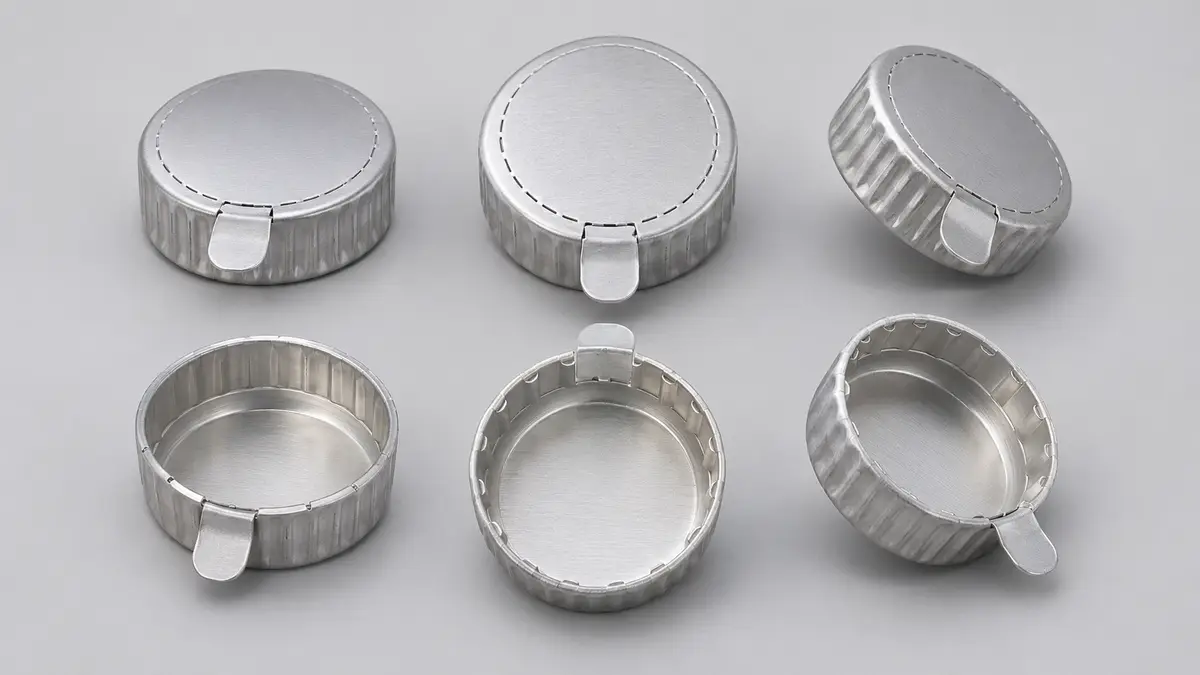
Aluminium tear-off bottle caps from China carry 0% UK duty on the relevant lines of heading 8309. Food and drink closures must be suitable for food contact, with compliant plastic liners where used. Check bottle fit, sealing and the tear path before ordering. Cambridge China Bridge sources aluminium tear-off bottle caps.
Buying from China for a business? How our UK China sourcing agent service works · China sourcing agent for small orders and first imports
UK duty and classification
Read from the UK Trade Tariff on 21 November 2026, heading 8309 covers base-metal stoppers, caps, lids, bottle capsules and other packing accessories. For aluminium tear-off bottle caps, distinguish a bottle capsule from another cap by its construction. The table contains the relevant candidate lines; crown corks and aluminium can ends are different products.
Both listed lines carry 0% duty for goods from China. The supplied tariff record shows no anti-dumping or countervailing duty, suspension or attached import control on these lines. Aluminium bottle capsules exceeding 21 mm in diameter have a specific line; do not assign it simply because a cap is aluminium.
Send your customs broker the cap drawing, diameter, photographs and explanation of how it seals and opens to confirm the commodity code. See the bottle caps and closures guide for the wider heading.
| Goods | Commodity code | Duty | Anti-dumping or countervailing duty on China |
|---|---|---|---|
| Aluminium bottle capsules exceeding 21 mm in diameter | 8309 90 10 00 | 0% | None |
| Other aluminium bottle caps, subject to construction and classification | 8309 90 90 90 | 0% | None |
Specify the bottle fit and tear path
Specify the bottle-neck drawing, cap diameter and height, aluminium thickness and temper, skirt profile, tear-strip layout, tab shape and liner construction. Agree the opening-force range and whether the whole shell or only a strip should detach. Provide actual bottles and trial samples on the intended capping equipment before approving production.
For food or drink, the closure must be suitable for food contact. Confirm the applicable requirements for plastic liners with the relevant authority. Ask for a declaration of compliance and migration evidence matched to the liner, internal coating, contents and filling conditions. Agree any heating, cooling or storage trials with the supplier.
Worked duty example
Illustrative example, not a quote: 100,000 aluminium tear-off bottle caps; illustrative order, not a quotation under 8309 90 90 90, invoiced at £12,500 free on board, with £2,500 of freight and insurance to the UK. The customs value is £15,000. Duty at 0% is £0. Import VAT at 20% is charged on the customs value plus duty, £15,000, so it is £3,000. With no duty, the only import tax is the VAT, which a VAT-registered importer can usually reclaim. The import duty and VAT guide explains each step.
Inspection checklist
Fit: measure the cap against the approved drawing and check that applied caps sit evenly on the actual bottle without damaging its neck.
Opening: pull the tab and check that the strip follows the intended path without premature tab failure, loose fragments or exposed burrs.
Seal: check liner placement and compression, then test filled bottles for leakage after the agreed processing and storage conditions.
Finish and records: inspect coating scratches, printing, crushed skirts and carton cleanliness; match batch identification and material records to the approved sample.
Working out your own order? Send us the product on WhatsApp and we reply the same working day: WhatsApp us
What goes wrong
A tear score that is too deep can split during capping or transport; a shallow or uneven score can make opening difficult or break the tab before the strip releases. Incorrect skirt dimensions or an off-centre liner can cause leakage even when the cap looks acceptable.
Approve the cap on your own bottles and equipment, retain reference samples and repeat opening and sealing checks on arrival. A report for a different liner or coating does not establish the performance of your supplied cap. See the quality inspection guide.
Cambridge China Bridge sources these products for UK businesses, checking the factory and the documents before shipment. See factory verification. For repeat volumes, see container programmes.
Frequently asked questions
What is the UK import duty on aluminium tear-off bottle caps from China?
The relevant lines of heading 8309 carry 0% duty in the supplied tariff record, read on 21 November 2026, with no anti-dumping or countervailing duty shown.
Which commodity code covers aluminium tear-off caps?
Check 8309 90 10 00 for aluminium bottle capsules exceeding 21 mm in diameter, or 8309 90 90 90 for other caps. Ask your broker to confirm from the drawing and construction.
Do tear-off bottle caps need food-contact evidence?
For food or drink use, yes. Ask for evidence covering the actual liner and internal coating under your intended use conditions.
What should I test before ordering tear-off caps?
Trial caps on your bottles and capping equipment. Check leakage, tab strength, opening force, the tear path and remaining edges against the agreed sample and specification.