Sourcing aluminium fence panels from China
Aluminium fence panels from China carry 6% ordinary UK duty across the relevant lines. Finished kits and joined subassemblies differ from loose extrusions for anti-dumping purposes. Check the construction-product marking route against the panel's intended use before ordering. Cambridge China Bridge sources aluminium fence panels.
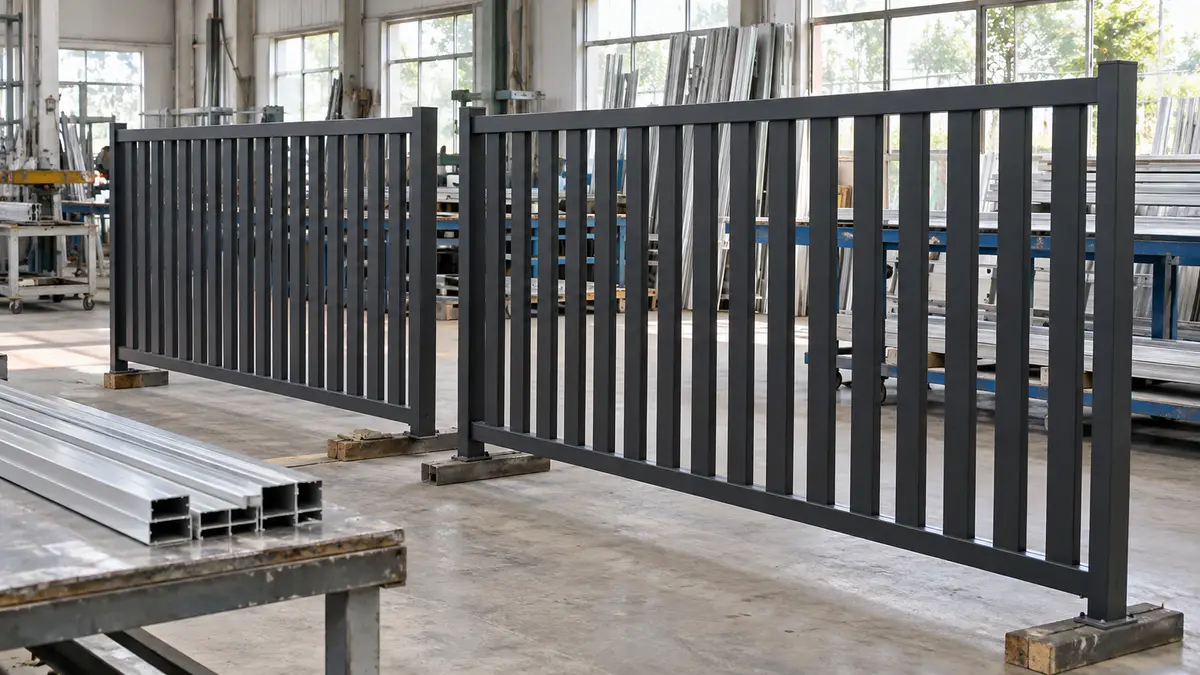
Duty on panels, kits and loose profiles
Read from the UK Trade Tariff on 30 September 2026, heading 7610 covers aluminium structures and their parts, including profiles prepared for use in structures. For fence orders, distinguish joined panel subassemblies, finished kits and loose prepared profiles. The table gives candidate lines, rather than a classification ruling for every fence design.
All listed lines carry 6% ordinary duty for goods from China. The supplied tariff data shows no suspension or attached import control on these fence-related lines, and flags anti-dumping on 7610 90 90 10 without supplying a rate. The published extrusion guide explains that structures, subassemblies and finished goods kits are exempt, while qualifying loose extrusions can attract additional duty. Do not treat loose lengths as a finished kit merely because they share a shipment.
Send drawings, packing lists and the fabrication state to your customs broker before confirming the commodity code. For the wider heading, see aluminium balustrade systems. Budget separately for import VAT at 20%; the duty and VAT guide explains the calculation.
| Goods | Commodity code | Duty | Anti-dumping or countervailing duty on China |
|---|---|---|---|
| Fence panel subassemblies joined by welding or fasteners | 7610 90 90 91 | 6% | None |
| Finished fence kits needing no further fabrication | 7610 90 90 92 | 6% | None |
| Other fabricated fence panels and structural parts | 7610 90 90 95 | 6% | None |
| Unassembled, unwelded fence profiles meeting the tariff description | 7610 90 90 10 | 6% | See the tariff |
Panel spans, posts and the marking route
Specify the panel width and height, slat or picket spacing, alloy, temper, wall thickness and finish. Include post sections, brackets, fixing-hole positions, ground clearance and details for slopes and corners. Agree coating thickness, colour and surface preparation, then approve an assembled sample with the actual posts and brackets.
Ask the supplier to identify any harmonised standard or European Technical Assessment supporting a proposed CE marking. Under the construction-products route, CE marking requires that coverage; it is not a generic fence quality badge. Great Britain continues to accept CE-marked construction products. Confirm the route for the intended use with a competent adviser, especially where the panels also serve as protective guarding.
Worked duty example
Illustrative example, not a quote: Illustrative batch of finished fence kits for a small fencing contractor under 7610 90 90 92, invoiced at £60,000 free on board, with £3,000 of freight and insurance to the UK. The customs value is £63,000. Duty at 6% is £3,780. Import VAT at 20% is charged on the customs value plus duty, £66,780, so it is £13,356. Import taxes total £17,136; a VAT-registered importer can usually reclaim the VAT, so the lasting cost is the £3,780 of duty. The import duty and VAT guide explains each step.
Inspection checklist
Fit: assemble production panels with their posts and brackets; check hole alignment, panel squareness, spacing and adjustment on the agreed slope.
Material and joints: compare certificates with the specified alloy and temper; measure wall thickness and inspect welds, fasteners and bracket engagement.
Finish: measure coating thickness against the order, compare colour with the approved sample and inspect corners, weld areas and cut ends.
Packing and arrival: check panel separators, protected corners, labelled hardware packs and visible transit damage before installation. Use the inspection guide to brief the inspector.
Working out your own order? Send us the product on WhatsApp and we reply the same working day: WhatsApp us
What goes wrong
Panels can arrive square but fail to fit because the post brackets or hole centres changed after sample approval. Thin sections flex, weld distortion pulls rails out of alignment, and coating damage appears where panels rub in transit. Freeze the complete assembly drawing and packing method, then inspect the production assembly.
Another failure is buying loose profiles while budgeting for an exempt finished kit. A supplier's marking certificate can also cover a different product or intended use. Match the shipped fabrication state to the customs description and match any conformity documents to the panel design. Importers must not supply construction products in Great Britain if they have reason to believe applicable requirements are not met.
Cambridge China Bridge sources these products for UK businesses, checking the factory and the documents before shipment. See factory verification. For repeat volumes, see container programmes.
Frequently asked questions
What is the UK import duty on aluminium fence panels from China?
The relevant tariff lines carry 6% ordinary duty. The loose-profile line also flags anti-dumping; check its scope and exporter rate. No suspension or import control is listed on these fence-related lines.
Does a flat-packed aluminium fence count as a finished kit?
Potentially, if it contains the necessary parts to assemble the finished product without further finishing or fabrication. Ask your broker to check the drawings and shipment contents.
Do aluminium fence panels need CE marking?
Check the intended use and applicable construction-product route. CE marking under that route requires a harmonised standard or European Technical Assessment; do not assume every fence panel qualifies.
What should I check before accepting the delivery?
Check transit damage, panel dimensions, coating, welds and hardware packs. Trial-assemble panels with the supplied posts and brackets before distributing them to installation sites.