Importing worn clothing from China
Worn clothing and other worn articles, such as second-hand garments and shoes traded in bulk, pay 4% UK duty from China under the single code 6309 00 00 00, with no anti-dumping duty. The tariff attaches a waste import control, so the key question is whether the goods are sorted, usable second-hand goods or unsorted material that counts as waste under the retained waste shipment rules.
Buying from China for a business? How our UK China sourcing agent service works · China sourcing agent for small orders and first imports
4% duty
Read from the UK Trade Tariff on 29 September 2026, heading 6309 covers worn clothing and other worn articles. It is a single code carrying 4% on goods from China, with no anti-dumping measure. It also carries a waste import control and an import control on seal products, which matters only for articles made from seal.
Rags, scrap twine and worn-out textile articles are heading 6310; see our wiping rags and textile scrap guide and confirm the commodity code.
| Goods | Commodity code | Duty | Anti-dumping duty on China |
|---|---|---|---|
| Worn clothing and other worn articles | 6309 00 00 00 | 4% | None |
Waste or second-hand goods
The waste control on 6309 refers to Regulation (EC) No 1013/2006 on shipments of waste, as retained. If the goods are waste, the waste shipment procedures apply, which for some wastes mean prior written notification and consent before shipment. Goods that are sorted, clean and ready for reuse as second-hand clothing are normally traded as goods, not waste, so keep evidence of sorting and grading and declare the goods accordingly.
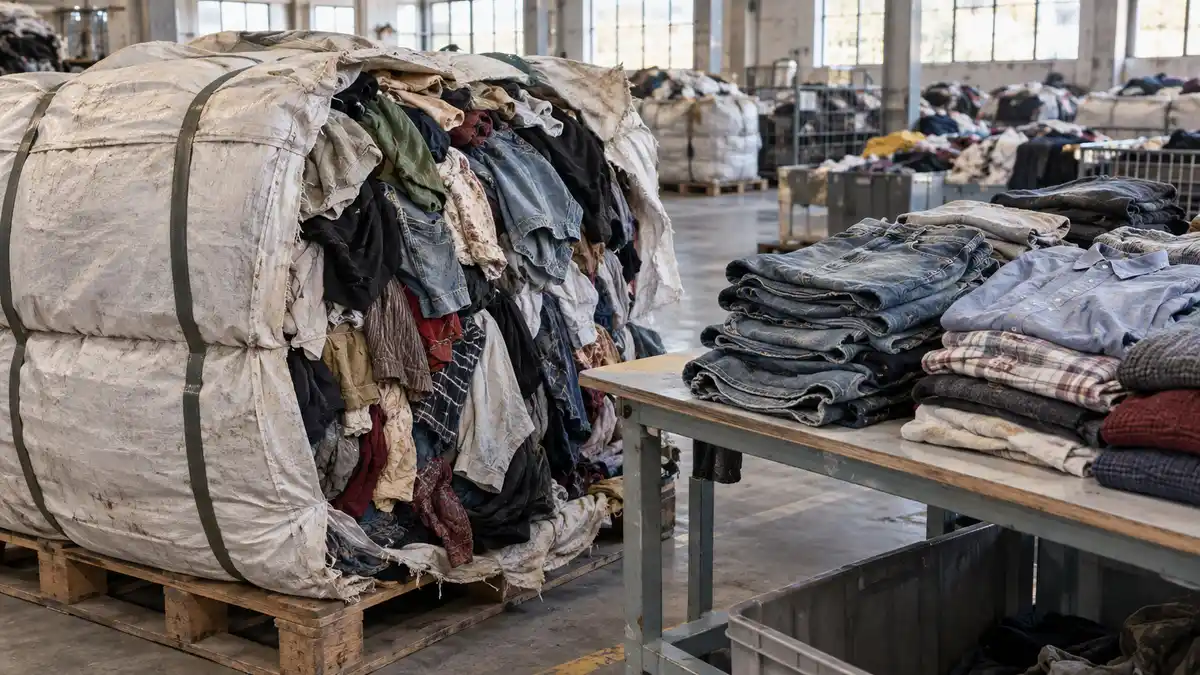
Specify the grade, the mix of garment types and sizes, the condition standard, sorting and cleaning, bale weight and packing, and exclude articles made from seal.
Worked duty example
Illustrative example, not a quote: 10 tonnes of sorted second-hand clothing under 6309 00 00 00, invoiced at £8,000 free on board, with £1,200 of freight and insurance to the UK. The customs value is £9,200. Duty at 4% is £368. Import VAT at 20% is charged on the customs value plus duty, £9,568, so it is £1,913.60. Import taxes total £2,281.60; a VAT-registered importer can usually reclaim the VAT, so the lasting cost is the £368 of duty. The import duty and VAT guide explains each step.
Inspection checklist
Grade: check the mix and condition against the agreed grade.
Cleanliness: check for damp, mould and odour.
Evidence: keep sorting and grading records for the waste question. See our quality inspection guide.
Working out your own order? Send us the product on WhatsApp and we reply the same working day: WhatsApp us
What goes wrong
Worn clothing shipments fail on the waste question. Bales are unsorted or contain unusable items, the goods are treated as waste at the border, and damp bales arrive mouldy.
Cambridge China Bridge can check how bales are sorted and graded before shipment. See factory verification.
Frequently asked questions
What is the UK import duty on worn clothing from China?
Read from the UK Trade Tariff on 29 September 2026, worn clothing under 6309 00 00 00 carried 4% from China.
Is second-hand clothing waste?
It depends. Sorted, clean goods for reuse are normally goods; unsorted material may be waste under the retained Regulation (EC) No 1013/2006.
Are rags in heading 6309?
No. Rags and worn-out textile articles are heading 6310.
Why does the tariff show a seal products control?
It applies to articles made from seal, which should be excluded from the shipment.
Sources
What most often fails: Clothing, textiles and fashion
UK OPSS + EU / EEA Safety Gate (alerts counted separately in each system) · China-origin alerts over the 24 calendar month coverage window(2024-12 – 2026-11) · 152
Combined counts are alerts from both systems, not unique products across markets. Each source uses its own publication window; the same product may appear in both. · OPSS: 2024-12 – 2026-11 · Safety Gate: 2024-12 – 2026-11
- Chemical: 95
- Entrapment: 25
- Strangulation: 20
Most-cited regulations
- REACH Regulation: 79
- General Product Safety Regulation: 36
- EN 14682: 26
Checks to ask the factory for
- Ask for laboratory testing for restricted substances relevant to the materials and intended market.
- Match the report model, material colours and component list to the order.
- Ask how raw-material declarations and supplier changes are traced by batch.
Questions for due diligence, not a certification checklist or a guarantee of compliance. Select the applicable standards and tests with a competent laboratory.
The current calendar month is partial. These are published alerts, safety reports and recalls, not a measure of all products sold or a recall rate. Hong Kong is reported separately.
All recall dataContains public sector information licensed under the Open Government Licence v3.0 (OPSS, GOV.UK product safety alerts)
Source: European Commission, Safety Gate, English XML (en), extracted 2026-11-09. XML distribution: CC0. Cambridge China Bridge analysis.