Container fumes: when is unloading safe?
Stop unloading and restrict access. Arrange competent assessment of the suspected gases, controlled opening, suitable testing and planned ventilation before authorising work. Record the release conditions and brief the unloading team. Supplier records can be gathered by Cambridge China Bridge.
Stop work and control access
If fumes are suspected, pause unloading and keep people away from the container and its doors. Tell the receiving supervisor, driver and unloading contractor that the shipment is on hold. Do not send someone inside to investigate or lean into the doorway to smell the air. HSE guidance recommends restricting access to people who need to be there.
Use barriers and a clear hold notice, and nominate the person who controls access. If someone becomes unwell, withdraw others from possible exposure and call the emergency services. Do not attempt an improvised entry rescue. Include the hold procedure in your container delivery arrangements.
Gather information without entering
HSE warns that missing fumigation markings do not prove that fumigants are absent. Treat missing paperwork as an unresolved question. Ask the supplier and forwarder for treatment records, the substance used, ventilation records and any previous gas test or clearance certificate. Match documents to the actual container.
Also collect the cargo description, packaging materials, relevant SDS and loading photographs. Ask about possible emissions from goods, spills or damaged chemical packaging rather than considering fumigation alone. The China loading check guide explains the shipment evidence to request; that evidence does not authorise entry at destination.
Commission a competent assessment
Arrange a specialist with experience of container atmospheres and the suspected substances. For suspected fumigation, use someone competent in fumigants. Ask them to plan controlled opening and sampling without exposing the receiving team, and to consider toxic gases, oxygen deficiency and flammable atmospheres.
Ask which substances the instruments detect, their limitations, where samples will be taken and how results will be interpreted. An unexplained reading from a general gas detector is not a useful release decision. If the hazards remain unidentified or cannot be measured adequately, keep the hold in place and seek further specialist assessment.
Agree ventilation before opening
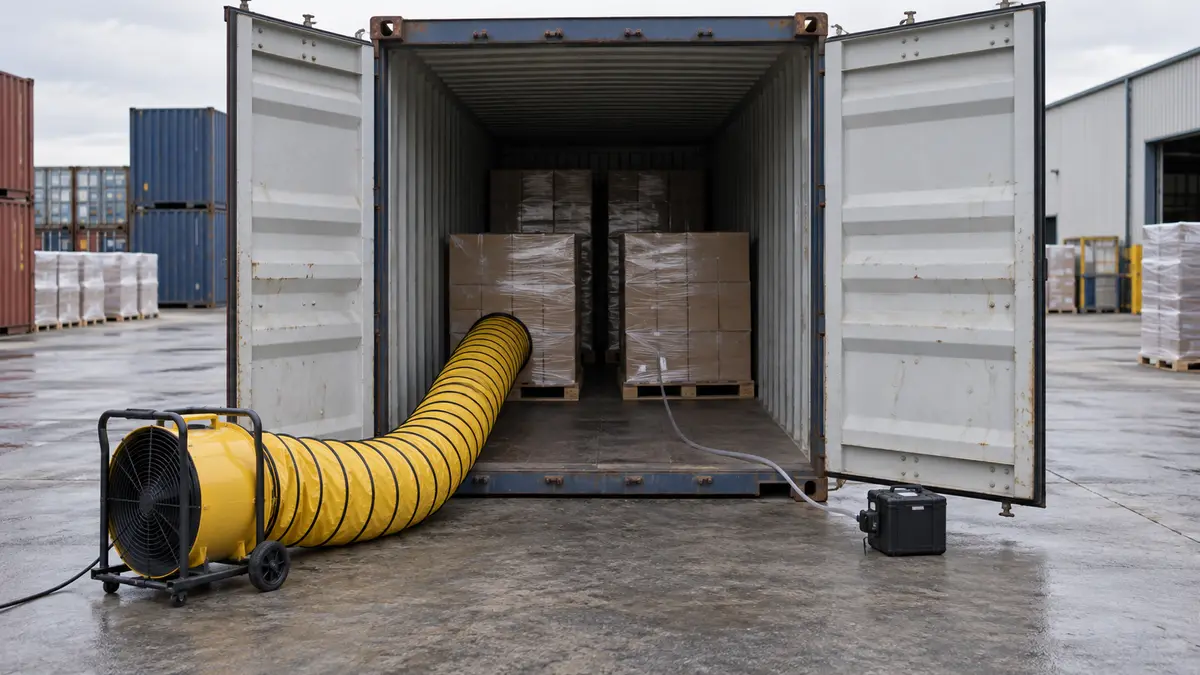
Have the specialist specify the ventilation method, equipment, container location and discharge arrangements. Keep discharged air away from workers, neighbouring operations and building air intakes. Ask whether forced ventilation is needed and whether equipment is suitable for any flammable atmosphere. Do not improvise with a warehouse fan.
Do not use an arbitrary airing period or disappearance of a smell as the release criterion. Agree testing after ventilation and whether further checks are needed as cargo is disturbed. Leave removal of fumigant residues or suspect treatment materials to the specialist. Nobody should enter merely to position ventilation equipment.
Working out your own order? Send us the product on WhatsApp and we reply the same working day: WhatsApp us
Authorise unloading with recorded conditions
For suspected fumigation, request a gas-free certificate from the competent person. Ask for its scope, test results, container identity and any conditions or limitations. Also obtain the assessor's recommendation for the actual unloading task. Agree who at the receiving site can authorise unloading once those findings and the working arrangements have been reviewed.
Record the authorisation, required ventilation, monitoring, access restrictions and stop-work triggers. Brief the team before work starts. If symptoms occur, monitoring indicates a problem or conditions change, stop and reassess. Once safe access is authorised, use the separate wet or mouldy arrival guide for cargo condition and claim evidence. Cambridge China Bridge can ask its staff in China to obtain supplier treatment and loading records.
Frequently asked questions
Can we unload a container with no fumigation label?
A missing label does not prove fumigants are absent. If fumes are suspected, keep unloading on hold until competent assessment supports safe work.
How long should we ventilate a suspect container?
Do not choose a fixed airing period. Ask the specialist to specify ventilation and testing, then release the container against the assessed conditions.
Can our warehouse gas detector clear the container?
Only if a competent assessor confirms that the instruments and sampling method address the suspected hazards. A detector reading alone does not authorise unloading.
Who should authorise unloading after a fumes concern?
Nominate a receiving-site decision maker to review the competent assessment, any gas-free certificate and the unloading controls, then record the release conditions.