Brief a factory for packaging that ships on its own
Give the factory an annotated packaging drawing and a packed sample brief covering delivery-label space, exposed branding, secure closure, opening and return packing. Protect product information and agree fulfilment-provider acceptance separately. Coordinate the brief and sample checks with Cambridge China Bridge.
Define what ships without an outer box
State that the retail pack will travel directly to the customer with a delivery label attached, without a separate shipping carton. Identify the product variants and dispatch channels covered. For broader channel and freight decisions, see our e-commerce sourcing guide.
Attach the packaging drawing, material specification, artwork and packing instructions to the order. Ask the fulfilment provider for its current acceptance criteria and record the applicable version. Treat its label, closure, testing and approval criteria as commercial acceptance conditions, separate from the product's legal requirements. Use our product specification guide for the wider order brief.
Reserve label space and decide what stays visible
Mark a flat delivery-label area on the drawing using the actual label template supplied by your dispatch operation. Keep it clear of seams, opening tabs, folds and product information. Specify the surface finish, then check adhesion and scanning on the finished pack rather than on an unprinted board sample.
Approve the branding visible during delivery, including product photographs and descriptions that reveal the contents. Decide whether discretion matters for this product. Show where warehouse labels and return labels can go, and distinguish cosmetic scuffing you will accept from damage that makes the pack unsuitable for sale.
Design closure, opening and return packing together
Specify how the factory closes the pack and how warehouse staff check that closure before dispatch. Trial the packed product for opening seams, escaping accessories and movement inside the box. Make the opening route clear and keep cutting paths away from the product and enclosed documents.
Have someone unfamiliar with the pack open it and repack the contents. Choose a resealing strip, reusable closure or a clearly explained taping area. State whether a return needs replacement packaging, and give warehouse staff a check for missing inserts, failed closures and obscured labels. This is a packing workflow, not a statement of customer return rights.
Protect product information throughout the journey
GOV.UK says labels must not mislead and safety information must be included for products that could be dangerous. Use its labelling guidance as a starting point, then confirm the information and placement applicable to your product before approving artwork. Do not let a delivery label become a substitute for product information.
Create an annotated information map showing the approved locations of warnings, identification, instructions and any applicable markings. Keep these away from delivery-label zones and tear-away sections. Check readability after labelling, opening and resealing. Where information belongs on the product, preserve that location rather than moving it to the box for convenience.
Working out your own order? Send us the product on WhatsApp and we reply the same working day: WhatsApp us
Approve a packed sample and define release checks
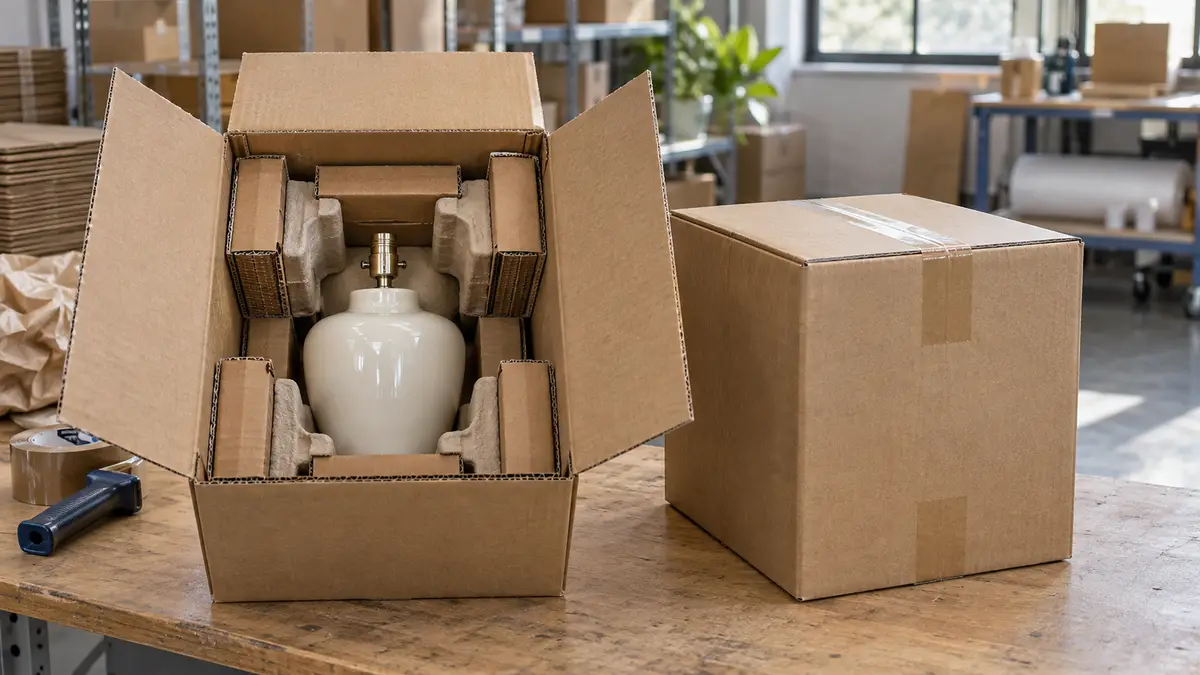
Request a sample made with the intended board, print finish, inserts, adhesive and closure, containing the actual product. Apply the dispatch label, send it through the intended delivery route, then inspect the contents, label adhesion, branding, opening and return packing. Our carton drop-test follow-up guide helps distinguish carton damage from product damage. For mirrors, see our guide to qualifying glass mirror packaging.
Keep the approved sample and photographs with the artwork revision and inspection brief. Define rejection conditions such as an opening seam, detached label, covered warning or unusable return closure. Obtain any provider approval before releasing stock to that channel. Cambridge China Bridge's staff in China can check production packs against the agreed brief.
Frequently asked questions
Can retail packaging be used as the shipping box?
Specify that use explicitly and trial the complete pack with the actual product and dispatch label. Confirm the fulfilment provider's acceptance before sending stock to that channel.
Where should the delivery label go?
Reserve a flat area using your dispatch operation's label template. Keep it away from seams, opening tabs and product information, then check adhesion and scanning on the finished pack.
Does fulfilment-provider approval prove legal compliance?
Treat provider approval as commercial acceptance. Check product labelling and safety information separately; approval for a dispatch channel does not establish those checks.
How should packaging work for customer returns?
Trial opening and repacking with someone unfamiliar with the pack. Specify how it reseals, where the return label goes and when replacement packaging is needed.