Damaged lithium battery: how to claim a refund
Stop using and charging the item. Send the seller evidence of the fault and the carrier’s refusal, then request a refund without return, an agreed local repair or specialist collection. Arrange local handling with a provider that explicitly accepts damaged lithium batteries. Ask Cambridge China Bridge to help document and negotiate the claim.
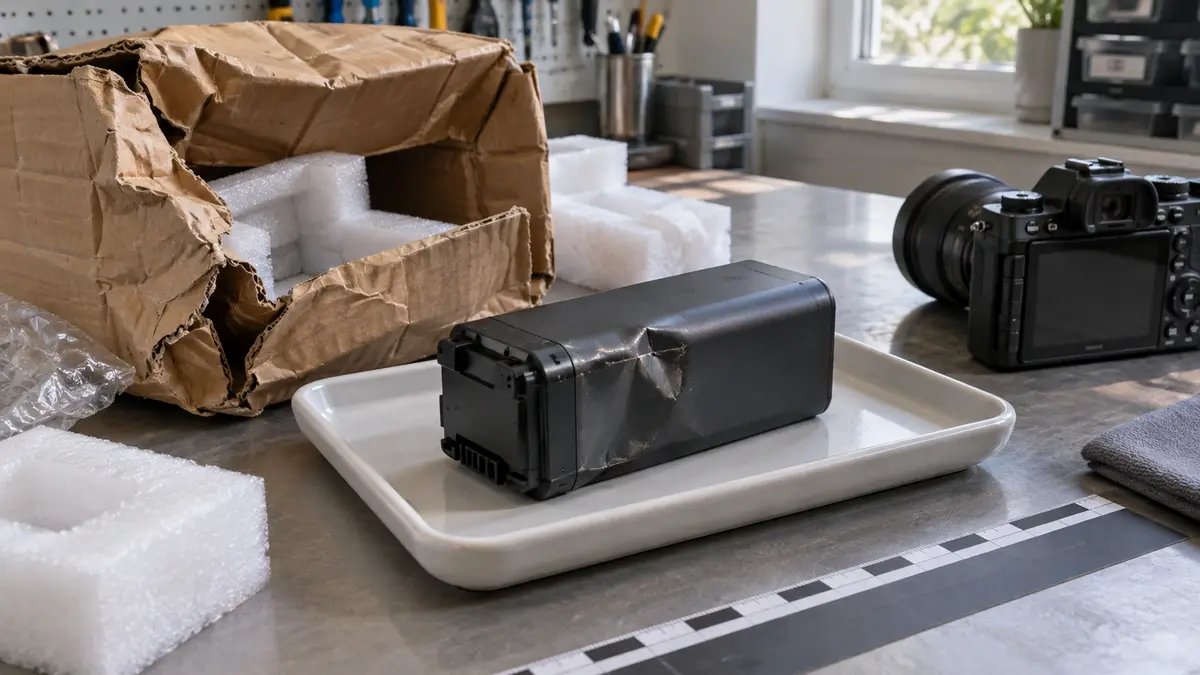
Stop use and avoid ordinary posting
Damaged lithium batteries need careful handling. Government safety guidance warns that lithium-ion battery fires can start without warning and spread rapidly. Stop using and charging the item; do not puncture, flatten, dismantle or deliberately discharge its battery. If it starts smoking or catches fire, leave the area and contact the fire service. Do not attempt to fight the battery fire yourself.
Do not use the rejected return label, conceal the battery or describe the parcel as an ordinary faulty item. Ask a specialist for handling and temporary storage advice before moving it. Keep escape routes clear. Our lithium battery sourcing guide covers normal import and shipping preparation; a damaged return needs separate acceptance.
Preserve evidence and identify the seller
Keep the order, invoice, payment record, product description, serial or batch details and complaint correspondence. Photograph the damage only if you can do so safely, without operating or opening the item. Obtain the carrier’s written refusal and its stated reason. A refusal explains why the proposed return route cannot be used; do not treat it as automatic approval of your refund claim.
Identify the contractual seller from the order documents rather than assuming the factory or marketplace is responsible for resolving it. For a business purchase, start with the agreed defect, warranty and dispute terms. For a personal purchase, ask for advice about applicable UK consumer rights. Use our faulty goods claims guide for the wider supplier dispute.
Request an alternative remedy in writing
Write: “The item is faulty and its lithium battery is damaged. The proposed carrier has refused it; the refusal is attached. Please confirm a refund without return and authorise safe local handling, or propose an agreed local repair or specialist collection that accepts the disclosed battery condition. Please confirm who pays and what evidence you need.”
Ask the seller to confirm the refund amount, payment method, payment timing and whether it wants the whole item or only particular components. Agree any repair scope, replacement specification and handling costs before proceeding. A return label alone is insufficient: ask for written acceptance from the actual collection provider for this damaged battery.
Arrange a local route that accepts the damage
Contact a specialist battery or electrical-waste contractor and disclose the battery chemistry, product type, visible damage and whether the battery remains fitted. Ask it to assess the route, packaging and collection arrangements. Do not remove a fitted battery merely to satisfy a return request. Do not put the item in ordinary rubbish or an unattended battery collection box. For routine retail take-back arrangements, see our guide to waste battery collection. For automotive batteries, see our automotive battery collection guide.
Waste from a commercial activity is business waste. In England and Wales, official duty-of-care guidance says to check that the recipient is authorised before transferring waste. Check the collector’s registration and the receiving site’s acceptance of this damaged item. For other UK locations, check the local regulator’s route. Our business returns disposal guide explains the wider contractor checks.
Working out your own order? Send us the product on WhatsApp and we reply the same working day: WhatsApp us
Protect the claim through local handling
Where safe to wait, obtain written agreement that local handling will be accepted instead of return before the item is repaired or discarded. Ask what photographs, inspection report or collection receipt will satisfy the claim. If urgent safety action cannot wait, follow emergency or specialist advice, notify the seller promptly and preserve whatever evidence can be obtained safely.
In England, waste transfer information must give the receiving business enough detail to handle and dispose of the waste safely. Ask the contractor to identify the appropriate classification and paperwork; do not assume a standard transfer note suits every battery. Keep the handling records with the claim. If negotiations stall, send the refusal and proposed alternatives through the seller’s complaint route and ask the marketplace or payment provider what dispute evidence it needs.
Frequently asked questions
Can I get a refund if the courier refuses the battery?
Request a refund without return and attach the written refusal. Ask the seller to accept local handling evidence or arrange specialist collection. Carrier refusal alone does not establish that your refund claim is accepted.
Can I post the item with the damaged battery inside?
Do not use ordinary post or the refused return service. Disclose the damage and obtain explicit acceptance from a specialist provider before arranging any shipment.
Can I remove the battery and return the rest?
Ask a competent specialist whether removal is safe, and obtain the seller’s agreement to a partial return. Do not open, puncture or force out a damaged battery yourself.
Should I dispose of the battery before the refund?
Where safe, agree the evidence and local handling route with the seller first. If there is an urgent safety risk, follow emergency or specialist advice and preserve evidence only where safe.