Shipping from China to the UK: the full picture
Goods move by sea or by air: sea is far cheaper per kilogram and suits bulk, air is far faster and suits small, urgent or high-value shipments, and most businesses ship the bulk by sea and keep air for emergencies. Cambridge China Bridge can quote one UK landed price covering freight, duty and clearance.
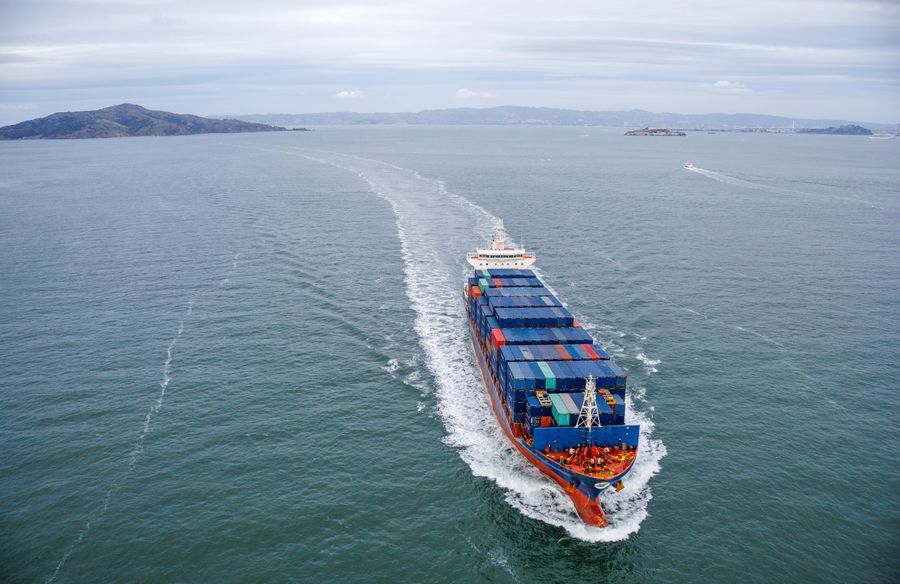
The two modes
Goods move by sea or by air. Sea is far cheaper per kilogram and suits bulk, non-urgent orders; air is far faster and suits small, urgent or high-value shipments. Most businesses ship the bulk by sea and keep air for emergencies. For temperature-sensitive goods, see our guide to temperature-controlled shipping from China.
See our sea vs air guide for the trade-off in detail.
The realistic timeline
Door to door, sea freight from China to the UK typically takes around two months once you include customs and delivery at both ends; air is usually around two weeks.
Add production time before that, and a buffer for the unexpected — a failed inspection or a busy shipping period each add days. For custom furniture, see our guide to inspecting a bespoke cabinet before shipping. For packing checks, see preventing mould and furniture finish damage. For upholstered pieces, see packing upholstered furniture for container shipping.
The paperwork and customs
To import you need a GB EORI number, the correct commodity code for each product, and accurate documents (commercial invoice, packing list, transport document). Import duty and VAT must be accounted for, but payment may be deferred, and eligible VAT-registered businesses can use postponed VAT accounting instead of paying import VAT at the UK border. See our guide to checking shipping manifests.
Our customs-clearance and duty-and-VAT guides cover the detail; a door-to-door service handles it for you.
What it costs — and the simple version
The real number to compare is the landed price: product, freight, insurance, duty and fees to your door. Import VAT is usually reclaimable for a VAT-registered business.
The simplest route is a single door-to-door landed price so you are comparing like for like against your current UK supplier — no separate bills to reconcile.
For a full container or an established importer, see our sourcing and shipping services: we can also compare goods, freight and destination costs as separate lines, with the importer and delivery point agreed in the quote.
FCL or LCL, and where the break-even sits
A full container costs a flat price whatever you put in it, so the more you fill it the cheaper each unit becomes. LCL, where your pallets share a container with other shippers, is priced on volume and suits smaller consignments.
The crossover is usually somewhere around 12 to 15 cubic metres: below that LCL normally wins, above it a 20ft container often costs the same or less than the LCL charge for the same volume. Our free shipping volume calculator works out your CBM and shows how it fits a 20ft, 40ft or 40ft high cube.
In our own bookings, LCL has usually cost about 1.5 to 2 times the per-cubic-metre rate of a full container, before the fixed charges at each end, which is why consolidating a growing range into a full container pays off quickly.
Why LCL is slower than the sailing time suggests
LCL adds consolidation at the Chinese end and deconsolidation at the UK end. Your pallets wait for the container to fill, then wait again at a UK depot to be broken out. That routinely adds one to two weeks that no sailing schedule shows.
It also adds handling, which is where damage happens. If your goods are fragile, the extra touches matter as much as the extra days. For luminaires, see our guide to testing LED luminaire shipping packs.
Chargeable weight: why light cargo still costs a lot
Air freight and express are priced on whichever is greater, actual weight or volumetric weight. Bulky, light goods are charged on the space they occupy rather than what they weigh, which is why a pallet of cushions can cost more to fly than a pallet of tools.
Sea LCL works on a similar principle using cubic metres against a weight equivalent. Ask which basis your quote uses before comparing two prices — they are often not measuring the same thing.
Working out your own order? Send us the product on WhatsApp and we reply the same working day: WhatsApp us
The costs that are not in the freight quote
A freight rate rarely covers everything. Expect origin charges at the Chinese end, terminal handling at both ends, customs entry fees, and delivery from the UK port. Duty and import VAT sit on top of all of it. For onward delivery options, see our guide to part-load or full-truck delivery.
This is why a low sea rate can end up more expensive than a higher all-in quote. Compare landed totals rather than freight lines, and ask specifically what is excluded.
| Charge | Where it arises |
|---|---|
| Origin charges | At the Chinese end, before the goods sail |
| Terminal handling | At both ends: the Chinese terminal and the UK terminal |
| Customs entry fees | UK clearance |
| Delivery from the UK port | From the port to your address |
| Demurrage | Daily, once the free days run out, while the container sits at the UK terminal |
| Detention | Daily, once the free days run out, while you hold the container off-site |
| Import duty and import VAT | At the UK border, on top of everything else: see the duty calculator |
Demurrage and detention: the clock nobody mentions
Once your container lands you get a limited number of free days before charges start, and they accrue daily. Demurrage runs while the container sits at the terminal, detention while you hold the container off-site.
Have somewhere to unload and the equipment to do it before the container arrives. A shipment that clears customs quickly and then sits waiting for a forklift is an expensive kind of on-time.
Peak seasons that move your dates
Two periods reliably disrupt schedules from China: the run-up to Chinese New Year, when everyone ships before factories close and rates climb, and the pre-Christmas peak from roughly August to October. For Golden Week planning, see our factory closures and shipping cut-offs guide.
Both are predictable, so both are plannable. Our Chinese New Year planner works backwards from the date you need stock to the day you have to place the order.
Cambridge China Bridge can quote one UK landed price covering freight, duty and clearance, whether the order fills a container or a few pallets; see how we handle smaller orders.
Buying from several Chinese suppliers at once? See consolidating goods from several suppliers into one shipment.
Frequently asked questions
How long does shipping from China to the UK take?
Roughly two months door to door by sea (including customs and delivery at both ends), or about two weeks by air, plus production time before shipping.
What do I need to import into the UK?
A GB EORI number, the correct commodity code for each product, and accurate documents. A customs agent or a door-to-door sourcing service can handle the declaration.
Should I use FCL or LCL?
Roughly, LCL below about 12 to 15 cubic metres and a full container above it, though the exact break-even moves with rates. LCL also adds one to two weeks of consolidation and more handling, so fragile goods may favour FCL earlier.
Why is my light shipment so expensive to fly?
Air and express are charged on the greater of actual and volumetric weight. Bulky, light goods are billed for the space they take up, not what they weigh.
What is not included in a freight quote?
Usually origin charges, terminal handling at both ends, customs entry fees and UK delivery — with duty and import VAT on top. Compare landed totals rather than freight rates, and ask what is excluded.
What are demurrage and detention?
Charges that start after your free days run out — demurrage while the container sits at the terminal, detention while you hold it off-site. Arrange unloading before the container arrives.